Last updated 2026-08-17
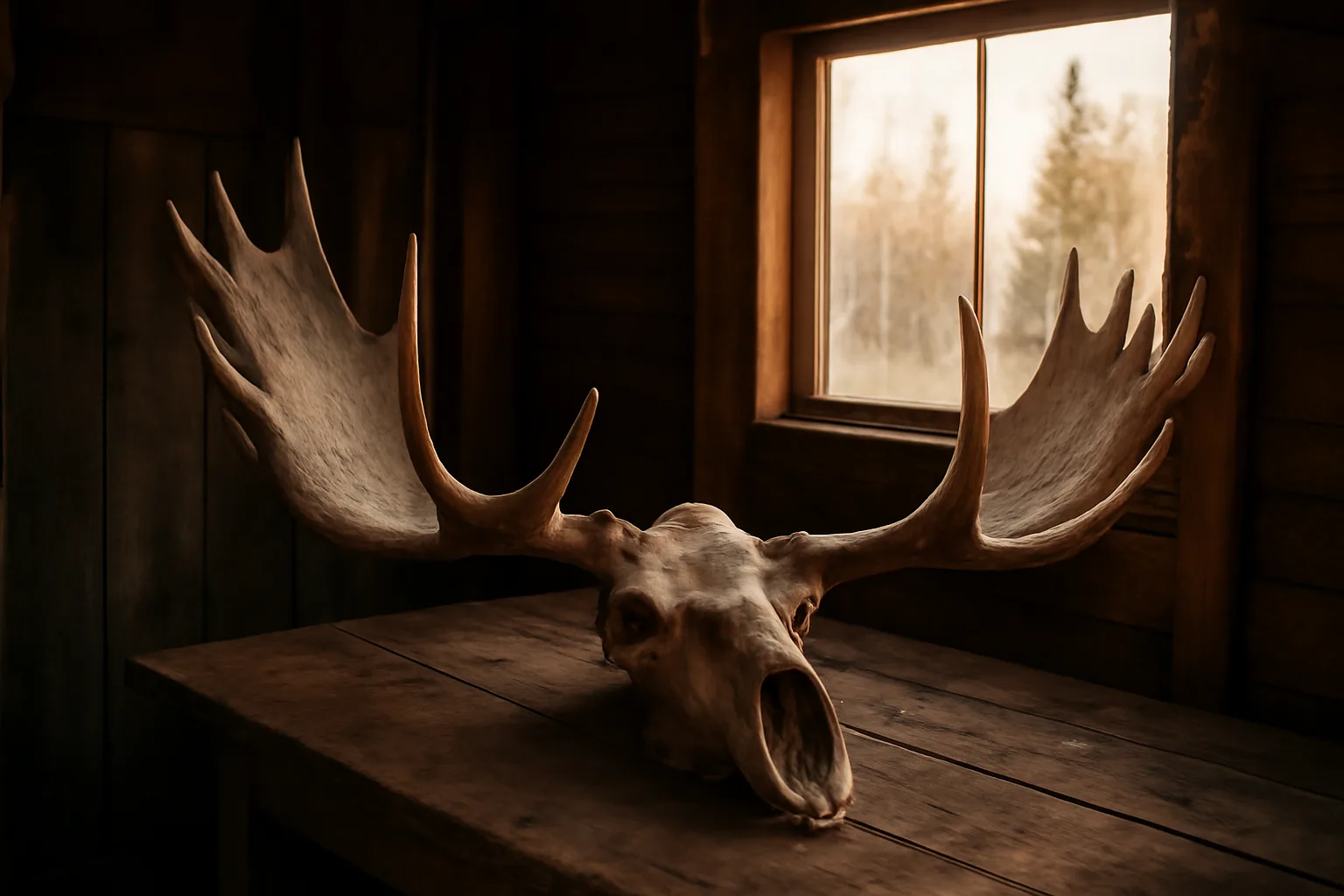
TL;DR
Alaska requires taxidermists who work for hire to hold a state taxidermy license from the Alaska Department of Fish and Game. Doing european mounts on your own harvested animals needs no license. Fees and processing times vary, so confirm current figures with ADF&G. Expect beetle or maceration processing to add two to eight weeks on top of cleaning time.
Do you need a license for european mount in Alaska?
It depends on one thing: are you getting paid, or are you cleaning your own skull?
Alaska requires anyone who prepares, preserves, or mounts wildlife specimens for hire or compensation to hold a taxidermy license issued by the Alaska Department of Fish and Game (ADF&G). This covers commercial european mount work the same as full skin mounts. A hunter drops a moose skull at your shop and pays you to clean it? You need the license. [1]
Did you harvest the animal yourself, and you're cleaning the skull for your own wall? Alaska does not require a taxidermy license for personal work. That matches how most states handle it, but Alaska's wildlife possession rules add a layer. You have to be able to show that the animal was legally taken, and certain species, including bears, wolves, and wolverines, carry specific tagging and sealing requirements no matter what you do with the skull afterward. [2]
Here's what trips people up. A taxidermy license does not replace a hunting license or a salvage permit. Those are separate instruments. The taxidermy license is purely about the business of preparing specimens. Doing european mounts commercially means you need all three relevant credentials layered on top of each other: the business license, the taxidermy license, and any species-specific sealing compliance.
Alaska has no separate "european mount" permit category. The state taxidermy license covers every form of specimen preparation for hire. Confirm current license requirements and fees directly with ADF&G before you take a paid job. [1]
What licenses and registrations does a commercial european mount operation need in Alaska?
A european mount business in Alaska stacks several layers of licensing. Map them out before you spend a dollar on equipment.
First, you need a general Alaska business license from the Department of Commerce, Community, and Economic Development (DCCED). As of the most recent published schedule, the standard business license costs $50 for two years. Confirm the current fee with DCCED before applying, since the legislature adjusts this periodically. [3]
Second, you need the ADF&G taxidermy license. This is the document that authorizes you to prepare wildlife specimens for compensation. ADF&G administers it through its licensing division. Fees and renewal cycles change, so confirm them with ADF&G directly rather than trusting a number printed anywhere else. [1]
Third, if your work touches federally protected migratory birds or eagle parts, you're in federal permit territory under the Migratory Bird Treaty Act and the Bald and Golden Eagle Protection Act. The U.S. Fish and Wildlife Service issues those permits separately. Most european mount shops focus on ungulates, bears, and game birds that fall under state jurisdiction, so this often doesn't apply. It matters the day a client brings you waterfowl or raptors. [4]
Fourth, check your borough or municipality. Fairbanks North Star Borough, the Matanuska-Susitna Borough, and the Municipality of Anchorage each have their own business registration or home occupation rules. A shop running out of a residential property in Anchorage, for example, needs to comply with Title 21 land use code. [5]
The federal layer is the one most new operators underestimate. Migratory bird species are a real exposure point in Alaska given the volume of waterfowl harvested each season.
How much does european mount cost in Alaska?
Two cost questions live inside this one: what a hunter pays to have a mount done, and what you spend to set up and run the operation.
For hunters, retail pricing for a professional european mount in Alaska runs roughly $150 to $400 for common ungulates like Sitka blacktail deer and caribou. Moose skulls and brown bear skulls push $250 to $500 or higher because of the cleaning labor involved. These are market observations, not published survey data, and prices swing between the Railbelt, Southeast, and rural hubs where freight costs differ sharply.
For operators, startup costs break into a few buckets:
| Cost item | Estimated range | Notes |
|---|---|---|
| Alaska business license | $50 / 2 years | Confirm with DCCED [3] |
| ADF&G taxidermy license | Confirm with ADF&G | Fee varies; verify before budgeting [1] |
| Dermestid beetle colony + starter kit | $129 one-time (Colony + Ship-In Kit) | Entry-level setup [6] |
| Maceration tank (DIY) | $20-$80 | Food-grade buckets, lids, heater |
| Degreasing supplies | $30-$100 | Ammonia, dawn, acetone, bins |
| Whitening agents (peroxide cream/powder) | $20-$60 | 40-volume developer or powder |
| Freight to/from rural clients | Highly variable | Alaska air cargo rates apply |
Freight is the line item that surprises new Alaska operators most. Shipping a moose skull from a rural village to your shop and back can run $80 to $200 each way depending on whether it moves by Alaska Airlines cargo, Ravn, or bush carrier. Build that into your pricing from day one or you'll lose money on every rural job.
Nobody has good published data on average Alaska european mount retail pricing. The figures above come from informal market observation, not a study, so treat them as a starting range and do your own local pricing research.
How long does european mount take in Alaska?
Processing time in Alaska has a wrinkle that matters more here than in the lower 48: temperature.
Dermestid beetles are the fastest reliable cleaning method in a controlled environment. A whitetail skull takes a well-colonized beetle bin about three to seven days in warm conditions, roughly 80 to 90 degrees Fahrenheit. A moose skull, with its mass of cartilage and tissue, can take two to four weeks. Winter ambient temperature is the problem in Alaska. Drop your shop below 65 degrees and beetle activity slows hard. Below 55, they go nearly dormant. Heating a dedicated beetle room through an Alaskan winter is a real operating cost. [6]
Maceration (warm water decomposition) works at lower temperatures than beetles but still needs sustained heat, ideally 80 to 95 degrees Fahrenheit, to stay fast. A submerged moose skull macerates in roughly two to four weeks at that range. At 60 degrees it can take two to three months. In an unheated Fairbanks garage in January, maceration is not a realistic method without supplemental heat.
Simmer boiling is faster, roughly two to four hours for a deer skull, but it damages bone quality and drives fat into the skull, which makes degreasing take longer and produces a greasier finished product. Most professional shops avoid it for finished mounts.
Total turnaround from receiving a skull to delivering a finished, whitened mount:
| Method | Cleaning | Degreasing | Whitening | Total |
|---|---|---|---|---|
| Beetles (heated shop) | 3-21 days | 3-14 days | 1-3 days | 1-6 weeks |
| Maceration (heated) | 14-28 days | 7-21 days | 1-3 days | 3-8 weeks |
| Boil (not recommended) | 2-6 hours | 14-30 days | 1-3 days | 2-5 weeks |
Degreasing is where Alaska operators lose time. Moose and brown bear skulls are fatty. An ammonia soak or Dawn dish soap degreasing at warm temperatures can take two to four weeks on a fatty skull. Rush it and the skull sweats grease after whitening, which ruins the finished look. Don't skip it.
For clients shipping skulls in from remote areas, add transit time in both directions. A skull coming from a remote camp in Western Alaska might spend five to ten days in transit before it even reaches your shop.
What wildlife possession rules apply to european mount skulls in Alaska?
Alaska has specific rules about what you can legally possess, transport, and sell in the way of wildlife parts. These rules touch european mount operations directly. [2]
Brown and black bear skulls have to be sealed by ADF&G before they can be transferred to a taxidermist. The sealing requirement confirms the animal was legally harvested and records the kill for population management. A taxidermist holding an unsealed bear skull is in a legally precarious spot. Always ask clients for proof of sealing before you accept bear work. [2]
For moose, caribou, and Dall sheep, the requirement is a valid harvest ticket or locking tag. The tag has to stay with the animal parts until the meat is processed and the horns or skull reaches a taxidermist or permanent location. Once it's in your shop as a taxidermy job, document your chain of custody.
Wolves and wolverines carry their own sealing requirements under Alaska regulations. [2]
Migratory birds, waterfowl included, cannot be possessed for taxidermy purposes without the appropriate federal salvage or taxidermy permit from USFWS. That's a federal restriction, not a state one, and the penalty for unlicensed possession of a migratory bird can be significant under the Migratory Bird Treaty Act. [4]
The practical rule for a commercial european mount shop in Alaska: when a client drops off a skull, get copies of their hunting license, harvest ticket, and any applicable sealing documentation before you start work. Keep those records. ADF&G enforcement does inspect taxidermy operations, and your documentation is your protection.
What equipment do you actually need to start a european mount operation in Alaska?
The core equipment list is shorter than people expect. In Alaska the complexity comes from managing temperature, not from exotic tools.
For beetle-based cleaning, you need a colony of Dermestes maculatus beetles, a secured enclosure (a chest freezer with a locking lid works well and also insulates the colony against winter), a heat source to hold 80 to 90 degrees Fahrenheit inside the enclosure, and food to feed the colony between skulls. The colony is the recurring investment. The enclosure is a one-time setup. Starting out, a Colony + Ship-In Kit from a supplier like DermestidPath gives you beetles, basic setup guidance, and a shipping protocol for clients to send you skulls, all from a single order. [6]
For degreasing, you need large food-grade buckets or plastic totes, ammonia (hardware store grade works) or Dawn dish soap, and a way to hold water temperature around 100 to 130 degrees Fahrenheit during the soak. An aquarium heater handles small skulls. A dedicated tank with a submersible heater handles moose.
For whitening, brush 40-volume hydrogen peroxide developer (available from beauty supply stores) onto the skull and leave it in indirect sunlight. That's the standard method. Do not use chlorine bleach. It degrades bone over time and leaves a chalky, brittle result.
For Alaska specifically: insulate your workspace. A well-insulated shop drops your heating bill over a six-month winter. A dedicated beetle room you can keep at 85 degrees without heating your whole building is the single most practical setup improvement in a cold-climate operation.
For how operators in other states approach equipment setup, see our guides on european mount board in Idaho and european mount board in Colorado, both of which handle cold-climate considerations.
How do Alaska's hunting seasons affect when european mount work comes in?
Alaska's hunting calendar is staggered in a way that spreads workload across more of the year than most lower-48 states.
Black bear season opens in April in many units, which brings early spring skull work. Sitka blacktail deer in Southeast Alaska runs August through December. Caribou seasons vary dramatically by unit, some opening in August and others running into January. Moose season peaks in September and October. Brown bear seasons split between spring (April-May) and fall (September-October). Dall sheep season is August through September. [7]
The practical implication: your busiest intake months are likely September through November, with a secondary spike in April and May from spring bear. December through March is your slow period, which is also when Alaska's temperatures punish beetle colonies and maceration tanks hardest.
Plan your heating costs around a six-month high-demand window and a slower winter where you're maintaining the colony rather than running it hard. Use the slow months to build colony size so you have beetle capacity ready for the September rush.
Southeast Alaska operators near the coast can see substantial Sitka blacktail volume. Interior operators near Fairbanks or Delta Junction see moose and caribou skulls dominate. Know your local species mix before you invest in tank capacity or beetle enclosure size.
Can you ship european mount skulls to and from Alaska legally?
Yes, with conditions.
Shipping raw (green) animal skulls across state lines is legal for legally harvested game animals, but carriers set their own rules. FedEx and UPS will ship raw skulls if they're properly packaged and labeled, though some locations reserve the right to refuse. USPS ships skulls but has stricter rules about liquid and odor. Double-bag raw skulls, then box them with absorbent material, so leakage doesn't get the package rejected or discarded.
Bear skulls carry an extra rule: the ADF&G seal has to stay intact on the skull during transport. Removing or tampering with the seal before the taxidermist receives it is a violation of state law. [2]
For clients shipping skulls in from remote Alaska villages, Alaska Airlines cargo is often the practical option. It operates between many rural hubs and Anchorage or Fairbanks, and the rates, while not cheap, are predictable. Some rural clients use the post office, which works but runs slower.
Shipping finished european mounts out is easier. A cleaned and dried skull is much less of a logistical headache than a green one. Standard box-and-peanuts packaging handles finished skulls for most species. Large moose paddles and antlers need custom crating.
Federal restrictions apply to any federally protected species. Do not ship federally protected bird parts through any carrier without the appropriate USFWS permit. [4]
How does Alaska compare to neighboring states for european mount licensing requirements?
Alaska lines up with most western states in requiring a taxidermy license for commercial work. A few things make it distinct.
Idaho requires a taxidermist license from the Idaho Department of Fish and Game for any commercial taxidermy work, including european mounts. The fee and renewal structure differ from Alaska's. See our guide on european mount board in Idaho for a direct comparison.
Colorado requires a taxidermist license from Colorado Parks and Wildlife for commercial operations. Colorado also has specific CWD (Chronic Wasting Disease) rules that affect how deer and elk skulls move across county lines, a layer Alaska does not have. See european mount board in Colorado for those details.
Alabama sits at the other end of the regulatory spectrum. Alabama does not require a state taxidermy license at all for deer and common game species, though USFWS rules still apply for migratory birds and protected species. See european mount board in Alabama.
The distinct Alaska factors: sealing requirements for bears and certain furbearers, the volume of federally regulated migratory game birds passing through the state, and the logistical reality of operating where a third of the geographic area has no road access.
| State | Commercial taxidermy license required | Bear sealing requirement | CWD transport restrictions |
|---|---|---|---|
| Alaska | Yes (ADF&G) | Yes | No |
| Idaho | Yes (IDFG) | No state seal | No |
| Colorado | Yes (CPW) | No state seal | Yes |
| Alabama | No | No | No |
What are the record-keeping requirements for Alaska taxidermists?
ADF&G requires licensed taxidermists to keep records of wildlife specimens received for preparation. The records build a traceable chain from harvest to completed mount so enforcement officers can verify that specimens in a shop are legally obtained. [10]
At minimum, record the client's name and contact information, the species received, the date received, the harvest documentation number (hunting license and harvest ticket or tag number), and the date the finished product went back to the client.
ADF&G can inspect a licensed taxidermist's shop and records. Inspections aren't random the way a restaurant health check might be, but they happen, particularly in response to tips about potential violations in the area.
Keep a simple logbook or spreadsheet. For each skull that comes in, photograph the harvest documentation before the client leaves. A two-minute intake process saves you from spending hours explaining a legally taken animal to an enforcement officer.
Bear skulls need particular care because the ADF&G seal number is a specific, traceable identifier. Log the seal number when you accept a bear skull. When you return it, the seal should still be on the finished skull.
Where can you find the official Alaska taxidermy license application and current fees?
The Alaska Department of Fish and Game administers taxidermy licenses through its licensing section. The official source for current fees, application forms, and requirements is ADF&G's licensing division. Do not trust third-party summaries, this article included, for current fee figures, because the legislature updates the fee schedule periodically and any number printed here could be stale within a year. [1]
The Alaska DCCED administers the general business license. Their business license section handles new applications and renewals online. [3]
For federal permits related to migratory birds or eagles, the USFWS Migratory Bird Program handles applications. The relevant permit type for a taxidermist is the Federal Taxidermist Permit under 50 CFR Part 21. [4]
For borough or municipal business registration, check directly with your local government. The Municipality of Anchorage, Fairbanks North Star Borough, and Matanuska-Susitna Borough each run their own business registration portals. [5]
Planning a ship-in model where remote clients mail you skulls? You can start with a beetle colony and a basic kit while your paperwork processes. DermestidPath's Colony + Ship-In Kit at $129 one-time is built for exactly that kind of lean startup, covering beetles and a shipping protocol so clients know how to pack and send you skulls safely. [6] Get your licensing in place before you accept your first paid job, not after.
For a broader look at how other states structure european mount licensing, the european mount board in California and european mount board in Florida guides cover two high-volume markets with distinct regulatory approaches.
Frequently asked questions
Do you need a taxidermy license for european mount in Alaska if you're only doing your own animals?
No. Alaska's taxidermy license requirement applies to commercial work, meaning you're paid or compensated to prepare someone else's specimen. Cleaning and mounting your own legally harvested skull does not require a taxidermy license. You still need to have harvested the animal legally and comply with any applicable tagging or sealing requirements for the species.
How much does a european mount cost in Alaska for hunters?
Retail pricing from Alaska taxidermists for a professional european mount runs roughly $150 to $400 for deer and caribou, and $250 to $500 or more for moose and brown bear given the cleaning labor involved. Freight costs for remote clients can add $80 to $200 each way. These are market observations, not published survey data; confirm current pricing directly with individual taxidermists.
How long does a european mount take in Alaska?
With beetle cleaning in a heated shop, expect one to six weeks total from skull receipt to finished whitened mount. Moose and bear skulls take longer because of tissue mass and degreasing time. In winter, unheated shops slow beetle activity dramatically. Add transit time for remote clients, which can run five to ten days each way by cargo carrier.
Does Alaska require bear skulls to be sealed before a taxidermist can accept them?
Yes. Alaska law requires brown and black bear skulls to be sealed by ADF&G before transfer to a taxidermist. The seal number is a specific, traceable identifier. As a taxidermist, verify and log the seal number at intake and make sure the seal stays on the finished skull when you return it to the client.
Can Alaska taxidermists do european mounts on migratory birds?
Not without a federal permit. Migratory birds are regulated under the Migratory Bird Treaty Act, and you need a Federal Taxidermist Permit from USFWS under 50 CFR Part 21 to prepare them for compensation. The state taxidermy license alone does not cover this. Eagles require separate authorization under the Bald and Golden Eagle Protection Act.
What is the best cleaning method for european mounts in Alaska winters?
Dermestid beetles in a heated enclosure are the most reliable method if you can hold 80 to 90 degrees Fahrenheit in the beetle room year-round. Maceration works but needs similar sustained heat. Boil cleaning is faster but damages bone and makes degreasing harder. The priority in an Alaska winter operation is insulating your workspace to cut the cost of maintaining processing temperatures.
Do Alaska taxidermists need a record-keeping log for specimens received?
Yes. ADF&G requires licensed taxidermists to keep records of wildlife specimens received. Minimum documentation includes client name, species, date received, harvest documentation numbers, and date returned. Photograph the harvest documentation at intake. ADF&G enforcement can inspect your records, and bear seal numbers should be logged specifically.
Can clients in rural Alaska legally ship skulls to a taxidermist in Anchorage or Fairbanks?
Yes, for legally harvested game species. Raw skulls must be double-bagged and packaged to prevent leakage. Alaska Airlines cargo is a common method from rural villages. Bear skulls must have the ADF&G seal intact during transport. USFWS-protected species require a federal permit for transport and cannot simply be mailed to a state-licensed taxidermist.
How much does it cost to start a european mount business in Alaska?
Minimum startup costs include a general Alaska business license (roughly $50 for two years, confirm with DCCED), an ADF&G taxidermy license (confirm current fee with ADF&G), and equipment. A beetle colony and starter kit runs around $129. Maceration and degreasing supplies add $50 to $180. Heating a beetle room is an ongoing winter cost. Budget for freight separately.
Does ADF&G inspect taxidermy shops in Alaska?
Yes. ADF&G enforcement officers have authority to inspect licensed taxidermy operations and review specimen records. Inspections happen, particularly in response to reported violations. Maintaining a clean intake log with copies of harvest documentation for every specimen in your shop is your primary protection during an inspection.
Is there a separate European mount license in Alaska, or does the taxidermy license cover it?
There is no separate european mount license. The Alaska taxidermy license issued by ADF&G covers all forms of specimen preparation for compensation, including european mounts, full skin mounts, and fish mounts. You need one taxidermy license for your operation regardless of which methods you use.
How does Alaska's european mount licensing compare to Idaho or Colorado?
All three states require a commercial taxidermy license for paid european mount work. Alaska adds bear and furbearer sealing requirements that Idaho and Colorado don't have. Colorado adds CWD transport restrictions on deer and elk skulls that Alaska doesn't have. Alabama is notably different, requiring no state taxidermy license at all for common game species.
How do I price european mounts to account for Alaska freight costs?
Build freight as a line item in your quote, not an afterthought. Air cargo rates for a moose skull between a rural village and Fairbanks can run $80 to $200 each way. Quote clients a base processing price plus actual freight, or build an average freight estimate into your rural pricing tier. Operators who bury freight into their base rate consistently underprice rural jobs.
When is the busiest season for european mount work in Alaska?
September through November is the peak intake period, driven by moose, caribou, and fall bear seasons. April and May bring a secondary spike from spring brown and black bear. December through March is typically slow. Size your beetle colony and tank capacity for the September rush; use winter to build colony numbers rather than running skulls at maximum throughput.
Sources
- Alaska Department of Fish and Game, Licensing: Alaska requires a taxidermy license from ADF&G for any person who prepares wildlife specimens for compensation
- Alaska Statutes Title 16, Fish and Game, AS 16.05.920 Possession of Game: Alaska requires sealing of brown and black bear specimens and imposes possession documentation requirements for legally harvested wildlife
- Alaska Department of Commerce, Community, and Economic Development, Business License: Alaska requires a general business license from DCCED for all commercial operations; the standard license fee is $50 for two years
- U.S. Fish and Wildlife Service, Migratory Bird Program: USFWS requires a Federal Taxidermist Permit under 50 CFR Part 21 to prepare migratory birds for compensation; state taxidermy licenses do not satisfy this federal requirement
- Municipality of Anchorage, Title 21 Land Use Regulations: The Municipality of Anchorage Title 21 land use code governs home occupation and commercial business operations within residential zones
- DermestidPath, Colony + Ship-In Kit product page: DermestidPath Colony + Ship-In Kit is available for $129 one-time and covers beetle colony and shipping protocol for a ship-in european mount operation
- Alaska Department of Fish and Game, Hunting: Alaska hunting seasons for moose, caribou, brown bear, black bear, Dall sheep, and Sitka blacktail deer span April through January across different units, creating a staggered intake schedule for taxidermists
- University of Alaska Fairbanks Cooperative Extension Service: Alaska cooperative extension resources on wildlife harvest documentation and possession rules for game species
- U.S. Fish and Wildlife Service, Bald and Golden Eagle Protection Act: Eagles require separate federal authorization beyond a standard taxidermist permit under the Bald and Golden Eagle Protection Act
- Alaska Administrative Code 5 AAC 92, Wildlife Possession and Taxidermy: Alaska Administrative Code establishes record-keeping and inspection requirements for licensed taxidermists and specimen possession documentation