Last updated 2026-08-18
TL;DR
Arkansas runs no standalone european mount board. AGFC regulates commercial taxidermy. If you finish skulls for other people for pay, confirm the current taxidermy permit, records, and CWD rules before you take work. Your own legally taken deer is usually a simpler path. Bird skulls can add a USFWS permit. Confirm every fee with the issuing agency.
Is there a european mount board in Arkansas?
There is no standalone european mount board in Arkansas. Skull work sits under wildlife law. The Arkansas Game and Fish Commission (AGFC) writes the hunting, possession, and commercial taxidermy rules you will actually live with.[13][2]
People hunt for a board because other trades have one. A white-tailed deer skull does not get its own commission. Mount wildlife for other people and you are in taxidermy territory. Clean the deer you tagged and you are usually in a simpler pile of paper. Confirm the current wording with AGFC before you take a check.
I would not spend a week calling occupational licensing in Little Rock. That office does not run this. Start with AGFC. If the skull is a duck, goose, or other migratory bird, add the U.S. Fish and Wildlife Service under 50 CFR Part 21.[6]
The board language on the internet is leftover from states that fold taxidermy into a general occupational license. Arkansas does not work that way. Wildlife is a Game and Fish problem. Business tax is a Department of Finance and Administration problem if you sell things. Entity filings sit with the Secretary of State if you form an LLC.[8][9]
That split is why first-year people get bad advice in Facebook groups. Someone in another state tells you to just get the board license. Then you waste a month. Read the current AGFC hunting regulations, email the agency with a plain description of what you plan to do, and save the reply.
Do you need a license for european mount in Arkansas?
It depends on whose animal it is and whether money changes hands. A european mount on a deer you legally killed in Arkansas is not the same activity as running a paid skull service for other hunters. AGFC regulates mounting wildlife for another person. Confirm the current taxidermy permit language, fee, and application with AGFC before you advertise.[2][14][13]
Your own legally tagged deer still has rules. The deer had to be taken in season, with the right license and tag, and you have to stay inside CWD carcass rules if you move the head. That is hunting law, not a shop license.[2][1]
Paid work is the line most people miss. A neighbor drops a head on your tailgate, you take $150, and now you are acting like a taxidermist. Saying you only do skulls, not capes, is not a magic phrase. A european mount is still preserving a wildlife part for someone else. I would treat it as taxidermy and ask AGFC to confirm in writing.
Free work for friends is a gray area I will not bless. Some agencies care about the for another person part even without a fee. Some care about the fee. I have not seen a published AGFC advisory that draws that line in plain English for skull-only work. Ask them. Do not let a forum vote replace that email.
Migratory birds are stricter. A federal taxidermist permit under 50 CFR Part 21 is how USFWS authorizes taxidermy services on migratory birds for another person. A deer skull does not trigger that federal form. A wood duck skull can.[6]
Do not run ads that say Arkansas euro mounts, no license needed. That sentence can become evidence. Get the agency answer first.
What counts as a european mount under Arkansas wildlife rules?
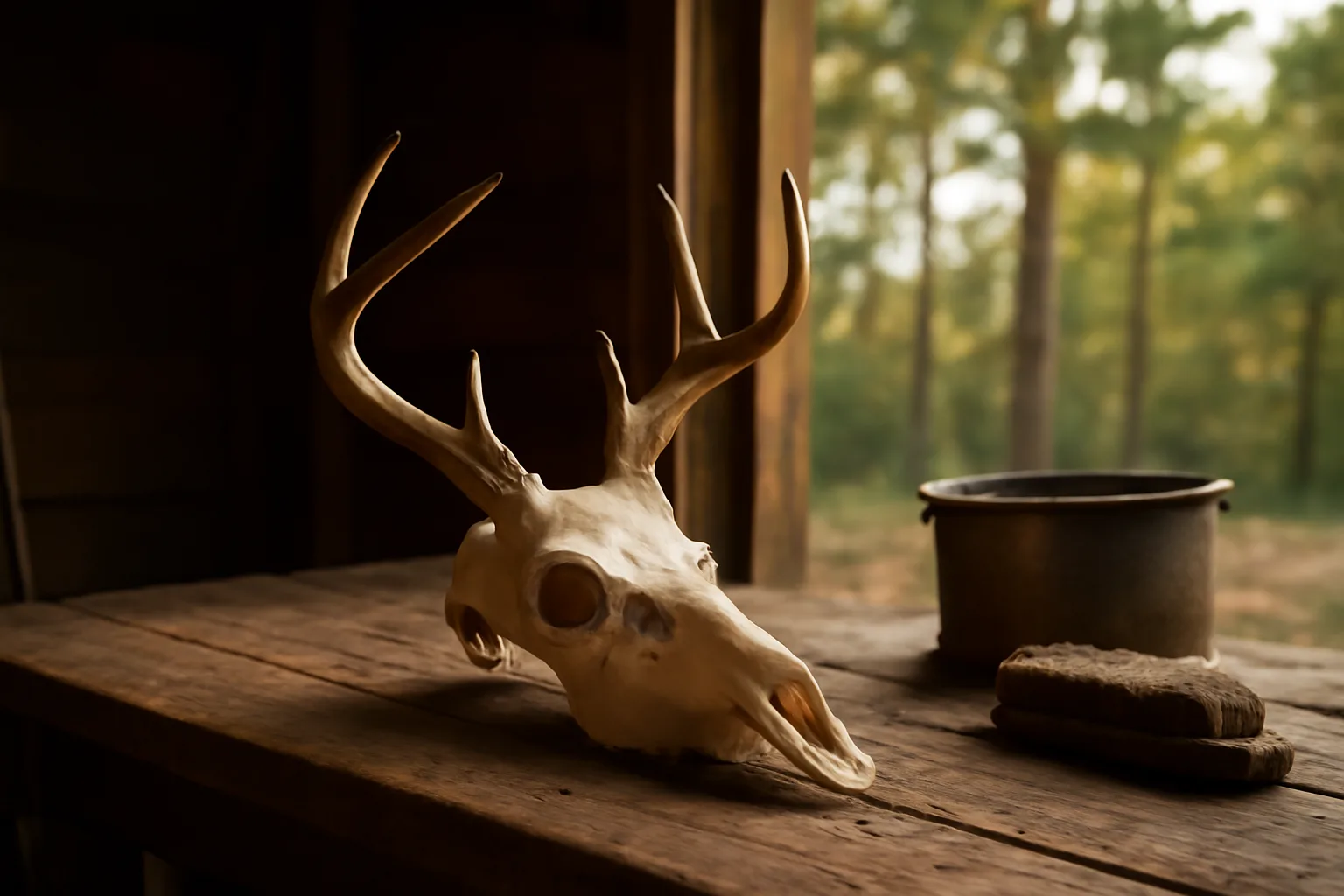
A european mount is a cleaned skull (often whitened) with or without antlers or horns, displayed as the finished piece. In wildlife law it is a wildlife part, not a craft project. Possession still traces back to a lawful take or another legal source.[5][2]
AGFC hunting rules start with the live animal and the tag. They do not write a special chapter titled skull bleach. You inherit whatever possession, transport, and waste rules apply to that species. White-tailed deer are the common case. Elk and black bear exist in Arkansas too, and each has its own season and permit stack. Confirm those pages before you say yes to a non-deer head.[2][13]
I use a simple split at the shop door.
| Work you want to do | Who you ask first | Extra federal paper? |
|---|---|---|
| Personal skull from your own legal deer | AGFC hunting rules and CWD page | Usually no |
| Paid mammal skulls for other people | AGFC taxidermy permit staff | Usually no, unless the species is federally listed |
| Paid migratory bird skulls or whole birds | AGFC and USFWS | Yes, taxidermist permit under 50 CFR Part 21 |
| Buying or selling mounts across state lines | AGFC plus Lacey Act caution | Depends on the species and the paperwork trail |
An animal taken in violation of state law becomes a Lacey Act problem the moment you move it. 16 U.S.C. § 3372 makes it unlawful "to import, export, transport, sell, receive, acquire, or purchase in interstate or foreign commerce" wildlife "taken, possessed, transported, or sold in violation of any law or regulation of any State." That is the statute text, not a blog summary.[5]
Keep the hunter's name, license number, harvest date, and county in a folder. A pretty skull with no origin story is a problem waiting for a warden.
How much does european mount cost in Arkansas?
There is no official Arkansas price list for a european mount. AGFC does not set shop rates. Nobody publishes a statewide survey I trust. Local taxidermists set their own prices, and those quotes move with antler size, condition of the head, and how backed up the shop is.
If you are the customer, call two or three shops and ask for a current deer euro price. Expect variation. A rush on a rotting head costs more because someone has to deal with a mess. A clean cap that was frozen the night of the hunt is cheaper to process. I would not mail a deposit to a stranger who will not give you a written turnaround.
Selling the work yourself? Price the chemicals, the beetle colony (or the propane and the pot), the failure rate, and the time you actually spend scraping. People underprice year one and then hate the work.
License and tax costs are separate from the mount price. AGFC permit fees change. Confirm the current taxidermy permit fee on the AGFC license-fees materials before you build a budget.[14] If you sell finished mounts, ask DFA whether you need a sales and use tax permit.[8]
Skip the expensive degreasing gadget until you have a backlog. Skip custom walnut plaques until you can deliver a clean, grease-free skull. Those are how new people light money on fire.
A starter beetle colony is optional equipment, not a permit. If you want one assembled instead of piecing crates together, the $129 Colony + Ship-In Kit is a simple way to begin. It does not make you legal. The email from AGFC does that.
How long does european mount take in Arkansas?
Arkansas does not set a legal processing time for a european mount. How long it takes is a shop method question, not a board calendar. Confirm any AGFC permit processing time with AGFC. I will not guess their turnaround.[14]
The skull itself runs on a different clock. A simmered, hand-cleaned deer skull can be done in a few days plus drying and whitening time if the head was fresh and you already removed the hide and eyes. Beetle-cleaned skulls often sit with a colony for weeks. A weak colony in a cold garage in January will stall. That is biology, not bureaucracy.
I would tell a hunter 8 to 12 weeks if I were using beetles and I did not know the condition of the head. Then beat that if I can. Promising 10 days on a January whitetail with a brand new colony is how you get angry texts.
Summer heat in the Delta and the Ozarks helps beetles. It also spoils a head sitting in a truck bed. Freeze the head. Do it the day of the hunt if you can. A chest freezer is more useful than a second Facebook ad.
Whitening with hydrogen peroxide needs dry bone and patience. Rush peroxide on a greasy skull and you get a yellow piece that smells in August. NIOSH publishes exposure data for hydrogen peroxide. Read it before you buy high-strength jugs and work in a closed bathroom.[10]
Have employees? OSHA hazard communication (29 CFR 1910.1200) is the rule that makes you label chemicals and train people. A one-person garage is still a bad place to be sloppy with oxidizers.[11]
What CWD rules hit a european mount in Arkansas?
Chronic wasting disease is in Arkansas. AGFC posts current CWD management zones and carcass movement rules. Those rules change. Read the current CWD page before you haul a whole head across a zone line or across a state line.[1]
CWD is a prion disease of cervids (deer, elk, moose). The USGS National Wildlife Health Center tracks it as a fatal neurologic disease of those animals.[7] CDC says, "To date, there have been no reported cases of CWD infection in people." That sentence is from CDC, not a hunting forum. CDC still tells hunters to take simple handling precautions around brain and spinal tissue.[3][12]
For a european mount, the practical hit is the head and the brain. Many state CWD rules restrict moving whole carcasses or intact heads out of a zone, and they often still allow a cleaned skull or a skull plate once brain tissue is gone. I am not going to reprint last year's allowed-parts list. Confirm this year's list on the AGFC CWD page.[1]
USDA APHIS runs the federal CWD program for farmed cervids. If your deer came from a pen, you are in a different paper world than a wild Ozark whitetail. Do not assume a ranch skull is simpler.[4]
I would not accept a mystery head from out of state without asking where it died and what that state's export rules say. Then I would check Arkansas import rules. Then I would decide if I even want the job. A cheap mount is not worth a possession case.
Gloves. No lunch on the same table. Do not use the kitchen oven. That is not folklore. It is basic hygiene around neural tissue.[12]
When do migratory bird rules change the paper?
Deer, elk, bear, and hog skulls do not need a USFWS taxidermist permit. Ducks, geese, doves, and other migratory birds can. 50 CFR Part 21 is the federal migratory bird permit chapter. USFWS uses a taxidermist permit when you perform taxidermy services on migratory birds for another person.[6]
If you only do whitetail euros, you can ignore this section, once you confirm you will never add ducks in November. Scope creep is how people trip federal paper.
Bald and golden eagles are not a side hustle. Do not touch them. Feather and parts rules are their own statute stack. I will not walk you through a workaround because there is not a clean one for a garage shop.
Decide birds are part of the business, and you need the current USFWS taxidermist application plus a call to AGFC about whether they want a state taxidermy permit at the same time. Two agencies. Two files. No approval timeline from me.[6][14]
Interstate movement of legally taken mammal skulls is mostly a state CWD and tagging problem plus the Lacey Act honesty test. Birds add the Migratory Bird Treaty Act permit stack. Read Part 21. Do not rely on a Facebook quote of Part 21.[5][6]
If I charge for european mounts, what other Arkansas paper shows up?
Once money appears, you have a small business, even if it still lives in a lean-to. AGFC is still the wildlife paper. DFA is the tax paper if you make taxable sales. The Secretary of State's Business and Commercial Services office is the entity paper if you form an LLC or corporation.[8][9][14]
I would not form an LLC on night one. A sole proprietor can ask AGFC and DFA the real questions first. An LLC is useful later for banking and liability hygiene. It is not a hunting license and it does not wash an illegal deer.
Sales tax is fact-specific. Selling a finished plaque-mounted skull looks like selling tangible personal property. Charging only for a service can be treated differently. I am not your tax preparer. Use the DFA sales and use tax pages and, once the dollar numbers get real, a CPA who has actually filed Arkansas returns.[8]
City and county privilege licenses still exist in parts of Arkansas. Call the city clerk if you are inside city limits. Zoning can block a beetle room next to a subdivision if you generate odor complaints. That fight is local. There is no state euro mount variance.
Insurance is optional until the day it is not. A cheap general liability policy is more useful than vinyl wrap on a truck. I would not buy a specialized taxidermy package from the first ad I saw.
Compare the paper stack to other states before you assume Arkansas is unique. The european mount board in Alabama writeup and the european mount board in Georgia guide are useful if you take heads across those lines.
What records should you keep on an Arkansas european mount?
Keep a paper trail that would still make sense two seasons later when a warden asks where the deer came from. Name of the hunter. Phone. Harvest date. County. Species. Sex. Tag or confirmation number. What you received (whole head, skinned cap, already boiled mess). What you returned. What you charged.[2][5]
Take a photo of the tag with the skull on day one. Tags get lost in freezers.
If AGFC requires a taxidermist record book or a specific retention period, use their format. Confirm that. Do not invent your own codes and then claim you were close enough.[13][14]
CWD zone origin matters. Write the county. If the hunter shrugs, you can decline the job.[1]
For beetles, keep a simple log of what went into which bin. Cross-contamination stories are how people lose a whole colony to a chemical wipe they forgot about.
I would keep records longer than feels convenient. A binder is cheap. A missing tag story is not.
Hire help later and those records also support wage and chemical training files under OSHA's hazard communication rule.[11]
Can you ship a skull or dermestid beetles into or out of Arkansas?
You can often ship a cleaned, legally taken mammal skull, but often is doing a lot of work. The origin state may restrict raw heads because of CWD. The destination state may restrict inbound carcass parts. Arkansas posts its own CWD movement rules. Read those first. Then read the other state's rules. Then look at the carrier's dead-animal policy.[1][4]
The Lacey Act is the federal backstop. If the deer was taken illegally, shipping it does not fix that. It can make it worse.[5]
Live dermestid beetles are sold openly in the U.S. I have not found an Arkansas statute that singles out Dermestes maculatus as a prohibited insect for a home colony. That is not the same thing as a permit to import freight containers of live insects as a dealer. If you start reselling beetles, ask the Arkansas Department of Agriculture whether they want a conversation. Confirm it. Do not treat my gap in the code as a blessing.
Freeze heads overnight before they go to a colony if you are worried about maggots. That is shop practice, not a statute.
Other states run their own wildlife agencies. If your hunter is coming from Florida, Illinois, or Colorado, make them show the harvest paper and the CWD export rules from that state. Idaho and Arizona hunters show up in Arkansas camps too. Same ask.
What would you actually do in year one in Arkansas?
I would pick one species. White-tailed deer. I would email AGFC a short description: personal skulls only, or paid skulls for other hunters, mammals only, no birds. I would wait for the reply. I would not print business cards in the meantime.
I would read the current CWD zone map the same week.[1]
I would get a chest freezer, a hose, gloves, and a peroxide plan I can do outside. I would not lease a retail bay. I would not hire a branding agency.
If I planned to take money, I would file whatever AGFC taxidermy paper they specify, then ask DFA about sales tax. I would skip the LLC until I had a reason.[8][9][14]
I would quote long turnaround times. I would refuse rotten, untagged, or out-of-zone mystery heads.
I would not promise same-week euros during gun season. That is how you ruin both the bone and your name.
Near the end of year one I would look at whether birds or capes are even worth the extra federal paper. Most small skull-only people should stay skull-only.
A european mount arkansas shop that only does whitetail still has to get the commercial question right. Everything else is equipment.
Want a kit path for the colony after the legal questions are answered? Start at /start. This publication is independent. It is not a law firm and not a taxidermy shop. Confirm every fee and form with the agency that issues it.
How do I confirm the current Arkansas rules without tribal knowledge?
Call AGFC. Use the contact path on their hunting regulations and license pages. Write down the date, the person's name, and what you asked. Follow with an email so you have text.[13][14][2]
Read the current hunting regulations and the CWD page in the same sitting. Rules move after Commission meetings. A printed page from 2022 is how people cite dead law.[1][13]
If birds are in scope, read 50 CFR Part 21 yourself.[6]
If you sell, read DFA's sales and use tax permit material.[8]
If you form an entity, use the Secretary of State's Business and Commercial Services forms, not a random national filing mill that does not know Arkansas.[9]
That is the whole board path. Wildlife agency, tax agency, optional entity filing, local zoning if you have neighbors. Confirm each piece. Nobody on the internet can pre-approve your shop.
Frequently asked questions
Do you need a license for european mount in Arkansas?
If you only clean a deer you legally killed, you typically need the hunting license and tag you already used, plus current CWD transport rules. If you mount wildlife for other people, treat it as taxidermy and confirm the current AGFC permit. Bird work can add a USFWS taxidermist permit. Confirm before you take money.
How much does european mount cost in Arkansas?
No state price list exists. Shops set their own rates. Call local taxidermists for a current deer euro quote. Permit fees are separate and change. Confirm AGFC and DFA costs with those agencies. Do not budget from a Facebook comment or an old forum thread.
How long does european mount take in Arkansas?
No legal processing clock exists for the skull itself. Beetle cleaning often takes weeks. A careful simmer and hand finish can take days plus drying. Quote conservatively. AGFC permit processing time is an agency fact. Confirm it with them. I will not guess it.
Is a european mount considered taxidermy in Arkansas?
Preserving a wildlife part for another person is the activity wildlife agencies treat as taxidermy. A bleached skull is still a wildlife part. Saying you do not do capes does not automatically exempt you. Ask AGFC for the current definition and permit trigger before you advertise.
Can I do free euro mounts for friends?
Maybe, maybe not. Some rules key off work for another person, not the fee. I have not seen a plain-language AGFC memo that blesses free neighbor work. Email AGFC with the exact fact pattern. Do not take everyone does it as the answer.
Do I need a federal permit for a deer skull?
Usually no. White-tailed deer are not migratory birds. USFWS taxidermist permits under 50 CFR Part 21 target migratory bird taxidermy for others. Eagles are off limits. If the species is federally listed, stop and get species-specific advice from USFWS.
Can I bring a deer head into Arkansas from another state?
Only if both states allow that movement under current CWD and carcass rules. Many states restrict whole heads and brain tissue. Check the origin state, then AGFC's current CWD page, then decide if you want the job. Untagged or mystery heads are a hard no.
Are dermestid beetles legal to keep in Arkansas?
They are widely sold, and I have not found an Arkansas ban on a small Dermestes colony for skull work. Reselling live insects may be a different conversation with the Arkansas Department of Agriculture. Confirm if you go commercial on beetles. Keep them contained.
Do I need a sales tax permit to sell euro mounts?
If you sell finished mounts, you may be making taxable sales of tangible personal property. DFA issues sales and use tax permits. Service-only billing can be treated differently. Confirm taxability with DFA. This is not tax advice and fees change.
What about elk or black bear skulls?
Arkansas has limited elk hunting and a bear season. Those animals have their own tags and possession rules. A paid mount still raises the same taxidermy permit question. Elk also sit inside CWD rules. Confirm species rules on the current AGFC hunting pages before you take the head.
Does an LLC replace a taxidermy permit?
No. An LLC is an entity filing with the Arkansas Secretary of State. It does not authorize possession of wildlife or mounting for the public. Get the AGFC answer first. Form an entity later if you have a real banking or liability reason.
Who do I call to confirm the current permit?
AGFC for wildlife and taxidermy. USFWS for migratory birds. DFA for sales tax. Secretary of State for an LLC. Your city clerk for privilege licenses and zoning. Get names and dates. Follow with email. Do not rely on a Facebook admin.
Can I dump boil water or maceration water in a ditch?
Do not dump greasy, rotting water into a creek or storm drain. That is how you get a complaint and a mess. Ask the city how they want slaughter-type waste handled. Keep it off the neighbor's fence line. A cheap disposal plan beats a health complaint.
Sources
- Arkansas Game and Fish Commission, Deer hunting: White-tailed deer harvest, seasons, and related hunting rules are set and published by AGFC.
- CDC, About Chronic Wasting Disease: CDC states there have been no reported cases of CWD infection in people.
- 16 U.S.C. § 3372, Lacey Act prohibited acts: The Lacey Act makes it unlawful to transport, sell, receive, acquire, or purchase in interstate commerce wildlife taken in violation of state law.
- 50 CFR Part 21, Migratory Bird Permits: Federal migratory bird permit rules, including taxidermy services on migratory birds for another person, are in 50 CFR Part 21.
- USGS National Wildlife Health Center, Chronic Wasting Disease: USGS describes CWD as a fatal neurologic prion disease of cervids.
- Arkansas Department of Finance and Administration, Sales and Use Tax: DFA administers Arkansas sales and use tax and the related permit process for sellers.
- Arkansas Secretary of State, Business and Commercial Services: Arkansas business entity filings such as LLCs are handled by the Secretary of State's Business and Commercial Services office.
- NIOSH Pocket Guide, Hydrogen peroxide: NIOSH publishes occupational exposure data and handling information for hydrogen peroxide used in skull whitening.
- OSHA, 29 CFR 1910.1200 Hazard Communication: Employers must classify chemicals, label them, and train workers under the OSHA hazard communication standard.
- CDC, CWD prevention: CDC publishes hunter and carcass-handling precautions related to CWD, including care around brain and spinal tissue.