Last updated 2026-08-19
TL;DR
Delaware runs no dedicated european mount board. Clean skulls for money and you still need a state business license from the Division of Revenue, plus you follow DNREC Fish and Wildlife game rules. Migratory birds add a federal taxidermist permit. Fees and wait times shift. Confirm every form with the agency that issues it before you take a customer's deer.
What is the european mount board in Delaware?
Delaware has no board named for european mounts. No skull-cleaning exam in Dover. No plaque that says the State blessed your beetles.
What people mean by european mount board in Delaware is the paper path around a cleaned skull. That path runs through wildlife law. Charge money and it also runs through ordinary business licensing.
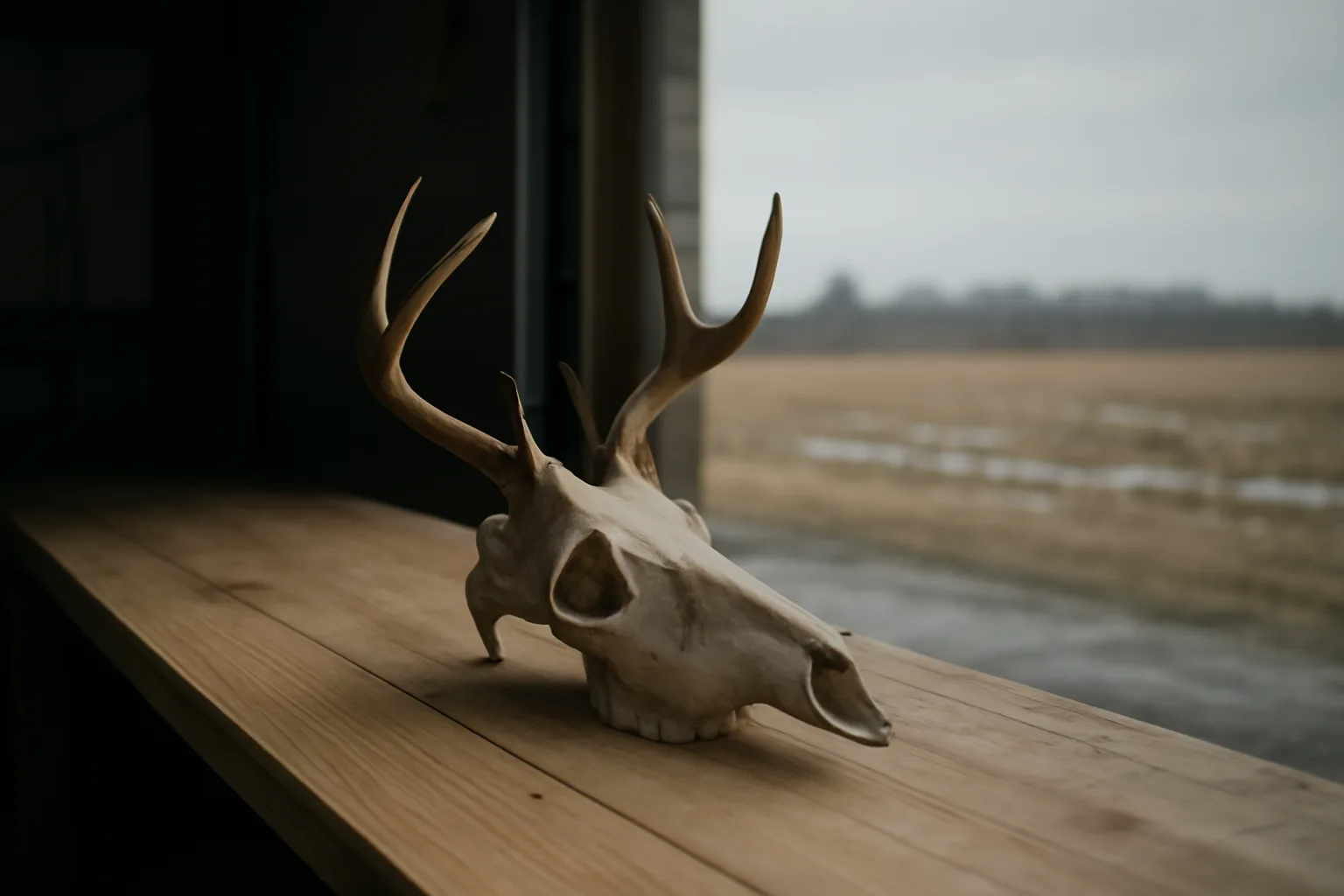
A european mount is a cleaned skull, usually a white-tailed deer, degreased and whitened. It counts as taxidermy work even if you never set a glass eye. DNREC Division of Fish and Wildlife owns the game rules. The Division of Revenue owns the business license. The U.S. Fish and Wildlife Service owns migratory birds. [4][1][8]
Anyone who tells you Delaware runs a special european mount board is mixing this state up with a professional board in another trade. Taxidermy here is not run like cosmetology. You will not sit for a practical test.
Treat "the board" as three inboxes. Wildlife. Revenue. And, if you touch ducks or geese for other people, the feds. Confirm every current form with the agency that issues it. A forum post from 2019 is not a source.
Hunters searching european mount Delaware want two things. A clean skull. A clean story if a warden asks. Keep the harvest legal. Keep the tag story straight. Do not invent a permit you never pulled.
Do you need a license for european mount in Delaware?
Clean your own legally taken Delaware deer at home for free and you generally do not need a taxidermy shop license. You still needed a lawful harvest. Title 7 of the Delaware Code is where hunting licenses live. [14]
Take money, trade work, or hold other people's animals, and the answer changes. Delaware requires a state business license before you conduct business. That is a Division of Revenue filing, not a Fish and Wildlife trophy stamp. [1][3]
Do not open a paid skull list on Facebook and wait to see if anyone cares. Call DNREC Division of Fish and Wildlife and ask, in plain words, whether paid european mount work needs a taxidermist permit, a wildlife possession permit, or only the business license. Wildlife rules sit in 7 DE Admin. Code 3900. Confirm how that chapter is being applied this season. [6][4]
Migratory birds are a different pile of paper. A federal taxidermist permit is required if you mount migratory birds for other people. White-tailed deer are not migratory birds. A deer-only bench does not pull you into that federal permit by itself. Ducks, geese, and most native songbirds do. [7][8]
Personal use is not a loophole for a side hustle. A neighbor pays you $200 and leaves a buck in your garage, and you are in business. File the business license. Ask DNREC the wildlife question. Skip both and you are guessing with someone else's animal.
Nobody outside those agencies can promise you a yes. Fees, form names, and who must file all change. Treat every dollar amount and processing clock as confirm with the relevant office. This page is not a permit.
Which Delaware agencies actually review the paper?
Three offices cover almost every european mount Delaware file. DNREC Division of Fish and Wildlife for game. Division of Revenue for the business license and gross receipts tax. USFWS for migratory birds. Your city or county may add zoning if you run a shop at home. [4][2][8]
There is still no european mount board. You are not waiting on a monthly board vote. You are waiting on clerks, wardens, and, for birds, a federal permit office.
Use this as a working map, then verify each line before you spend money.
| Office | What they actually control | What you confirm |
|---|---|---|
| DNREC Division of Fish and Wildlife | Hunting licenses, game possession, CWD import language | Whether paid skull work needs a wildlife or taxidermist permit |
| Division of Revenue | Business license and gross receipts tax | License class, current fee, filing calendar |
| U.S. Fish and Wildlife Service | Migratory bird taxidermy | Form 3-200-8 if you mount birds for others |
| City or county | Zoning and home occupation | Whether a skull shop is allowed at your address |
Delaware runs a business license plus gross receipts tax, not a general retail sales tax. That surprises people who moved from Maryland or Pennsylvania. Confirm your license class and GRT bracket with Revenue. Do not copy a fee you saw on a blog. [2][1]
Start with Revenue if you already know you will charge customers. Start with DNREC if you only have questions about a tagged deer. Start with USFWS if the bird has feathers.
How much does european mount cost in Delaware?
Delaware publishes no official european mount price list. Shops set their own rates. Nobody has a clean public data series for Sussex, Kent, or New Castle County skull work.
Call shops and ask for a current quote on a typical whitetail skull plate. Expect the number to move with antler size, grease, and whether the cape is involved. I will not invent a statewide average. If a site gives you a single Delaware price as if it came from DNREC, they made it up.
DIY is cheaper in cash and easy to ruin. A strong beetle colony, a bin, and peroxide cost less than a shop ticket. A giant new pressure cooker for one buck is a waste of money. So is cheap household 3 percent peroxide if you expect a show-white skull in an afternoon.
Shop work earns its price if you have never degreased a mature, late-season buck. Grease that stays in the bone weeps for months. That is how people stain a once-in-a-lifetime rack.
Are you the shop? Price the ugly ones higher. Frozen, skinned late, and stored in a garage bag is more work than a fresh winter buck. Your business license and gross receipts filings are a cost too. Confirm those amounts with Revenue. They are not printed here on purpose. [2]
Do not underprice the first year just to get Instagram photos. Beetles, heat, and peroxide still cost real money after the fifth free skull for a buddy.
How long does european mount take in Delaware?
Delaware sets no legal clock for how long a european mount takes. The calendar is biology, weather, and how backed up the person doing the work is.
A hot, well-fed dermestid colony can finish a prepped deer skull in a couple of weeks. A weak colony in a cold garage can just sit there. Simmer and hand-clean methods strip flesh in a day or two, then you still wait on degrease, dry, and whiten. Rush the dry and you trap grease.
Shops quote what their rack of skulls looks like, not what a textbook says. A one-person bench with a day job can take months to start your deer even if the beetles only need weeks. Ask for a start date, not a magic number.
Summer in southern Delaware helps beetles. It also helps odor complaints. Winter slows a garage colony. Do not promise a Christmas delivery in October unless the skull is already in the box.
A seller who guarantees a 10-day european mount on every buck is either boiling too hard or telling you what you want to hear. Walk. Confirm timing with the person holding the bone, not with a state office. DNREC does not run your drying rack. [5]
What records should you keep if you clean skulls for other people?
Keep a paper trail that a warden can read without a speech. Hunter name and phone. Harvest date. Species and sex. County of kill. Hunting license or tag number. Date you took the skull. Date you returned it. How you disposed of tissue.
Title 7 is built around licensed take and lawful possession. The Lacey Act makes it a federal problem to move wildlife taken in violation of state law. Your notebook is how you show the deer was not a road mystery. [14][10]
Photograph the tag with the skull on intake. Phones die. Ink smears. A dated photo is cheap insurance.
Do not take a bag of unmarked heads from a camp and sort it out later. Two bucks get swapped and you own that fight. Someone brings a deer they cannot explain, and you do not need that customer.
Confirm with DNREC whether they want a specific taxidermy log format. Some states do. Delaware's current instruction is a fact you confirm at the Division, not one you guess from a neighboring state. [4][6]
Can you ship a deer skull into Delaware for a european mount?
Sometimes, and the answer sits in chronic wasting disease rules plus ordinary game possession law. Confirm the current carcass and skull import language with DNREC before a box leaves another state. Last year's hunting forum is not the rule. [5][12]
CDC describes CWD as "a prion disease that affects deer, elk, reindeer, sika deer and moose." Brain and spinal tissue are the parts agencies worry about. A plate-cleaned skull is not the same as a whole head with the atlas attached, but Delaware's written rule is what matters, not a general internet summary. [11]
APHIS tracks CWD in cervids at the national level. States still write the import sentences you must follow. If the hunter killed the deer in a CWD-positive jurisdiction, assume extra limits until DNREC says otherwise. [12]
Do not accept an out-of-state whole head on a porch drop. Ask what came off the carcass, where, and whether brain tissue is still on the bone. If the answers get vague, decline.
Shipping a finished, dry european mount back out of Delaware is usually simpler than shipping a fresh head in. Still match the destination state's rules. The Lacey Act does not care that you were trying to help. [10]
Do migratory birds and deer follow the same european mount rules?
No. A white-tailed deer skull is a state game problem. A duck, goose, or most native wild birds is a federal migratory bird problem stacked on top of state law.
The Migratory Bird Treaty Act says, in 16 U.S.C. § 703, that "it shall be unlawful at any time, by any means or in any manner, to pursue, hunt, take, capture, kill" migratory birds except as permitted by regulation. Possession and taxidermy sit inside that same statute family. [9]
USFWS form 3-200-8 is the taxidermist permit application for people who mount migratory birds for others. 50 CFR 21.63 is the rule that permit sits on. A deer-only european mount shop that never touches birds does not grab that permit by accident. Add waterfowl and you do. [8][7]
Do not clean a found hawk "as a favor." Found raptors are a fast way to meet special agents. Same for a songbird from a window strike if you plan to sell the skull.
Deer hunters still need a lawful Delaware tag story. Birds need the federal layer. Do not mix the two files in your head just because both end up white and on a plaque. [14][5]
What does first-year european mount work look like in Delaware?
Quiet, messy, and more paper than people expect. You need a place that can take odor, grease water, and the odd escaped beetle. A townhouse with a shared dumpster is a bad plan. Do not put a colony in an apartment. They walk.
Pull the Division of Revenue business license before you advertise. Ask the county or town about home occupation rules. Then call DNREC and ask the taxidermy question out loud. Write down the name of the person who answered. [1][4]
Want a paper checklist you can hold in your hand? DermestidPath sells a $129 one-time Colony + Ship-In Kit at /start. You do not need it to use this guide. This site is a publisher, not your filer.
First-year waste is the part people skip. Maceration water is not garden fertilizer. Tissue bags do not go in a park trash can. Talk to your hauler. On a septic system, do not treat it like a kill-floor drain.
Keep the first winter small. A few bucks for people you know. Learn degrease on a jaw, not on a 160-inch plate. Buy used tubs. Skip the logo truck.
Gross receipts tax filings sneak up on new operators who came from sales-tax states. Delaware runs no general retail sales tax. It does run GRT. Calendar that with Revenue so January is not a surprise. [2]
What waste and chemical rules hit a skull-cleaning bench?
Peroxide, degreasers, and soak water are not a cute craft mess. OSHA's hazard communication rule at 29 CFR 1910.1200 is the federal baseline if you have employees and hazardous chemicals on the bench. Labels, safety data sheets, and no decanting mystery jugs into soda bottles. [13]
Even as a one-person shop, treat 12 to 40 percent peroxide like it can blind you, because it can. Do not store it next to the coffee.
Flesh and boil water belong in a disposal path you can defend. Do not dump a simmer pot into a roadside ditch. Do not rinse a month of maceration into a storm drain. DNREC is a wildlife agency and an environmental agency. That combination should make you careful. [5]
Beetles need a sealed room or a truly tight box. A colony in an open shed next to a neighbor's hen house is how you get a complaint that has nothing to do with deer season.
Cannot explain where the brain tissue went? Then you are not ready for other people's CWD-sensitive heads. Keep that waste out of the ordinary trash story you tell yourself. [11][12]
How does Delaware compare with other states on european mount paper?
Delaware is small and it skips the theatrical licensing board ritual for skulls. Some larger states run a named taxidermy license with a fee table you can screenshot. Here you start with a general business license and a direct question to Fish and Wildlife. [1][3][4]
Maryland, New Jersey, and Pennsylvania sit closer than any state in our comparison set. Still, the nearest listed Mid-Atlantic writeup is european mount board in Connecticut. Want to see how a big coastal state writes the same problem? Read european mount board in California or european mount board in Florida.
Southern and mountain states split again. european mount board in Georgia, european mount board in Colorado, and european mount board in Illinois help when a customer asks you to match "what my cousin did" in another state. Do not import their form names onto a Delaware deer.
I would rather have Delaware's quieter paper and a phone call than a fake sense of certainty from a laminated out-of-state permit.
What should you confirm with DNREC before you take a customer's deer?
Call and ask five things. Does paid european mount work require a wildlife or taxidermist permit this year. What intake records they want. Current rules for out-of-state cervid parts. Whether a finished skull can move back across the line. Who at the Division answers taxidermy questions after deer season starts. [4][5][6]
Then call Revenue and confirm the business license class and the current fee. Confirm how gross receipts tax applies to a service that returns the same bone the customer walked in with. [1][2]
No one here can promise approval, a quota, or a processing time. A kit or a coach that promises the State will be done in a set number of days is selling comfort.
DermestidPath is an independent publisher, not a law firm and not a service company. Use /start only if you want the optional Colony + Ship-In Kit. The useful version of this page is the part you can take to the phone without buying anything.
Write the answers you get. Date them. If the guidance changes next season, you have a record of what you were told when you took that buck.
Frequently asked questions
Do you need a license for european mount in Delaware?
Personal work on your own legally tagged deer usually does not need a shop license. Paid work does need a Delaware business license from the Division of Revenue. Ask DNREC whether a wildlife or taxidermist permit also applies. Migratory birds need a federal taxidermist permit. Confirm current forms before you take money.
How much does european mount cost in Delaware?
There is no official state price. Shops set their own rates and they move with antler size, grease, and backlog. DIY materials cost less and are easy to botch on a greasy late-season buck. Do not trust a single posted "Delaware average." Call local shops for a current quote and confirm any license fees with Revenue.
How long does european mount take in Delaware?
The State sets no turnaround. A strong beetle colony can finish a prepped deer skull in a couple of weeks. Simmer methods are faster on flesh and slower if you rush degrease. Shop backlog can add months before work starts. Ask the person holding the skull for a start date, not a guarantee.
Can I european mount my own Delaware deer at home?
Yes, if the deer was legally taken and you are not running a quiet business out of the garage. You still follow ordinary possession and waste rules. Neighbors, odor, and peroxide remain your problem. If friends start paying you, treat it as commercial work and file the business license.
Do I need a federal permit for a white-tailed deer skull?
No. White-tailed deer are not migratory birds. The USFWS taxidermist permit (form 3-200-8, 50 CFR 21.63) is for migratory birds mounted for other people. A deer-only bench stays with Delaware game rules and, if you charge, the state business license.
Can I bring a Pennsylvania or Maryland deer head into Delaware?
Only if DNREC's current cervid import and CWD rules allow that form of the carcass. Whole heads with brain tissue are treated more strictly than a cleaned plate in many states. Confirm the written Delaware language before the head moves. Do not rely on last season's camp advice.
Do I charge sales tax on a european mount in Delaware?
Delaware has no general retail sales tax. Businesses file a business license and may owe gross receipts tax. How GRT hits a taxidermy service is a Revenue question, not a guess from a sales-tax state. Confirm your class and filing calendar with the Division of Revenue.
Does a european mount count as taxidermy in Delaware?
Treat it as taxidermy work. You are processing a game animal for display. Whether DNREC uses the word taxidermist on a permit is the question you ask them. Do not hide behind "I only clean bone" if you take customer animals and return a finished skull.
What if european mount work is only a weekend side hustle?
Revenue still sees a business if you conduct business in the state. A weekend schedule does not erase the license. DNREC still cares how you got the deer. Keep records. File. Side hustle is a calendar, not a legal category.
Are dermestid beetles legal to keep in Delaware?
A common hide-beetle colony used for skull work is widely kept, but interstate movement of live insects can pick up agricultural rules. Confirm with the Delaware Department of Agriculture if you are shipping a colony in or out. Keep the box sealed so the legal question never turns into a neighbor complaint.
Who do I call to confirm current european mount rules?
DNREC Division of Fish and Wildlife for game, tags, CWD import, and any wildlife permit. Division of Revenue for the business license and gross receipts tax. USFWS for migratory bird taxidermy. Your town for zoning. Ask for names and dates. Do not treat this article as a permit decision.
Can I pour skull boil water into the yard or a storm drain?
Do not. Grease, tissue, and peroxide do not belong in a ditch or a septic surprise. Use a disposal path you can explain. If you have employees and chemical jugs, OSHA hazard communication is the federal floor. A backyard dump is how a small bench becomes an environmental complaint.
Sources
- Delaware Division of Revenue, Business License and Gross Receipts Tax: Delaware businesses file under the business license and gross receipts tax system rather than a general retail sales tax.
- Delaware Code Title 30, Chapter 23 (Business and Occupational Licenses): Title 30, Chapter 23 is the statutory home of Delaware occupational and business license requirements.
- DNREC Division of Fish and Wildlife, Licenses: DNREC Division of Fish and Wildlife issues Delaware hunting and wildlife licenses and is the office that confirms wildlife permit questions.
- DNREC Division of Fish and Wildlife, Hunting: Deer hunting, carcass handling, and related season rules are administered on DNREC's hunting pages.
- 7 Delaware Administrative Code 3900, Wildlife: 7 DE Admin. Code 3900 is Delaware's wildlife administrative regulation chapter.
- eCFR, 50 CFR 21.63 Taxidermist permits: Federal taxidermist permits for migratory birds are set out at 50 CFR 21.63.
- U.S. House Office of the Law Revision Counsel, 16 U.S.C. § 703: The Migratory Bird Treaty Act makes unauthorized take and possession of migratory birds unlawful except as permitted by regulation.
- U.S. House Office of the Law Revision Counsel, 16 U.S.C. § 3372 (Lacey Act): The Lacey Act prohibits trafficking in wildlife taken, possessed, transported, or sold in violation of state or federal law.
- CDC, About Chronic Wasting Disease: CDC states that chronic wasting disease is a prion disease that affects deer, elk, reindeer, sika deer and moose.
- OSHA, 29 CFR 1910.1200 Hazard Communication: Employers with hazardous chemicals must follow OSHA hazard communication requirements, including labels and safety data sheets.
- Delaware Code Title 7, Chapter 5 (Licenses): Title 7, Chapter 5 of the Delaware Code is the statutory chapter for hunting and related wildlife licenses.