Last updated 2026-08-17
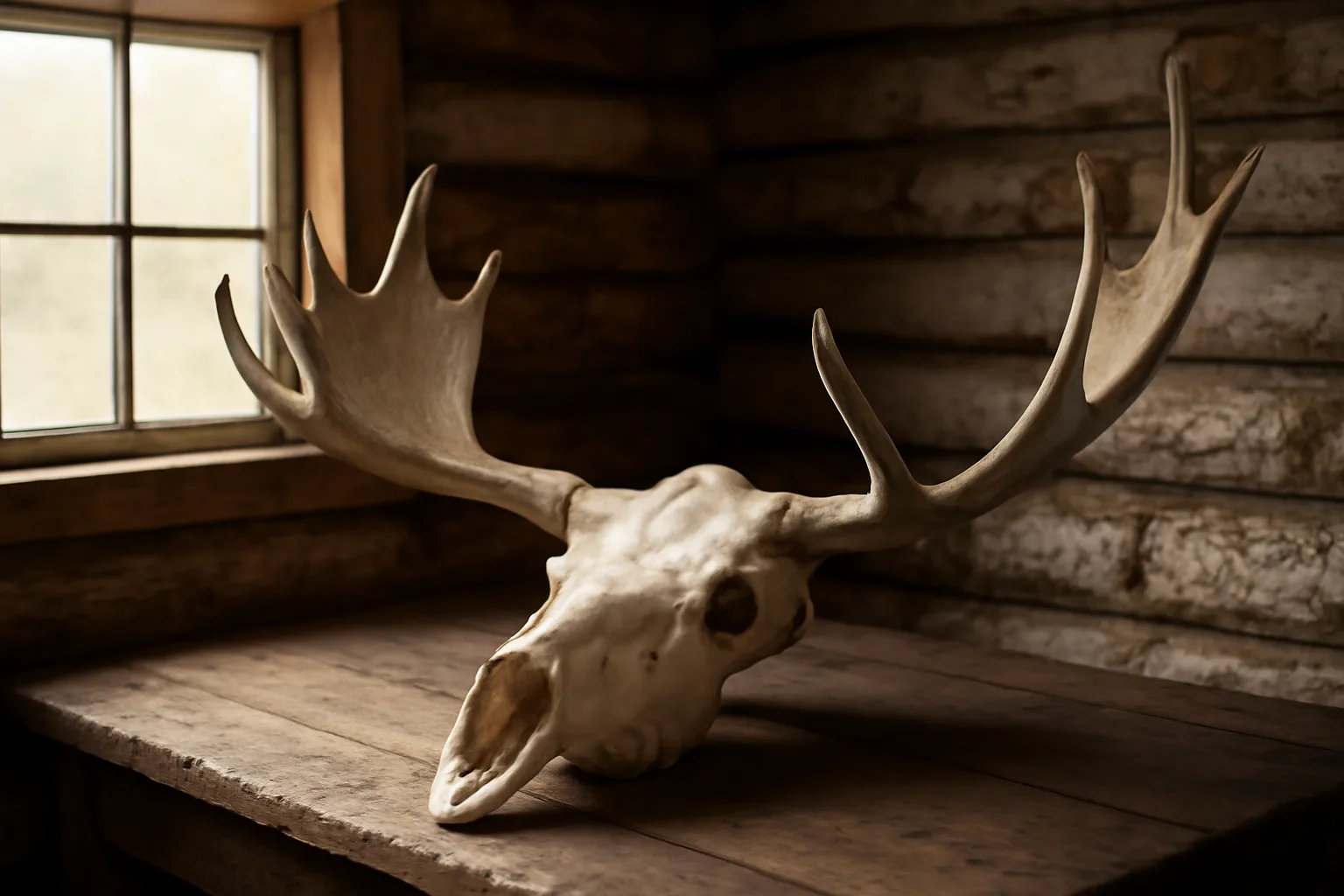
TL;DR
Alaska requires a taxidermy license to prepare european mounts commercially. The license runs $100 for residents and $200 for nonresidents on a two-year term, per the state's published fee schedule. Solo hobbyists cleaning only their own skulls are generally exempt. Charge a fee and you need the license. Confirm current amounts with the state before applying.
Do you need a license for european mount in alaska?
Yes, if you're charging clients. Alaska Statute AS 08.54 governs the practice of taxidermy, and the Alaska Department of Commerce, Community, and Economic Development (DCCED) licenses taxidermists under that statute. [1] Preparing a european mount for compensation, even informally, puts you inside the state's definition of practicing taxidermy.
Sell a service, get a license first.
If you're boiling and bleaching skulls only from animals you personally harvested, for your own wall, you generally don't need a license. That exemption disappears the moment someone hands you a skull and hands you money. The state gives that gray zone very little sympathy when an audit happens.
Alaska stacks wildlife possession and transport rules on top of the taxidermy question. Brown bear, Dall sheep, wolverine, and other species require sealed or tagged parts under ADF&G regulations. [2] Your taxidermy license doesn't replace those tagging requirements. Both obligations run at the same time. If a client brings you a brown bear skull with no documentation, your exposure under AS 16.05.330 is real, even with a current taxidermy license. [3]
One license to practice, plus separate compliance for regulated species. The taxidermy license is the easier of the two to get.
How do you actually apply for an alaska taxidermy license?
Applications go through the Alaska Division of Corporations, Business and Professional Licensing (CBPL), which sits inside DCCED. [1] You fill out the state taxidermy license application, pay the fee, and the license issues for a two-year term.
Alaska asks for no formal apprenticeship, no written exam, and no proof of training. That's genuinely different from states like California or Arizona, which build in more structure. Alaska's bar is simple: apply, pay, comply with the statute. [1] You still have to follow every ADF&G possession, tagging, and transport rule once you're operating, but CBPL doesn't quiz you on those before it issues the license.
Here's what to gather before you start:
- Legal business name and address (P.O. boxes usually work for mailing, but a physical address may be needed for the license record)
- Social Security Number or FEIN, depending on your structure
- Payment for the license fee
- Any municipality or borough business license, because some Alaskan municipalities require one separately
Processing times aren't posted as a fixed number on the CBPL site, and they move with application volume. Paper applications from rural Alaska tend to run longer than online submissions. Confirm current timing with CBPL before you promise a client a delivery date.
If you're comparing state paths, the european mount license in arizona guide covers a state with an actual exam requirement, which makes a useful contrast.
How much does european mount cost in alaska?
Two cost questions hide inside this one: what the state license costs, and what the service costs a client.
On the license side, the Alaska CBPL fee schedule lists taxidermy licenses at $100 for residents and $200 for nonresidents, renewable every two years. [1] Annualized, that's $50 or $100 a year just to hold the credential. Confirm with CBPL before you apply, because fee schedules do get updated between legislative sessions.
Service pricing is murkier. Nobody has clean public data on Alaska specifically. The closest figures come from national taxidermy association pricing surveys and regional trade discussion. A skull-only european mount (boil, degrease, whiten) for a moose runs roughly $150 to $350 in northern and western states with cost structures like Alaska's. [5] Caribou and Dall sheep sit in a similar or slightly lower band because the skulls are smaller. Brown bear skulls price higher, $250 to $400 or more, partly for the extra time and partly for the documentation work a licensed taxidermist has to keep on that species.
Alaska's remoteness adds cost pressure other states don't have. Shipping a skull from the field to your shop can add $50 to $150 or more depending on origin. In a ship-in model, that freight either lands on the client or eats your margin. Price accordingly.
For new operators sorting out startup costs, the DermestidPath Colony + Ship-In Kit ($129 one-time) is one structured way to get a beetle colony and shipping workflow going without buying parts piecemeal. That's an operations cost, not a licensing cost. Keep the license fee and the equipment cost on separate budget lines.
How long does european mount take in alaska?
The cleaning method drives the timeline more than geography does, though a few Alaska variables matter.
For dermestid beetle cleaning, the most common method for commercial european mount work, a moose skull typically takes 5 to 14 days from fresh receipt to clean bone. Caribou and Dall sheep can come in under a week with a healthy colony. Brown bear takes longer, sometimes 2 to 3 weeks, because of cartilage volume and oil in the bone. These are practical ranges, not promises. A fresh skull versus a frozen-then-thawed one, colony health, and room temperature all move the number.
Anchorage shops running beetles indoors in a heated space work on roughly the same timelines as shops in the lower 48. Rural operators in spaces that aren't well heated in winter see slower activity below 70 degrees F. Dermestid beetles slow sharply under 65 degrees F and stop working productively below 60 degrees F. [6] If your Fairbanks or Kodiak shop isn't climate-controlled, winter work needs either supplemental heat or a plan to pause.
Maceration (water-soaking) costs less to set up but runs slower: 2 to 6 weeks for most ungulate skulls, and the smell in a small Alaska shop in summer is its own problem. Simmering is faster, 4 to 8 hours for a caribou skull, but it risks cracking fine bone around the nose and orbital area if you lose control of temperature.
Whitening with hydrogen peroxide (the right method, not bleach) adds 1 to 3 days depending on concentration and sun exposure. Bleach is tempting because it's cheap and sits on every Alaska hardware shelf, but it degrades bone over time and leaves the mount brittle. Build a commercial operation on peroxide from day one and you protect your reputation.
Client-facing turnaround, skull receipt to shipping back, is typically 2 to 4 weeks for most species under normal conditions.
What wildlife documentation rules apply to alaska european mounts?
This is where Alaska splits hardest from the lower 48, and where new operators make expensive mistakes.
ADF&G requires that certain big game animals be sealed or tagged before any part, the skull included, can be transferred to or possessed by anyone other than the hunter. Brown bear, black bear, Dall sheep, and a handful of others fall under mandatory sealing or export permit rules. [2] [3] As a licensed taxidermist taking these species from clients, you have to verify the animal was properly sealed or that the required documentation rides along with the skull.
Alaska Statute AS 16.05.330 makes it illegal to possess, transport, or sell wildlife or parts taken in violation of state law. [3] Your taxidermy license grants no exemption if the animal your client brought was improperly documented. Safest practice: require a copy of the client's ADF&G seal record or export permit before you accept a skull.
Nonresident clients add a layer. Federal export from Alaska for certain species may require documentation under the Lacey Act. [7] If a nonresident wants their finished mount shipped out of state, confirm whether that species needs anything beyond the standard taxidermy receipt.
For species off the mandatory sealing list, like most caribou taken in a unit without sealing rules, you still want a legible tag or the hunter's license number with the skull. Document every intake. A simple sheet with the client's name, license number, species, unit of harvest, and date is your paper defense if an ADF&G wildlife trooper comes through.
Do alaska taxidermy licenses cover federal land or migratory species?
Your Alaska state taxidermy license covers state-regulated species taken under state jurisdiction. It doesn't stand in for federal permits when federal species are in play.
Marine mammals are the clearest case. Alaska has long-standing provisions around indigenous harvest of marine mammals, but a commercial taxidermist working marine mammal parts generally needs a permit under the Marine Mammal Protection Act. [8] That's a federal matter run by NOAA Fisheries and the U.S. Fish and Wildlife Service, not the Alaska CBPL.
Migratory birds, waterfowl included, fall under the Migratory Bird Treaty Act and require a federal permit from USFWS to possess or work with parts. [9] If a client brings you a ptarmigan skull (ptarmigan are taken under federal migratory bird rules in Alaska), that's a federal permit question more than a state license one.
Bald and golden eagles are fully off-limits for commercial taxidermy regardless of cause of death, under the Bald and Golden Eagle Protection Act. [10] Don't accept eagle work.
For conventional big game european mounts (moose, caribou, Dall sheep, mountain goat, black bear, brown bear) your state taxidermy license is the primary credential. Federal jurisdiction is largely limited to import/export and the species exceptions above.
How does alaska taxidermy licensing compare to neighboring states?
Alaska sits in a middle tier nationally. It requires a license with a real fee, but it doesn't demand an exam or apprenticeship hours the way some states do.
| State | License Required | Exam Required | Resident Fee (approx.) | Term |
|---|---|---|---|---|
| Alaska | Yes | No | $100 | 2 years |
| Arizona | Yes | Yes | $50 | 2 years |
| Alabama | Yes | No | $50 | 1 year |
| Arkansas | Yes | No | $50 | 1 year |
| Colorado | Yes | No | $50 | 2 years |
Sources: state CBPL/wildlife agencies, fee schedules current as of publication. Confirm all fees with the relevant board before applying. [1]
Alaska's nonresident fee is double the resident fee, which tracks its broader licensing pattern. If you're thinking about operating remotely across state lines, that gap matters.
For a side-by-side look at how neighboring states handle licensing, the european mount license in arizona and european mount license in colorado guides cover two states with meaningfully different structures.
What does a basic alaska european mount business setup actually cost?
Real numbers on a minimal legitimate operation, not a fantasy business plan.
State taxidermy license: $100 resident, renewed every two years. Annualized, $50 a year.
Municipality business license: Anchorage requires a business license for commercial operations. Check the municipality of Anchorage or your local borough for the current fee, and treat it as a separate credential from the state license. [11]
Equipment is its own line, either a dermestid colony or a maceration setup. A beetle colony with a proper enclosure runs $200 to $600 depending on supplier and colony size. That's a one-time cost that spreads over years of use.
Hydrogen peroxide for whitening: a gallon of 12% developer-grade runs $15 to $30 at beauty supply stores. A quart goes a long way on a single skull.
Shipping supplies for a ship-in model: boxes, packing material, and prepaid return labels add $15 to $30 per job depending on skull size.
Total paper and setup cost to be legal and minimally equipped in year one lands around $400 to $900, not counting a beetle colony if you go that route. That's a real entry cost, not a number someone invented.
If you form an LLC instead of running as a sole proprietor, add Alaska's LLC formation fee ($250 as of the most recent CBPL schedule) and annual fees. [12] The LLC is worth the cost for liability separation once you're handling client-owned specimens regularly.
How do you find alaska taxidermy clients if you're just starting out?
Alaska's hunting culture does most of the marketing for you if you show up in the right places. Three things actually work: getting listed in any regional taxidermist directory, showing work at sportsmen's shows, and staying active in hunt-planning forums where out-of-state hunters research their Alaska trips.
Out-of-state hunters make up a large share of Alaska's big game harvest. Roughly 28,000 nonresident hunting licenses are issued in Alaska each year, and those hunters tend to have both the disposable income and the desire to mount their animals. [13] Nobody flies home and throws a Dall sheep or brown bear skull in the trash. Being reachable and licensed is your edge over the unlicensed crowd.
For a ship-in model where you take skulls from clients outside your region, a clear intake process, documented species verification, and reliable return shipping separate the operators who get repeat referrals from the ones who collect one-star reviews.
The how to start european mount in alaska guide covers the operational side in more depth, including equipment decisions and pricing for the Alaska market.
What are the most common compliance mistakes new alaska taxidermists make?
The biggest one is accepting a skull without proper documentation. An ADF&G wildlife trooper doesn't need a warrant to inspect a licensed taxidermist's shop; the agency has inspection authority under AS 16.05.150. [3] An unsealed brown bear skull with no intake paper is a problem you created, not your client.
Second most common: letting the license lapse and working anyway. Alaska's two-year renewal cycle needs a calendar reminder, not a mental note. Practicing taxidermy without a current license violates AS 08.54 and can bring revocation on top of the initial penalty.
Third: treating whitening agents carelessly. Household bleach (sodium hypochlorite) eats the protein matrix in bone and leaves mounts brittle within a few years. Clients come back angry. The professional standard is hydrogen peroxide, 3% to 12%, with UV exposure to activate whitening. That's not a regulatory issue; it's a quality issue that becomes a reputation issue.
Fourth: no written client intake form. If a client disputes the species delivered, the condition of the skull, or the services agreed to, your intake form is the defense. It doesn't need to read like a contract. It needs to be consistent and dated.
For operators eyeing other states, the european mount license in alabama and european mount license in arkansas guides walk through two states with simple license paths, useful if you're deciding where to add capacity.
Frequently asked questions
Do you need a license for european mount in alaska?
Yes, if you're doing it commercially. Alaska requires a taxidermy license under AS 08.54 from the Division of Corporations, Business and Professional Licensing (CBPL) to prepare european mounts for compensation. Hobbyists working only on their own animals generally don't need one, but the moment you charge a fee, you need the credential. Confirm current requirements with CBPL before operating.
How much does an alaska taxidermy license cost?
The published CBPL fee schedule lists the taxidermy license at $100 for Alaska residents and $200 for nonresidents, valid for two years. That annualizes to $50 or $100 a year for the credential alone. Fees can change between legislative sessions, so confirm the current amount directly with CBPL before you apply.
How long does a european mount take in alaska?
For dermestid beetle cleaning, most ungulate skulls (moose, caribou, Dall sheep) are clean in 5 to 14 days. Brown bear takes longer, sometimes 2 to 3 weeks, because of bone oil content. Add 1 to 3 days for hydrogen peroxide whitening. Total client turnaround from skull receipt to finished mount is typically 2 to 4 weeks under normal conditions.
Does alaska require an exam to get a taxidermy license?
No. Alaska requires no written exam and no apprenticeship hours for taxidermy licensure, unlike states such as Arizona. You submit the application, pay the fee, and meet the basic statutory requirements. The application goes through the Alaska Division of Corporations, Business and Professional Licensing. Requirements can change, so confirm the current process with CBPL.
What wildlife documentation do I need from clients before accepting a skull in alaska?
For mandatory-sealing species like brown bear and Dall sheep, verify that ADF&G has sealed the animal or that a proper export permit accompanies it. For other species, ask for the client's hunting license number and harvest tag. Document every intake. AS 16.05.330 holds taxidermists liable for possessing improperly documented wildlife parts.
Can I do european mounts in alaska as a sole proprietor or do I need an LLC?
Both structures are legal. A sole proprietor can hold a taxidermy license in Alaska. An LLC gives you personal liability separation for client disputes over specimen damage or documentation issues, which matters when you're regularly handling other people's trophies. Alaska LLC formation costs $250 plus annual fees. The decision depends on your risk tolerance and volume of work.
Are there federal permits I need beyond the alaska state taxidermy license?
For standard big game european mounts (moose, caribou, bear), your state license is the primary credential. Federal permits come into play for marine mammals (Marine Mammal Protection Act), migratory birds (Migratory Bird Treaty Act), and anything involving import or export across international borders. Bald and golden eagles are fully off-limits for commercial taxidermy under federal law regardless of circumstances.
Can out-of-state hunters ship skulls to me for european mount work in alaska?
Yes, if the animal was legally harvested in Alaska and properly documented. You'll still need intake documentation showing the species, harvest unit, and hunter's license. For mandatory-sealing species, the seal or export permit must accompany the skull. Out-of-state hunters represent a large share of Alaska's big game harvest, so ship-in work can be a real business model here.
How much should I charge for a european mount in alaska?
There's no published Alaska-specific pricing index. Based on regional comparables, moose skulls typically run $150 to $350, caribou and Dall sheep in a similar range, and brown bear skulls $250 to $400 or more due to processing time and documentation work. Alaska's remote shipping costs also tend to push prices higher than lower-48 averages. Price to cover your actual time and materials.
Do alaska taxidermy regulations cover dermestid beetle operations specifically?
Alaska taxidermy law under AS 08.54 covers the practice broadly; it doesn't specify cleaning method. You can legally use dermestid beetles, maceration, or simmering as long as you hold the required license and follow any waste and biosecurity practices your local municipality requires. Some boroughs have rules on disposal of biological waste. Confirm local requirements with your borough.
How does alaska's taxidermy license renewal work?
The license is valid for two years. CBPL should send renewal notices, but don't rely on that. Mark your expiration date when you receive the license and start renewal before it lapses. Practicing after the license expires violates AS 08.54. Renewal fees are typically the same as initial fees; confirm the current amount with CBPL at renewal time.
What happens if I do european mount work in alaska without a license?
Unlicensed commercial taxidermy violates AS 08.54. Penalties can include fines and a bar on applying for the license for a set period. ADF&G wildlife troopers also have authority to inspect licensed taxidermist operations and can refer unlicensed operators for prosecution. The licensing cost is low enough that operating without it is not a rational risk.
Does alaska require a separate business license from the taxidermy license?
The taxidermy license from CBPL covers your professional credential. Separately, the municipality or borough where you operate may require a general business license. Anchorage, for example, requires a municipal business license for commercial operations. Check with your specific municipality. These are different licenses from different agencies, and both may apply at once.
Is european mount taxidermy in alaska a viable side income or only a full-time business?
It can work as either. Alaska's hunting season concentrates demand heavily in August through October for most big game. That means a high-volume stretch followed by slower months, which fits a side-income model well. Full-time operators typically add other services, like full-body mounts or fish work, to hold year-round revenue. The european mount side is low overhead and fast turnaround.
Sources
- Alaska Division of Corporations, Business and Professional Licensing (CBPL): Alaska requires a taxidermy license through CBPL under AS 08.54 to practice taxidermy commercially, at $100 for residents and $200 for nonresidents on a two-year term
- Alaska Department of Fish and Game: Brown bear, Dall sheep, and certain other species require mandatory ADF&G sealing before parts can be transferred
- Alaska Statutes AS 16.05.330 and AS 16.05.150, Alaska Legislature: Possession or transport of wildlife taken in violation of state law is prohibited; ADF&G has inspection authority over licensed taxidermists
- National Taxidermists Association: Regional pricing for skull-only european mounts in comparable northern states runs roughly $150 to $350 for ungulates
- University of Florida IFAS Extension, Dermestid Beetles: Dermestid beetle development slows sharply at cooler temperatures, with activity dropping off well below room temperature
- U.S. Fish and Wildlife Service, Lacey Act: The Lacey Act governs interstate and international transport of wildlife and may require export documentation for certain species
- NOAA Fisheries, Marine Mammal Protection Act: Commercial taxidermy work involving marine mammals generally requires a federal permit under the Marine Mammal Protection Act
- U.S. Fish and Wildlife Service, Bald and Golden Eagle Protection Act: Commercial taxidermy on bald and golden eagles is prohibited under the Bald and Golden Eagle Protection Act regardless of cause of death
- Municipality of Anchorage: Anchorage requires a municipal business license for commercial operations, separate from the state taxidermy license
- Alaska Division of Corporations, Business and Professional Licensing, Corporations Section: Alaska LLC formation costs $250 as of the most recent CBPL schedule
- Alaska Department of Fish and Game, Licensing: Approximately 28,000 nonresident hunting licenses are issued annually in Alaska