Last updated 2026-08-17
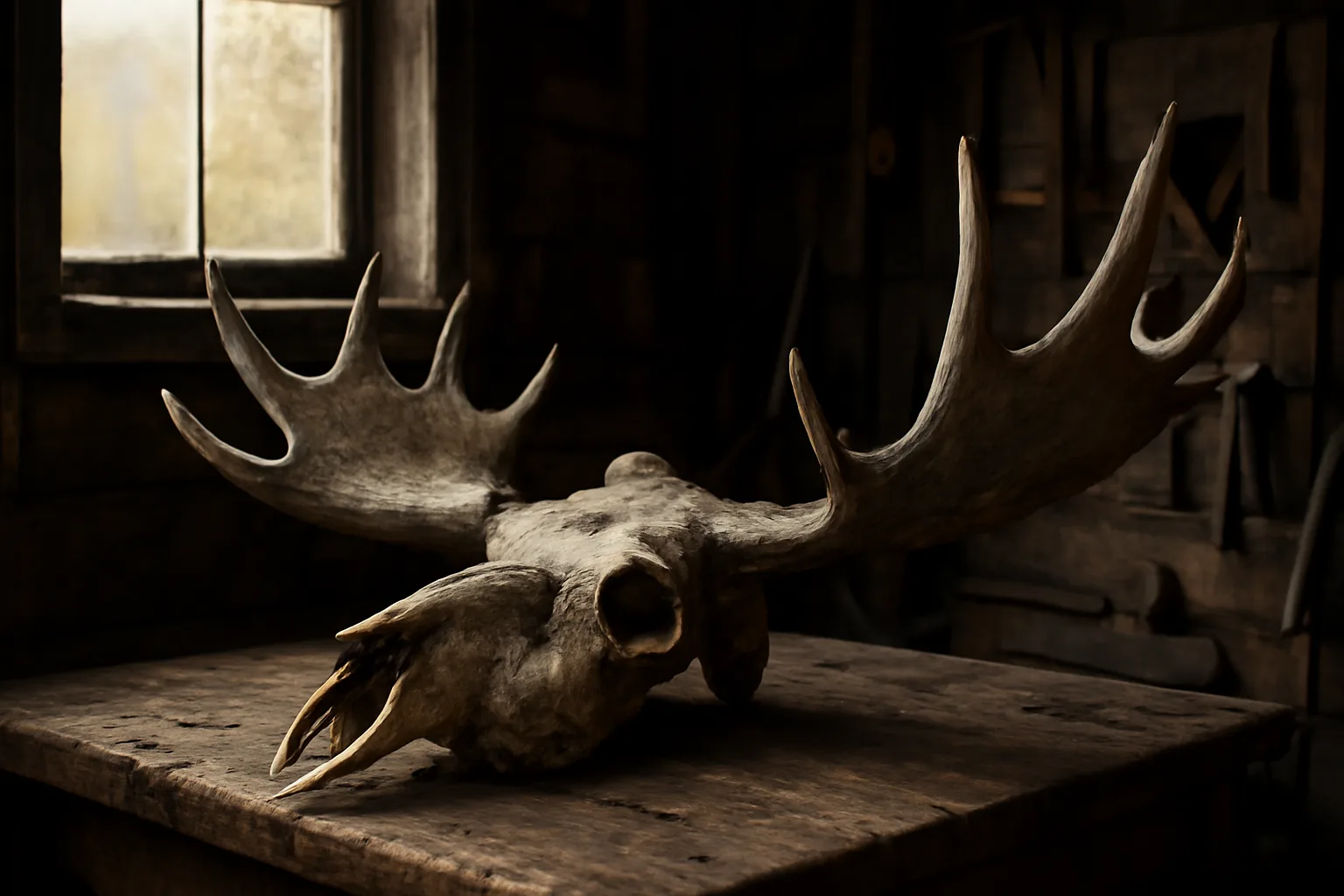
TL;DR
A professional european mount in Alaska runs $150 to $300 for deer-sized skulls, and $350 to $600 or more for moose, caribou, or bear. DIY processing is legal and costs $115 to $240 in materials. Alaska has no state taxidermy license, but commercial preparers need a business license. Professional turnaround is 4 to 8 weeks in peak season.
How much does a european mount cost in alaska?
A professional european mount in Alaska runs $150 to $300 for a whitetail or Sitka blacktail skull, and $350 to $600 or more for moose. Alaska rates sit above the Lower 48 average, and the gap is real. Antler spreads are large, skulls are heavy, and shops that haul gear into remote areas pass those costs along.
Caribou lands in the $200 to $400 range depending on antler complexity and whether you field-capped the skull or delivered it whole. Brown and black bear european mounts often fall between $250 and $450. Grizzly sits on the high end because the skull is dense and maceration takes longer.
These ranges come from surveying publicly listed Alaska taxidermy shops. They line up with national professional pricing surveys that show large-antlered species averaging 40 to 80 percent more than whitetail-equivalent skulls. Nobody tracks Alaska-specific data in a published study, so treat these as honest ranges, not guarantees. Call local shops before your hunt, not after.
DIY costs almost nothing if you already own a large pot, propane, and degreaser. The real expenses are hydrogen peroxide (roughly $10 to $20 per gallon at beauty supply stores), a propane burner if you don't have one ($40 to $80), and time. Many Alaska hunters do their own mounts because shipping a skull to an Outside processor can eat $80 to $150 round-trip, which erases any savings.
What factors push the price up or down in alaska?
Species size is the biggest driver. A moose skull cleaned properly takes six to twelve hours of active boiling, degreasing, and whitening. A small Sitka blacktail might take two hours. Shops price on time, and Alaskan labor rates run higher than most states.
Remoteness matters a lot here. If you hunted a fly-in area, or you're shipping from a bush village, freight stacks on top of the base rate. Some processors add a $50 to $150 freight surcharge for skulls that arrive frozen via small-plane cargo.
Condition at drop-off changes the price too. A skull that was properly capped, skinned, and kept cold is easy to process. One that sat in a hot tent for a week, or that has bullet damage, takes more work. Some shops charge a $25 to $75 extra cleaning fee for difficult skulls.
Whitening method affects the quote. Basic hydrogen peroxide whitening is included in most prices. Commercial whiteners run as an upgrade, adding $20 to $50. Painted or clear-coated finishes add another $30 to $75.
Turnaround affects price in Alaska more than most states. Hunting season clusters in fall. If you want your mount back before freeze-up or before you fly out of state, expedited processing adds $50 to $150 to the bill.
Do you need a license for european mount work in alaska?
For personal-use mounts, Alaska requires no taxidermy license. You hunted the animal legally, you want the skull for yourself, you do the work yourself. That's it. You're processing your own legally taken specimen, and the state stays out of it [1].
Commercial preparers are different. If you charge money to process other people's skulls, you need at least a basic Alaska business license from the Department of Commerce, Community, and Economic Development [1]. Alaska has no separate taxidermist occupational license at the state level as of this writing, unlike some states. The Alaska Business License Act requires licensure for anyone engaged in business in the state, and commercial skull processing counts [2]. Confirm current requirements before you start, because licensing rules change.
The bigger legal layer in Alaska is wildlife salvage law. Alaska Statute 16.05.940 defines salvage obligations for big game hunters, and ADF&G regulations require that antlers, horns, and skull plates be salvaged from most big game species [9]. That's the hunter's obligation, not the taxidermist's license. It still matters: a commercial preparer who knowingly processes illegally taken wildlife could face exposure under the federal Lacey Act [4].
For federally managed species, including some migratory birds and marine mammals, additional federal permits apply. You cannot legally prepare or possess certain species without the right federal documentation, and a state personal-use exemption does not override that [10].
Here's the short version. Personal processing of your own legally taken skull, no taxidermy license. Commercial operation, get an Alaska business license at minimum, and confirm current requirements before you take a paying customer.
How long does a european mount take in alaska?
DIY turnaround is entirely in your control. Maceration (soaking in warm water to loosen tissue) takes 1 to 3 weeks for a moose skull, 5 to 10 days for deer-sized skulls. Beetle processing, if you have a colony running, takes 1 to 3 weeks depending on temperature and colony size. Boiling and simmering is faster, 2 to 6 hours of active work, but it can hurt bone quality on old or thin skulls if you push it too hard. Drying and whitening add 2 to 5 days at the end.
Professional shops in Alaska, based on publicly stated policies from several Anchorage and Fairbanks taxidermists, quote 4 to 8 weeks during peak fall. Some quote 6 to 12 weeks for moose during the September and October rush. Off-season, January through March, some shops turn deer-sized skulls in 2 to 3 weeks.
Shipping adds to the clock if you're not local. Sending a skull from a remote area to Anchorage via USPS or a freight carrier adds 3 to 10 business days each way. Rural mail in Alaska is slower than the continental US, so plan for it.
If you'd rather run a colony-based kit at home, DermestidPath's Colony + Ship-In Kit ($129, one-time) is built for hunters who want a manageable home setup without sourcing beetles separately. It's one option for processing your own skull on your own timeline. Any established beetle supplier, or a well-run maceration setup, gets you to the same end result.
Alaska species: how does species type change the mount process?
Alaska gives hunters a species list few other states can match, and each one changes cost, time, and difficulty in real ways.
Moose is the hardest skull to process at home. The skull plate is thick, the nasal passages are large and trap tissue, and the antler bases are dense. Most first-timers underestimate the degreasing phase. Moose skulls are famously greasy, and skipping proper degreasing (acetone soak or dish-soap hot-water cycles) leaves a yellow, oily mount that never looks right. Budget at least two full weeks for degreasing alone if you're doing it yourself.
Caribou is more manageable. The skull is smaller, the bone is less dense, and the antlers usually come out of the field fairly clean. The main challenge is the velvet, which most hunters want removed before processing. Let it dry naturally or skin it carefully.
Brown and grizzly bear skulls are dense and take a long time in maceration or with beetles. The skull cap is worth displaying, and some hunters keep the lower jaw articulated, which adds work. Bear skulls also need to meet Boone and Crockett measurement rules if you're scoring, and B&C requires a 60-day drying period after cleaning.
Dall sheep is one of the more straightforward large-game mounts in Alaska. The skull is smaller than moose or bear, the horns are already dry and hard, and cleaning goes quickly. Dall sheep is also legally sensitive: the harvest is governed by ADF&G rules that require horn salvage and sealing before transport [9].
Sitka blacktail is the most approachable skull for a first-timer. Small skull, easy maceration, and widely done by hunters across Southeast Alaska.
What are the legal rules for shipping a skull out of alaska?
This catches people. Once you've processed a skull in Alaska and want to take it home to another state, several rules apply.
For non-protected species, cleaned and fully fleshed skulls can generally be transported. Cleaned means no raw flesh attached. USPS and most air carriers accept cleaned, dry skulls as checked baggage or shipped packages. Alaska Airlines and other carriers serving the state publish policies on transporting game trophies. Check with your carrier before you pack.
Brown bear falls under CITES (Convention on International Trade in Endangered Species). Export to another country requires proper documentation. For interstate transport within the US, brown bear parts must travel with proof of legal take: your license, locking tag, and ADF&G sealing receipt [4].
Dall sheep, mountain goat, and muskox require that antlers or horns be sealed or tagged by ADF&G before you can legally take them out of state [9]. Sealing means you present the skull or horns to an ADF&G office before you ship or fly. Don't skip it.
The Lacey Act, 16 U.S.C. 3372, prohibits transport of wildlife taken in violation of state law [4]. A legal, documented hunt makes transport straightforward. Anything irregular about the take creates federal exposure.
Carry paper copies of your hunting license, harvest ticket, and any ADF&G seal documentation with the skull. more than in your phone. Paper survives dead batteries and lost cargo.
How does alaska compare to other western states for european mount costs?
Alaska runs above the western state average for professional european mount work. Higher operating costs, geographic isolation, and the size of the common species all push it up.
| State | Deer-sized skull (pro) | Elk/Moose-sized skull (pro) | Notes |
|---|---|---|---|
| Alaska | $150 to $300 | $350 to $600+ | Remote surcharges common |
| Colorado | $100 to $200 | $200 to $400 | Elk common, well-established market |
| Idaho | $100 to $175 | $200 to $350 | Competitive market, shorter seasons |
| Arizona | $125 to $225 | $250 to $450 | Desert species, smaller shops |
| California | $150 to $275 | $275 to $500 | Regulations affect species availability |
These ranges come from publicly listed taxidermy shop pricing pages and hunting forum pricing discussions, not a published academic study. Taxidermy pricing is not systematically tracked anywhere, so treat these as representative, not exact.
To compare markets, see our guides on european mount cost in colorado and european mount cost in idaho. Both cover pricing structures that work very differently from Alaska.
The DIY-versus-professional gap is widest in Alaska because the professional premium is highest. A hunter willing to spend two weekends on home processing can save $200 to $400 on a moose skull against the professional rate.
What should you budget for a complete alaska european mount project?
Start with the worst case. A moose european mount is the hardest and most expensive project, so if you can budget that, everything else looks easy.
Professional route: $350 to $600 for the mount, plus $80 to $150 freight if you're shipping the skull, plus $30 to $80 for a wall panel or mounting hardware. Total lands at $460 to $830.
DIY route at home: propane burner rental or purchase $40 to $80 (if you don't own one), large pot $30 to $60, 40-volume hydrogen peroxide $15 to $30, dish soap and acetone $10 to $20, wall hardware $20 to $50. Out-of-pocket total: $115 to $240, plus your time.
For deer-sized species, the DIY cost drops hard. A Sitka blacktail mount done at home can cost under $50 in materials if you already have basic gear.
Hunters consistently underestimate wall-mounting hardware. A moose skull with antlers is heavy, sometimes 40 to 60 pounds. Standard drywall anchors won't hold it safely. A proper lag bolt into a stud, or a purpose-built bracket, is a real expense and a real safety question.
For a structured starting point, DermestidPath offers a Colony + Ship-In Kit at $129 one-time, which covers the colony setup for home beetle processing. Not the only option, but worth knowing about if you're budgeting a first DIY setup.
How do you find a reputable european mount processor in alaska?
Alaska has no centralized taxidermy directory, so finding a processor takes legwork. The National Taxidermists Association keeps a member directory searchable by state [7], which is a reasonable start. ADF&G does not maintain a taxidermist referral list.
Alaska-specific hunting forums, particularly AlaskaHuntingForum.com, have active communities where hunters trade processor recommendations. Word-of-mouth from local hunting guides is often the most reliable filter you'll find.
When you call a shop, ask straight up whether they've done your species. A shop that runs fifty Sitka blacktail a year may have little moose experience, and the techniques differ. Ask about their whitening method, their typical turnaround during your season, and whether they've had moisture or beetle damage in storage.
For remote hunters, some processors will work with you by phone and email if you prepare and ship the skull properly. Get a written quote before you ship, and confirm their preferred packing method. A moose skull shipped wet and badly sealed is a biohazard nightmare, and most carriers won't touch it.
See also our guides on european mount cost in california and european mount cost in arizona if you're comparing other western markets.
What are the most common mistakes alaska hunters make with european mounts?
Not capping in the field. A whole moose head weighs 60 to 80 pounds. Hauling it whole from a remote site is brutal, and the tissue rots fast in warm fall weather. Cap the skull as close to the ears as practical, strip as much tissue as you safely can in the field, and cool it right away. This is the single most common first-timer mistake.
Skipping degreasing. Whitening a skull that's still full of grease just makes a yellow, smelly mount. Whitening brightens bone, it doesn't pull grease. Grease has to come out first, through hot-water and dish-soap cycles, or an acetone soak, or both. For moose, that can take 2 to 4 weeks of repeated soaking.
Using bleach. Household bleach (sodium hypochlorite) damages bone structure and leaves your skull brittle and prone to cracking within a few years. Hydrogen peroxide at 12 to 40 volume is the correct whitening agent. This is a well-established point in taxidermy trade literature [8].
Forgetting the ADF&G seal before flying out. If your species requires sealing, skipping it is not a minor slip. You may be legally unable to transport the skull until you return to Alaska to finish the process. Dall sheep and certain other species require sealing before transport [9].
Overboiling. Aggressive boiling for hours separates the sutures and loosens teeth. Gentle simmering at 160 to 180 degrees Fahrenheit is enough to loosen tissue. Maceration is slower but easier on the bone.
Frequently asked questions
Do you need a taxidermy license to do european mounts in alaska?
Alaska has no separate state taxidermist occupational license as of this writing. For personal-use processing of your own legally taken animals, no license is required. Commercial preparers who charge for the service need at least an Alaska business license from the Department of Commerce, Community, and Economic Development. Confirm current requirements before starting any commercial operation, as rules can change.
How much does a moose european mount cost in alaska?
Professional shops in Alaska charge $350 to $600 for a moose european mount. Remote freight surcharges, difficult skull condition, and expedited turnaround can push the total past $600. DIY processing costs $115 to $240 in materials for a first-time setup. Moose is the most expensive species to process because of skull size, density, and the extensive degreasing required.
How long does a european mount take at an alaska taxidermist?
Most Alaska taxidermists quote 4 to 8 weeks for deer-sized skulls during fall, and 6 to 12 weeks for moose during the September and October rush. Off-season processing (January through March) can run 2 to 4 weeks for smaller skulls. Add freight time both ways if you're shipping from a remote area, which can add 1 to 3 weeks to the total.
Can you ship a processed skull out of alaska to another state?
Yes, for most species if the skull is fully cleaned, dry, and you have documentation of legal take. Some species, including Dall sheep and mountain goat, require ADF&G sealing before transport. Brown bear transport requires proof of legal take. USPS and most air carriers accept cleaned, dry skulls. Carry paper copies of your hunting license, harvest ticket, and any sealing documentation with the skull.
Is maceration or beetle processing better for alaska skulls?
Both work well. Maceration is free if you have a container and water, and it handles large skulls like moose without needing a big beetle colony. Beetle processing is gentler on bone and teeth, and works well for smaller skulls like Sitka blacktail or caribou. For a first-time processor in Alaska, warm-water maceration followed by degreasing is the most practical start because it needs no live colony.
What does ADF&G require you to salvage from alaska big game?
Alaska Statute 16.05.940 and ADF&G regulations require hunters to salvage all edible meat from most big game species, and antlers or horns must be removed and kept from species like moose, caribou, Dall sheep, and mountain goat. The skull plate with antlers attached must be salvaged for moose. Requirements vary by species; check ADF&G's current regulations booklet for your species before your trip.
How do you whiten a european mount skull at home in alaska?
After the skull is fully cleaned and degreased, apply 12 to 40 volume hydrogen peroxide (available at beauty supply stores) to all bone surfaces. Wrap the skull in peroxide-saturated paper towels or use a brush, then seal in a plastic bag or bin for 24 to 48 hours. Repeat until you reach the whiteness you want. Do not use household bleach; it damages bone and causes cracking over time.
Do alaska hunters need CITES documentation for brown bear trophies?
For export outside the US, yes, CITES documentation is required for brown bear. For interstate transport within the US, you need proof of legal take including your Alaska hunting license, locking tag, and ADF&G sealing or documentation. Brown bear is one of the more legally complex species to transport, so confirm current federal requirements with the US Fish and Wildlife Service before shipping or traveling.
What's the cheapest way to get a quality european mount in alaska?
DIY processing is the cheapest route. A Sitka blacktail or caribou skull can be macerated, degreased, and whitened at home for under $50 in materials if you already have basic supplies. The main cost for most Alaska hunters is time and freight if they're remote. Doing field prep (capping and rough cleaning) yourself before handing off to a professional is the cheapest hybrid, cutting professional labor by $50 to $100.
Do alaska european mount costs vary between anchorage and rural areas?
Yes. Anchorage and Fairbanks have more competition among taxidermists, which keeps prices closer to the $150 to $350 range for deer-sized skulls. Rural areas have fewer local options, and shipping adds to the cost. Some hunters in remote areas find that processing skulls themselves beats the combined cost of freight plus professional processing, which can easily exceed $400 for moose.
How do you store a skull before processing in alaska?
Keep it cold or frozen as fast as possible after the kill. Strip as much tissue as you can in the field, cap the skull, and seal it in a heavy plastic bag. A skull kept below freezing holds indefinitely until you're ready to process. Never let it sit warm and unskinned for more than 24 hours in temperatures above 50 degrees Fahrenheit, or tissue breakdown accelerates and the odor turns severe.
Is a european mount cheaper than a full shoulder mount in alaska?
Yes, significantly. A full shoulder mount for a moose or caribou in Alaska typically runs $900 to $1,800 or more at established shops, depending on shoulder size, pose complexity, and the shop's rates. A european mount for the same species runs $350 to $600 professionally, or under $250 DIY. For hunters mainly interested in the antlers or horns, the european mount is the economically sensible choice.
What does boone and crockett require for entry from alaska kills?
Boone and Crockett requires a 60-day drying period after the skull is cleaned before official measurements are taken. The skull must be cleaned but not otherwise altered. B&C maintains a list of official measurers who can certify your Alaska trophy, listed by state and region. Alaska produces a high volume of record-book entries for moose, brown bear, and Dall sheep, so measurers familiar with Alaska species are generally accessible in Anchorage and Fairbanks.
Sources
- Alaska Department of Commerce, Community, and Economic Development - Business Licensing: Alaska business license is required for commercial taxidermy operations; no separate state taxidermist occupational license exists at the state level
- Alaska Statutes Title 43 - Revenue and Taxation, AS 43.70 - Business License Act: Alaska Business License Act requires licensure for persons engaged in business in the state, including commercial taxidermy and skull processing services
- U.S. Fish and Wildlife Service - Lacey Act, 16 U.S.C. 3372: The Lacey Act prohibits interstate transport of wildlife taken in violation of state law, making documentation of legal take essential when transporting processed skulls across state lines
- National Taxidermists Association - Member Directory: The NTA maintains a searchable member directory by state that hunters can use to locate taxidermists and skull processors in Alaska
- University of Alaska Fairbanks Cooperative Extension Service - Wildlife Processing and Preparation: Extension and taxidermy trade literature consistently notes that household bleach (sodium hypochlorite) damages bone structure; hydrogen peroxide is the correct whitening agent for european mounts
- Alaska Statute 16.05.940 - Definition of Game, Salvage Obligations: AS 16.05.940 defines the salvage obligations for big game hunters in Alaska, including requirements to retain antlers and horns from specified species
- U.S. Fish and Wildlife Service - Migratory Bird Treaty Act: Federal permits are required for possession and preparation of federally protected species including certain migratory birds; state taxidermy or personal-use exemptions do not override federal requirements