Last updated 2026-08-17
TL;DR
To start a european mount business in Arizona, you need a commercial taxidermist license from the Arizona Game and Fish Department, a local city or county business license, and TPT registration with the state. Startup costs run $335 to $2,330, with most operators landing $500 to $1,500. No exam is required. Common game mammals need no federal permit.
What is european mount and why is arizona a good market for it?
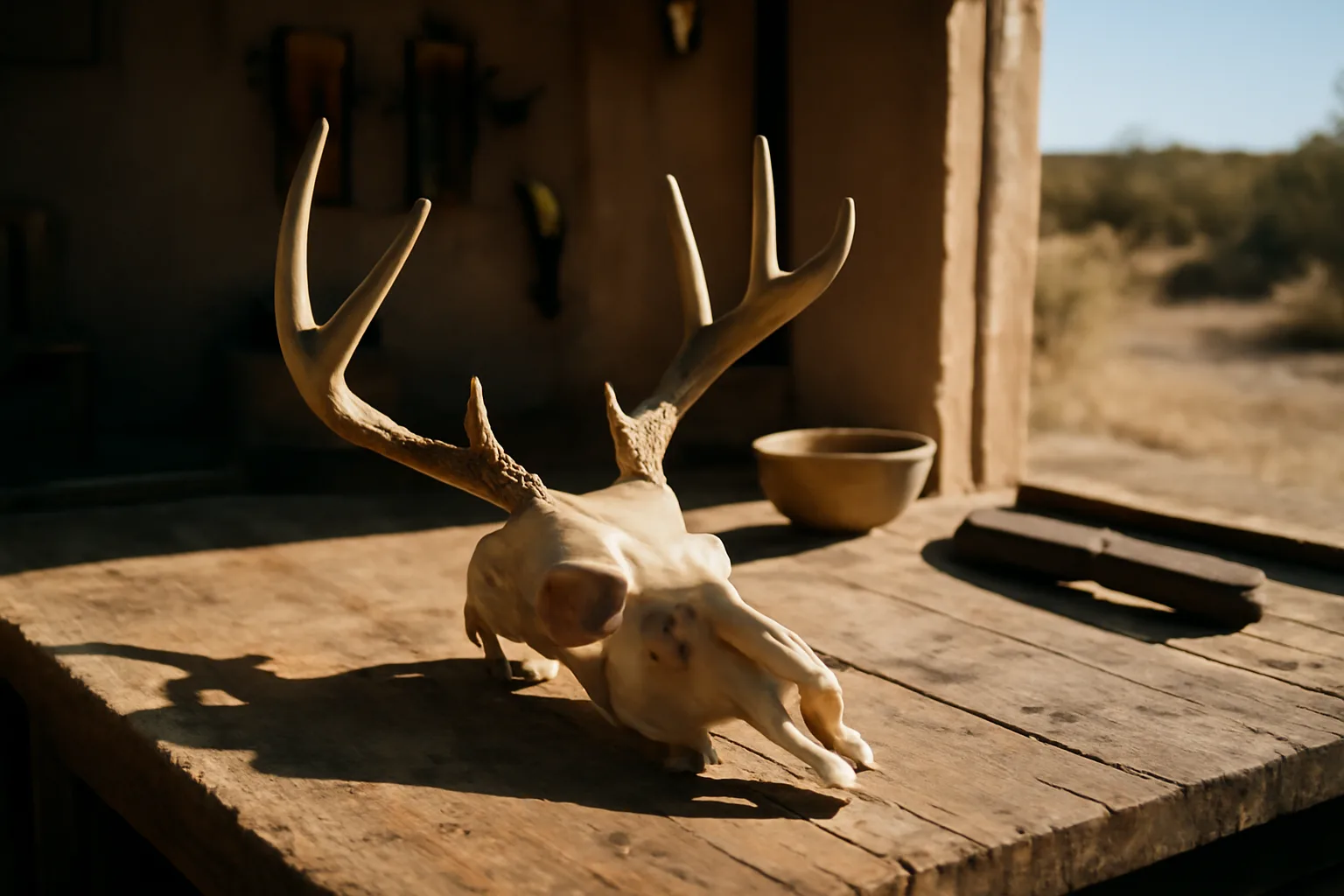
A european mount strips a skull to clean bone, preserves it, and displays it with no hide or hair. That's the whole idea. No tanning chemicals, no form-fitting, no glass eyes. The result is a plain trophy that's become the top choice for desert mule deer, Coues whitetail, javelina, and elk hunters across the Southwest.
Arizona is one of the stronger markets for this work. The state issues roughly 200,000 hunting licenses a year [1], and big-game tags for elk, mule deer, and pronghorn stay oversubscribed. A hunter who draws a hard-to-get Arizona elk tag usually wants a mount, and the european style costs a fraction of a full shoulder mount. That price gap pushes volume toward european specialists.
The Sonoran Desert hands you a real operating advantage: low humidity. High humidity is the enemy of a maceration or dermestid operation because it feeds mold. Arizona's dry air means less mold to manage and faster dry times after processing. That's a genuine benefit, not a sales line.
Do you need a license for european mount in arizona?
Yes. Arizona requires a commercial taxidermist license if you accept wildlife for processing in exchange for money [2]. The Arizona Game and Fish Department (AZGFD) runs this under Arizona Revised Statutes Title 17, which governs wildlife. The controlling section is ARS 17-271, which bars anyone from doing taxidermy business without a valid license [3].
Here's the statute's own language on scope: a license is required for any person who "for hire, preserves or mounts the whole or any part of any bird, fish, reptile or mammal" (ARS 17-271) [3]. A european mount skull is "any part of any mammal," so you're inside that definition from your first paid job.
Beyond the AZGFD license, you need a local business license from your city or county. Most Arizona municipalities require one for any commercial activity, no matter the industry. Tucson, Phoenix, Mesa, and Flagstaff each run their own municipal license process. Costs vary, but most sit at $50 to $150 a year. Confirm current fees with your city's business licensing office.
If you plan to process federally protected species (migratory birds, raptors, or anything listed under the Migratory Bird Treaty Act or Endangered Species Act), you'll need extra federal permits from the U.S. Fish and Wildlife Service [4]. Most european mount startups stick to common game mammals and never touch those categories. Learn where the line sits before you accept a questionable skull.
For the full licensing paperwork, see the european mount license in arizona guide, which walks the AZGFD application form step by step.
What does the arizona taxidermy license cost and how do you apply?
AZGFD publishes a license fee schedule, but fees change by rule, so confirm the current figure when you apply [2]. As of this writing, the commercial taxidermist license has historically sat in the $25 to $50 range annually. That's a narrow band from past reporting, not a guaranteed current fee. Check with AZGFD directly before you budget.
You apply through AZGFD's online licensing portal or by mail. You'll give your name, business address, and payment. Arizona has no practical exam and no apprenticeship requirement for taxidermists, unlike some states (Louisiana, for example, requires demonstrated training hours [5]). Arizona's regulatory barrier is low. The real barrier is skill and equipment.
Renewal is annual. Let the license lapse while you keep taking work and you're operating illegally. Set a calendar reminder. That single paperwork miss ends small operations.
| License / Permit | Issuing Authority | Approximate Cost | Frequency |
|---|---|---|---|
| Commercial Taxidermist License | Arizona Game and Fish Dept. | Confirm with AZGFD | Annual |
| Local Business License | City/County | $50 to $150 | Annual |
| Federal Migratory Bird Permit (if needed) | U.S. Fish and Wildlife Service | Varies by permit type | Annual |
| Sales Tax License (TPT) | Arizona Dept. of Revenue | Free to apply | Ongoing |
Arizona also requires businesses collecting sales tax (Transaction Privilege Tax, or TPT) to register with the Arizona Department of Revenue [6]. Taxidermy services are generally subject to TPT as a service performed on tangible personal property. Register before you invoice your first customer.
How much does european mount cost to start in arizona?
Startup costs split into equipment, licensing, and workspace. Here's the honest range.
Run dermestid beetles and your core cost is a colony plus an enclosure. A starter colony of Dermestes maculatus (hide beetles) runs roughly $80 to $150 from a reputable supplier [7]. The enclosure can be a modified chest freezer, a wooden box with a heating element, or a purpose-built insulated cabinet. DIY enclosures cost $100 to $300 in materials. Commercial units run $500 to $1,500 depending on size.
Go the maceration route (warm-water decomposition) and your startup cost drops further: a large bucket or trash can, a submersible aquarium heater, and a vented lid. Total hardware under $100. The tradeoff is smell and processing time.
For whitening, use hydrogen peroxide, never bleach. Bleach eats bone. Pharmacy-strength hydrogen peroxide (3%) handles lighter skulls; salon-grade H2O2 (12 to 40 volume) speeds larger elk or bear skulls. Budget $30 to $80 for initial whitening supplies.
Licensing and registration add $75 to $200 in year one. You'll also want basic safety gear: nitrile gloves, a half-face respirator (maceration throws off strong odors and possible pathogens), and eye protection. OSHA has no taxidermy-specific standard, but the bloodborne pathogen standard applies when you handle fresh carcasses [8].
Here's the first-year startup, honest about the ranges:
| Cost Category | Low End | High End |
|---|---|---|
| Beetle colony or maceration setup | $80 | $400 |
| Enclosure / processing vessel | $100 | $1,500 |
| Whitening supplies | $30 | $80 |
| Licensing and registration | $75 | $200 |
| Safety equipment | $50 | $150 |
| Total | $335 | $2,330 |
Most people land between $500 and $1,500 all-in for a legitimate first-year setup. Spending more on a bigger enclosure makes sense if you're projecting real volume. Spending $3,000 before you have a single customer does not.
How long does european mount take in arizona, from raw skull to finished product?
Turnaround depends on your method and the size of the skull. Here are real numbers, not sales copy.
Dermestid beetles on a deer skull: 5 to 14 days in a colony at 75 to 85 degrees Fahrenheit [7]. An elk skull with heavy flesh and muscle takes longer, sometimes 14 to 21 days. Javelina, which most Arizona hunters bring in small, can finish in 3 to 7 days.
Maceration at 90 to 95 degrees Fahrenheit: a deer skull usually cleans in 5 to 10 days. Elk run 10 to 20 days. The water needs monitoring and partial changes to keep it from going anaerobic, which produces an extreme smell and slows everything down.
Whitening after cleaning: 24 to 72 hours, depending on peroxide concentration and how bright you want the bone.
So the practical customer-facing turnaround for a standard deer skull in Arizona is 10 to 21 days from drop-off to pickup, beetles on the fast end and maceration on the variable end depending on how fresh the skull arrives.
Arizona's climate is a real factor. Summer temperatures in the Phoenix metro regularly clear 105 degrees Fahrenheit [9]. Put your beetle enclosure or maceration setup in an unairconditioned space and internal temperature becomes a problem fast. Beetles stop feeding and eventually die above about 100 degrees. Insulation and shade matter more here than in most states.
Turnaround is your throughput constraint. Book 20 skulls in November (peak deer season in Arizona) with an enclosure that holds 4 at a time on a 10-day cycle, and you need 5 cycles to clear the backlog. That's 50 days. Either add capacity or stagger intake. Setting honest expectations from day one heads off nearly every review problem you'd otherwise get.
What wildlife transport rules apply to skull drop-offs in arizona?
Customers bringing you skulls have to comply with Arizona wildlife transport rules. AZGFD requires hunters to keep proof of lawful harvest with any game or game parts in transport [3]. You're not the enforcement officer, but knowingly accept illegally taken wildlife and you can face criminal charges under ARS 17-309 [3].
In practice, ask for the tag number and record it in your intake log. Most taxidermists keep a simple ledger: customer name, contact, species, tag number, date received, date completed. This log is your legal protection. AZGFD wildlife managers can inspect taxidermist records, and a clean log shows good faith.
For skulls shipped in by out-of-state hunters (which happens, especially on guided Arizona elk hunts), the hunter has to comply with the originating state's transport rules plus any federal rule that applies when the skull crosses state lines [4]. Whitetail deer, mule deer, and most common Arizona game mammals need no federal permit for interstate transport when lawfully taken. Migratory birds or listed species are a different matter entirely.
Javelina (collared peccary) is an Arizona-specific species worth flagging. AZGFD classifies it as big game and it requires a valid tag [3]. Don't accept a javelina skull without a corresponding tag on record.
See the how to start european mount in colorado guide for how a neighboring state handles intake documentation, since a fair number of Arizona hunters also hold Colorado tags.
How do you price european mount services in arizona?
Arizona pricing tracks the broader Southwest market. Current rates for a basic deer skull european mount (cleaned, whitened, no pedestal) run roughly $100 to $175 from independent operators. Elk skulls, given the size and processing time, run $175 to $300. Javelina, being small, often prices at $75 to $125.
Those ranges come from scanning publicly listed Arizona taxidermist fee schedules in 2024 and 2025, not from a formal survey, so treat them as a general benchmark. Nobody has good published data on Arizona taxidermy pricing with statistical rigor.
Here's the calculation that actually sets your floor: (processing labor hours) x (target hourly rate) + (direct supply cost) + (allocated overhead). If a deer skull takes 2 hours of hands-on time across the cycle, you want $40 an hour, and your direct costs run $15, your floor is $95 before overhead. Price under that and you're subsidizing the customer.
Don't set prices off the competitor 40 miles away. They may be underpriced. They may have lower overhead. They may be losing money and not know it yet. Set your own floor, then check market rates to confirm you're not wildly out of range.
For extra skulls per order (a hunter with several deer from one trip), most operators give a small volume discount. Whether that's $10 or $25 off per additional skull is your call. It rewards repeat customers without giving away margin.
What equipment should you buy first in arizona?
The one decision that shapes everything is whether you start with beetles or maceration. This is a real debate among practitioners, not a coin flip.
Beetles are faster and produce cleaner skulls with less smell during active processing. They suit tight outdoor space (common in Arizona suburbs with HOA restrictions) because the enclosure contains the odor while the colony feeds. The downside is a live colony to maintain. Beetles die from heat, cold, starvation, or pesticide drift. A colony crash during peak season is a real risk.
Maceration is cheaper to start and has no colony to keep alive. The smell during water changes is heavy and hard to contain indoors. In Arizona's heat, outdoor maceration works well in spring and fall. Summers can push maceration temps too high even outdoors unless you shade and monitor closely.
For a first-year Arizona operator, a reasonable starting stack is:
1. A starter beetle colony (1,000 to 2,000 beetles is a working size, not a token colony) 2. An insulated enclosure, DIY or commercial, sized for at least 2 to 4 deer skulls at once 3. A thermometer and ideally a temperature controller to hold the colony at 80 to 85 degrees through Arizona's swings 4. A bucket and aquarium heater for maceration as a backup or overflow method 5. Hydrogen peroxide for whitening, starting with 12-volume cream developer from a beauty supply store 6. Basic safety gear (respirator, gloves, eye protection)
DermestidPath's Colony + Ship-In Kit at $129 covers the colony and shipping in one transaction, which takes the sourcing headache off the beetle side. Worth weighing if you're comparing the cost of assembly against a packaged start.
Skip the UV whitening light setups until you've cleaned at least 20 skulls and know whether you want faster whitening or can wait the extra day. That's an upgrade call, not a day-one buy.
How do you find your first customers in arizona?
Arizona's hunting culture runs through a tight network of hunting clubs, archery ranges, outfitters, and online forums. The Arizona Deer Association and the Arizona Elk Society both keep active memberships [1]. Getting known in those circles beats any paid advertising in year one.
The most direct path: call two or three outfitters or guides in your area and offer to process their clients' skulls at a fair rate. Outfitters don't want the taxidermy logistics. Pick up from camp or the check station and you become something they'll recommend again and again.
AZGFD check stations during deer and elk seasons are another physical touchpoint. Some operators leave business cards at sporting goods stores near check stations during season. Cheap and targeted.
Online, Facebook Marketplace and the ArizonaHunting.com forums run active buy/sell/service sections [10]. A few honest posts showing your work at fair prices pull inbound inquiries faster than a new website will in year one. Build the website eventually. Customers get made face-to-face with hunters.
For how operators in adjacent states approach their first customers, the how to start european mount in california and how to start european mount in colorado guides cover the market differences worth reading.
What are the ongoing compliance requirements after you open?
Annual renewal of your AZGFD taxidermist license is the main ongoing requirement [2]. Watch for renewal notices and don't let it lapse. You'll also renew your local business license and TPT registration.
Keep your intake ledger current. If AZGFD runs an inspection (which happens, especially after a poaching investigation in your area where skulls may have moved through processors), your records show lawful operation. A missing tag number on a specific skull is the gap that creates trouble.
Stay current on AZGFD rule changes. The department updates regulations through an annual rule-making process, and species-specific rules (Coues deer seasons, javelina tag structures) shift [3]. What hunters can legally harvest changes what skulls come through your door.
Hire anyone, even part-time help during peak season, and Arizona payroll tax and workers' compensation requirements kick in. That's a separate compliance track. The Arizona Industrial Commission runs workers' compensation, and coverage is mandatory for most employers [11].
Ready to map the full paper path? The european mount license in arizona guide covers the form-by-form process, including the AZGFD application, TPT registration, and local license requirements.
How does starting european mount in arizona compare to neighboring states?
Arizona's regulatory setup for taxidermists is straightforward next to some neighbors. California adds environmental compliance around waste disposal and a more complex business licensing environment in many counties [12]. Colorado requires a taxidermist license through Colorado Parks and Wildlife, with a structure similar to Arizona's [5].
The real difference between states is often market size. Arizona issues far fewer big-game tags than Colorado, but the quality of the tags (Arizona's elk draws are known nationally for mature bulls) means individual clients may pay more per mount and expect higher quality. That's a different value proposition than high-volume deer processing in a Midwestern state.
On equipment, Arizona's dry climate genuinely gives beetle operators an edge over operators in humid Southern states who fight mold constantly. That's no small thing when your colony's health is your throughput.
Operating near a state border? New Mexico has its own licensing structure and NMDGF regulations [5]. Don't assume an Arizona license covers activity in another state.
| State | Taxidermy License Issuer | Exam Required? | Relative Humidity Challenge |
|---|---|---|---|
| Arizona | AZGFD | No | Low (advantage) |
| California | CDFW | No | Moderate to high coastal |
| Colorado | CPW | No | Low to moderate |
| New Mexico | NMDGF | No | Low |
| Nevada | NDOW | No | Low |
Exploring a neighboring state's setup? The how to start european mount in california and european mount license in colorado guides cover those paper paths in full.
What should you do in the first 60 days after deciding to start?
Here's a concrete sequence most Arizona operators can finish before processing their first skull.
Weeks 1 to 2: File for your AZGFD commercial taxidermist license. At the same time, apply for your local business license and register with the Arizona Department of Revenue for TPT. These filings don't need to run in order. Run them in parallel.
Weeks 2 to 3: Source your beetle colony or set up your maceration kit. Order beetles only when your enclosure is ready and at temperature, because a colony that arrives before its home is ready dies quickly.
Weeks 3 to 4: Run your first test skull. Get a roadkill deer skull from your area (AZGFD allows salvage of certain roadkill under specific rules; confirm current permit requirements before collecting) or buy a practice skull. Run the full cycle: cleaning, degreasing if needed, whitening, sealing. Write down your timing.
Weeks 4 to 6: Set your pricing. Build a simple intake form (customer name, phone, species, tag number, date in, agreed price, deposit if any). Get business cards printed locally.
Weeks 6 to 8: Contact two outfitters or hunting guides in your area. Attend one local hunting club meeting. Post in one Arizona hunting forum with a photo of your test skull and your pricing.
By day 60, your licenses should be active, your equipment running, and your first real customer a realistic prospect. That's a reachable target. DermestidPath's Colony + Ship-In Kit at /start removes one supply sourcing step from weeks 2 to 3 if you want beetles delivered ready to establish.
Frequently asked questions
Do you need a license for european mount in arizona?
Yes. Arizona requires a commercial taxidermist license from the Arizona Game and Fish Department under ARS 17-271, which covers anyone who for hire preserves or mounts any part of a bird, fish, reptile, or mammal. You also need a local business license from your city or county. If you process federally protected species, a federal permit from U.S. Fish and Wildlife Service is required separately. Confirm current fees directly with AZGFD before applying.
How much does european mount cost in arizona?
Client-facing prices in Arizona typically run $100 to $175 for a deer skull and $175 to $300 for elk, based on publicly listed operator rates. Your startup costs to open the business run $335 to $2,330 depending on whether you buy a beetle setup or go the maceration route, with most first-year operators landing between $500 and $1,500 all-in after licensing, equipment, and supplies.
How long does european mount take in arizona?
With dermestid beetles at 80 to 85 degrees Fahrenheit, a deer skull takes 5 to 14 days to clean and an elk skull 14 to 21 days. Maceration at 90 to 95 degrees runs 5 to 10 days for deer and 10 to 20 days for elk. Whitening adds 24 to 72 hours. Realistic customer-facing turnaround for a deer skull is 10 to 21 days from drop-off. Arizona's summer heat requires enclosure temperature management to protect beetle colonies.
Can you do european mount at home in arizona?
Yes, as long as you hold a valid AZGFD commercial taxidermist license and comply with local zoning. Many Arizona operators work from a garage or outbuilding. Check your municipality's home occupation ordinances, which often limit signage, customer traffic, or certain odor-producing activities. HOA rules may also apply. Beetles produce minimal odor when contained; maceration produces strong smells and may conflict with residential restrictions.
Does arizona require any exam to get a taxidermist license?
No. Arizona does not require a written exam or demonstrated apprenticeship hours for a commercial taxidermist license, unlike some states such as Louisiana. The application through AZGFD is primarily administrative: name, address, and fee. The barrier to entry in Arizona is equipment and skill, not regulatory testing. Confirm application requirements directly with AZGFD, as procedures can change.
What records do arizona taxidermists need to keep?
Arizona taxidermists should maintain an intake log recording the customer's name, contact information, species, hunting tag number, date received, and date returned. AZGFD wildlife managers can inspect taxidermist records under state law. A clean log is your primary legal protection if a question arises about whether a skull came from a lawfully taken animal. Retain records for at least three years as a practical minimum.
Do you need to collect sales tax on european mount services in arizona?
Yes. Arizona's Transaction Privilege Tax (TPT) generally applies to taxidermy services as work performed on tangible personal property. You must register with the Arizona Department of Revenue before collecting TPT. Registration is free. The rate varies by city and county. Consult a local accountant or the Arizona Department of Revenue directly to confirm the applicable rate and classification for your specific services.
Can you accept out-of-state skulls for processing in arizona?
Yes, with caveats. The hunter must have lawfully taken the animal and complied with transport regulations in both the originating state and under any applicable federal law. Record the tag number and state of harvest in your intake log. Common game mammals like mule deer and elk generally don't require federal permits for interstate transport when lawfully taken. Migratory birds and listed species are a different matter requiring federal permits.
Is javelina a species you can process for european mount in arizona?
Yes. Javelina (collared peccary) is classified as big game by AZGFD and can be legally processed. Always record the customer's valid javelina tag number in your intake log. Javelina skulls are small and typically clean faster than deer skulls, often in 3 to 7 days with beetles. They're a common Arizona request given the state's strong javelina population and hunting culture.
How do arizona's beetle colony management challenges compare to other states?
Arizona's main challenge is summer heat. Dermestid beetles stop feeding and die above roughly 100 degrees Fahrenheit, and Arizona summers regularly exceed that outdoors. You need an insulated, climate-controlled enclosure or an air-conditioned indoor space for your colony. The benefit is low humidity, which prevents mold far better than humid Southern or coastal states where operators fight mold constantly throughout processing.
What species do arizona hunters most commonly bring in for european mount?
Mule deer and Coues whitetail are the most common. Elk skulls come in during October and November from drawn-tag hunters, and these are often the highest-value jobs. Javelina runs a strong third. Pronghorn antelope skulls come in occasionally. Bear skulls require care given size and grease content. Verify AZGFD tag documentation for every species regardless of how common it seems.
What's the cheapest legal way to start european mount in arizona?
A maceration-first setup is the lowest startup cost: a large bucket, a submersible aquarium heater, and hydrogen peroxide for whitening runs under $150. Add AZGFD and local business licensing at roughly $75 to $200, and you can open legally for under $400. The tradeoff is smell management and longer cycle times. Once you have cash flow, a dermestid beetle colony upgrades your throughput and reduces odor during active processing.
Does arizona have restrictions on disposing of processing waste from taxidermy?
Arizona doesn't have a taxidermy-specific waste disposal statute, but general solid waste and liquid waste regulations apply. Tissue and bone waste from skull processing is typically disposed of as solid waste in sealed bags. Maceration water should not be discharged to storm drains. Check with your county environmental services office for current local rules, especially in incorporated areas with sewer and stormwater regulations.
Where can you find arizona european mount customers quickly?
Outfitters and guides are the fastest path. Arizona has an active outfitter community for elk and mule deer, and they prefer taxidermists who will pick up from camp or check stations. Arizona Elk Society and Arizona Deer Association events offer direct access to serious hunters. ArizonaHunting.com forums and Facebook hunting groups also generate quick inquiries when you post real work with honest pricing.
Sources
- Arizona Game and Fish Department, 2023 Annual Report: Arizona issues roughly 200,000 hunting licenses per year
- Arizona Game and Fish Department, Commercial Taxidermist License information: AZGFD administers the commercial taxidermist license requirement
- Arizona Revised Statutes Title 17, ARS 17-271 (Taxidermist license) and ARS 17-309 (Violations): ARS 17-271 prohibits engaging in taxidermy for hire without a license; ARS 17-309 establishes criminal penalties for violations
- Colorado Parks and Wildlife, Taxidermy and Meat Processor License: Colorado requires a taxidermist license through Colorado Parks and Wildlife; other states such as Louisiana require demonstrated training hours
- Arizona Department of Revenue, Transaction Privilege Tax: Taxidermy services in Arizona are subject to Transaction Privilege Tax as services performed on tangible personal property
- University of Florida IFAS Extension, Dermestid beetle biology and rearing conditions: Dermestid beetles clean skulls fastest at temperatures around 75 to 85 degrees Fahrenheit
- OSHA, Bloodborne Pathogens Standard, 29 CFR 1910.1030: OSHA bloodborne pathogen awareness standards apply to workers handling fresh animal carcasses
- National Weather Service, Phoenix climate data: Summer temperatures in the Phoenix metro regularly exceed 105 degrees Fahrenheit
- ArizonaHunting.com, Community Forums: ArizonaHunting.com forums have active buy/sell/service sections used by Arizona hunters
- Arizona Industrial Commission, Workers' Compensation Coverage Requirements: Arizona workers' compensation coverage is mandatory for most employers under Arizona Industrial Commission oversight
- California Department of Fish and Wildlife, Taxidermist License Information: California has additional licensing and environmental compliance considerations for taxidermists compared to Arizona