Last updated 2026-08-18
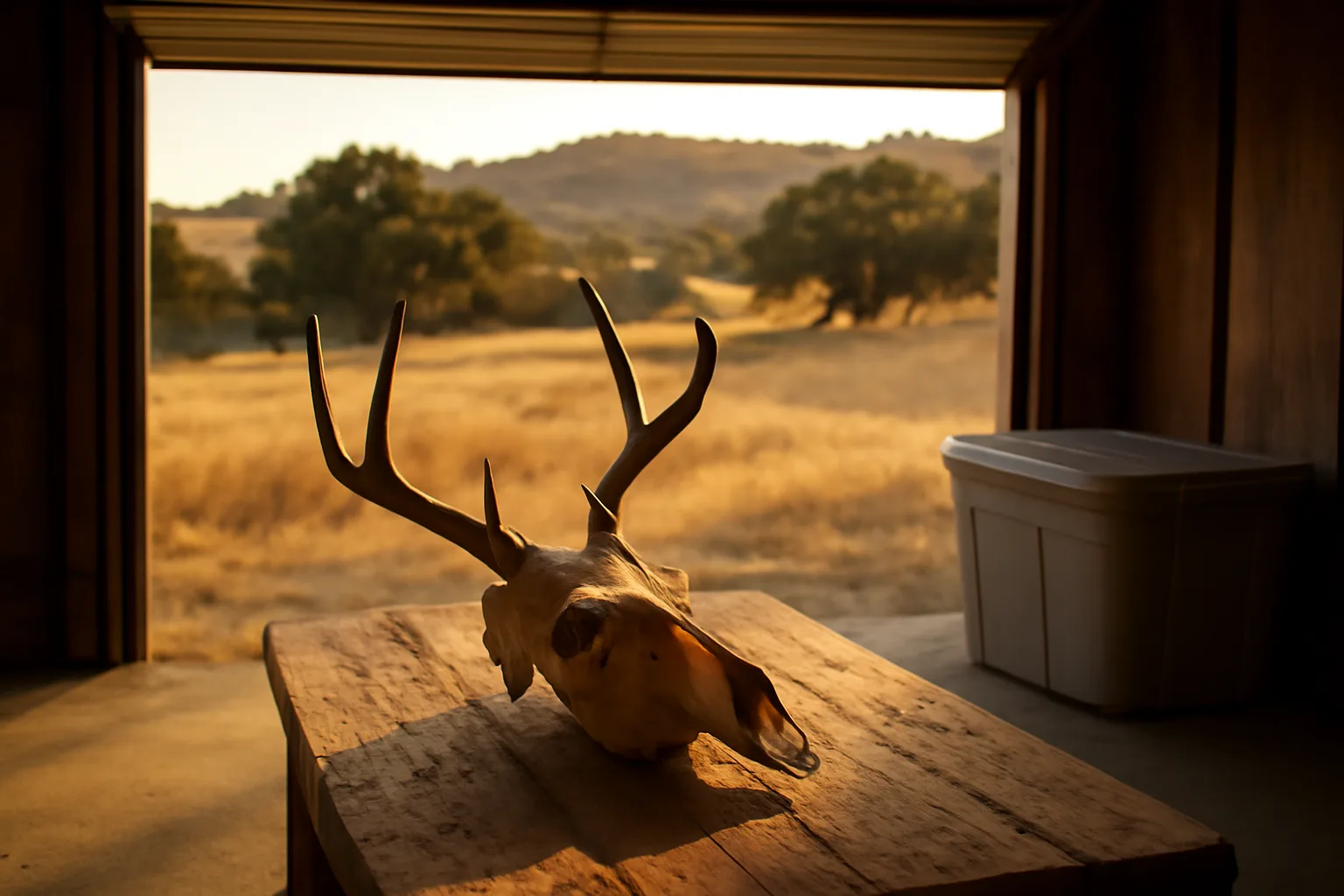
TL;DR
Charge to clean and finish skulls in California and Fish and Game Code 3087 requires a taxidermy license. Hobby work on your own legal deer is different. You still need local business paper, and you generally cannot sell California wild birds or mammals. Beetle time is days to weeks. Confirm every fee and timeline with CDFW before you advertise.
Do you need a license for european mount in California?
Yes if you take money. Fish and Game Code section 3087 requires a taxidermy license for anyone who practices taxidermy for profit. The statute says, "Every person who practices taxidermy for profit shall procure a taxidermy license." [1] A paid european mount is prepared wildlife for display. California does not write a separate skull-only license.
Doing your own legal deer at home, with no ads and no payment, is a different fact pattern. The moment a friend Venmos you and you post a price list, you are in the for-profit lane. I would treat that as licensed work. Wardens read Instagram too.
The license is a CDFW product. Your city business license is a different document. You can hold one and still be illegal on the other. Confirm the current fee and application with CDFW License and Revenue. I will not invent a dollar amount or a processing week count. Boards change both. Nobody honest guarantees approval.
That license does not let you sell California wild mammals. It does not cover migratory birds. It does not override an HOA. For the license path in one place, use european mount license in California.
Is european mount work really taxidermy under California law?
Yes. Section 3087 does not list methods. It regulates the person who practices taxidermy for profit. [1] A european mount is a finished wildlife part prepared for display. Beetles, maceration, or a simmer pot do not change the legal category.
People argue that they do not mount skins, so they are not taxidermists. That line is cute and wrong for a paid shop. If a warden walks in and you have a price list for deer skulls, you are practicing taxidermy for profit. The statute cares about the business, not your YouTube comments.
Hobby clubs and one personal trophy are not the same as ads. Intent shows up in how you get paid and how you store other people's animals. I would put the CDFW license on the wall before the first paid intake, then keep the intake sheet boring and complete.
European mount work in California sits on top of possession law. Fish and Game Code section 2002 makes it unlawful to possess a bird, mammal, fish, reptile, or amphibian, or parts thereof, taken in violation of the code or its regulations. [3] A freezer of mystery heads is not a business plan.
How much does european mount cost in California?
There are two bills. What customers pay you, and what you pay the state before you earn a dollar.
Startup paper you can pin down is mostly entity and tax registration, not the skull work. Form an LLC and you owe an $800 annual tax under Revenue and Taxation Code section 23153. [6] The Secretary of State publishes Articles of Organization and Statement of Information filing fees. Confirm the current dollars on that fee page before you write a check. CDTFA Publication 73 is clear that there is no fee for a seller's permit itself. [5] CDFW taxidermy license fees are not a number I will invent. Confirm them with the department. City business tax is local. Insurance is a quote, not a blog.
| Filing | Who issues it | What to confirm |
|---|---|---|
| CDFW taxidermy license | CDFW License and Revenue | Current fee, form, premises questions |
| City or county business license | Local finance desk | Home occupation allowed at your address |
| Seller's permit | CDTFA | Service only vs selling plaques or hardware |
| LLC articles (optional) | CA Secretary of State | Current filing fee on the fee page |
| Annual LLC tax (if you are an LLC) | Franchise Tax Board | $800 under RTC 23153 |
| Workers' comp | Your insurer, DIR rules | Required once you have an employee |
Job costs are peroxide, degreaser, bins, a freezer, heat, water, and time. Greasy hogs and bears eat solvent and calendar. Nobody publishes a solid statewide price study for european mount shops in California. Local places quote by species and condition. Someone who promises a $75 bear skull in five days is skipping degrease or losing money.
I would not buy a $4,000 stainless beetle room in year one. A used chest freezer and sealed tubs get you farther. I would not form an LLC on day one for a two-skull hobby either. That $800 tax is real even if you net $400. [6] Price the first year to cover licenses, insurance, and the ugly redo, not to win a Facebook argument.
How long does european mount take in California?
Two clocks. One is paper. One is biology.
Licensing time is not a number I will fake. Confirm current processing with CDFW License and Revenue. Do not advertise a finish date tied to a license you do not have. City business licenses can clear in a few days or sit while planning reviews a home occupation. No one should promise you a date that the board did not put in writing.
Skull time depends on method and fat. A hot, well-fed dermestid colony can clean a deer skull in a few days to a couple of weeks. Maceration is slower and smellier. Degreasing is the part people undercount. It can run weeks to months on a fat hog or bear. Whitening is usually days after the fat is gone. California heat helps colonies. California neighbors do not help if you macerate on a patio in July.
I would not promise a two-week european mount on a late-season bear. You will eat the redo. Build your shop calendar around degrease, not around the pretty beetle video. Tell hunters the truth on day one. The ones who want a miracle will leave. Good.
What CDFW paper stays with each skull?
Keep the hunter's name, species, date in, date out, and proof the animal was legally taken. For California deer, Fish and Game Code section 4304 governs deer tags and how they stay with the animal. [4] Do not accept a California buck head with no tag story you can defend.
Fish and Game Code section 2002 makes it unlawful to possess wildlife or parts taken in violation of the code or its regulations. [3] That is the whole problem with "a guy dropped this off." Your name is now on the freezer.
I keep a paper intake and a phone photo of the tag next to the skull. License or tag number, state of harvest, what I charged. Boring. That is what an inspection looks like. I am not going to invent a regulation year-count I cannot quote. Ask CDFW what they want to see. Then keep more than that.
Mix customer skulls in one unmarked bin and you will hand back the wrong rack. You will also have a possession problem if one of those animals was dirty. Separate bins. Separate tags. No mystery bones.
Can you sell skulls and antlers, or only charge for the work?
Charge for labor on a customer's legally taken animal. That is the clean model. Selling California wild mammals is usually closed.
Fish and Game Code section 3039 makes it unlawful to sell or purchase a bird or mammal found in the wild in California, except as otherwise provided. The code says "it is unlawful to sell or purchase a bird or mammal found in the wild in California." [2] Buying shed antlers, roadkill, or a "found" mule deer head to flip online is how people get a case.
Some feral or exotic items get treated differently. Do not assume a wild pig or a coyote is a free product line. Confirm the species with CDFW Law Enforcement before you build a shop around it.
Interstate junk is still your problem. The Lacey Act, 16 U.S.C. 3372, hits sale and movement of wildlife taken, possessed, transported, or sold in violation of state law. [10] A cheap skull from another state with a bad origin story does not get cleaner because it crossed a border into your garage.
Do you need a permit to keep dermestid beetles in California?
California does not publish a simple beetle license the way it publishes the taxidermy license. That is not the same thing as "do whatever."
UC IPM documents dermestid beetles as real household and museum pests. Carpet beetles and their relatives eat keratin and spread in a house. [11] Your colony is a pest population if it escapes. I would run beetles in sealed, escape-proof containers inside a room you can freeze or heat-kill. I would not start a colony in a rented apartment.
Import live beetles from out of state and you should ask CDFA Pest Exclusion whether that shipment needs a permit. I have not seen a clean public FAQ that blesses mailing Dermestes maculatus into California in any quantity. Confirm. Do not take silence as a yes.
Want a contained starter colony rather than scraping one out of a carcass? DermestidPath has a $129 one-time Colony + Ship-In Kit on /start. It does not answer CDFW or CDFA questions. Paper still comes first.
What city, tax, and entity filings do you actually need?
You need a city or county business license where the work happens. You need a seller's permit if you sell taxable goods. You need an entity filing only if you want one. Hire anyone and Labor Code section 3700 requires workers' compensation insurance. [9]
CDTFA Publication 73 says you must obtain a seller's permit if you are engaged in business in California and intend to sell or lease tangible personal property that would ordinarily be subject to sales tax. [5] Sales and Use Tax Regulation 1501 separates service enterprises from sales of goods. [8] If you only clean a customer's skull and hand that same skull back, ask CDTFA whether that is a non-taxable service. If you sell plaques, hardware, or skulls you own, expect sales tax rules. I would call CDTFA and write down the person's name.
An LLC is optional. The Secretary of State explains how to start a business entity if you want that wrapper. [15] The $800 annual tax is not optional once you are an LLC doing business here. [6] A sole prop with a county fictitious business name is cheaper in year one. I would not form an LLC because a podcast said you have to.
Confirm SOS filing fees on the current fee page. Confirm the CDFW taxidermy fee with CDFW. Confirm the city tax with the city. Anyone selling you a single "California starter package" that includes mystery government fees is guessing.
Can you run a european mount shop from a California garage?
Maybe. Zoning is local. A home occupation permit might allow quiet finishing and forbid odor, employees, and customer traffic. Beetles and maceration fail the "no one notices" test more often than people admit.
Talk to planning before you buy bins. Bring photos of sealed containers. If they hesitate, that is a no. Rent a small industrial room with a sink and a door that closes. Residential complaints end shops faster than wardens.
HOAs can be harsher than the city. Read the CC&Rs. One escape of hide beetles into shared walls is ugly. UC IPM is on the HOA's side if they call you a pest source. [11]
Do not pour maceration soup down a residential drain. County environmental health cares. Peroxide and solvents have disposal rules. If you have employees, Cal/OSHA Hazard Communication in Title 8 CCR 5194 applies to labels, lists, and training. [12] Solo operators still should not be casual with solvents in a house with kids.
What federal rules still apply if you only do deer and elk?
Stay on legally taken non-migratory big game and never touch birds, and you usually do not need a U.S. Fish and Wildlife Service taxidermist permit. That federal permit (Form 3-200-8) is built for migratory bird work.
The moment you accept a duck, goose, or other migratory bird, the Migratory Bird Treaty Act applies. 16 U.S.C. 703 makes it unlawful to possess or transport those birds except as permitted. [14] Do not "just bleach a duck skull" as a favor.
Lacey Act rules still apply to an interstate deer if the take or the paper was illegal. [10] I would put a written species list on the intake form and refuse birds until the federal paper is in hand. European mount shops in California get in trouble on the side favor, not on the mule deer they logged correctly.
What would I actually do in the first 90 days?
Call CDFW License and Revenue. Ask for the current taxidermy license application, the current fee, and whether they want a premises description. Write it down. Do not take paid work until that license is real. [1]
Call the city or county planning desk and the business license desk. Ask if a home-based european mount shop is allowed at your address. If they stall, assume no.
Decide sole prop versus LLC with the $800 tax in your head. [6] [15] Set up intake sheets and a camera for tags. [3] [4] Build a sealed beetle setup or decide you will macerate somewhere that will not get you evicted. Read the UC IPM note so you treat escape risk like a real pest problem. [11]
Get a general liability quote. If you hire anyone, budget workers' comp first. [9] Skip the van wrap. Skip the 40-skull promise. Do three ugly practice skulls you already own.
Work or hunt out of state too? The paper does not travel. Compare how to start european mount in Arizona and how to start european mount in Colorado before you take a truck skull across a line.
How does California compare to nearby states?
California is explicit on taxidermy for profit and hard on selling wild mammals. [1] [2] Local business tax and zoning add a second layer a lot of interior states barely talk about. The beetle biology is the same everywhere. The sale ban is the part people miss when they move here from a shed-antler flea market culture.
Arizona, Colorado, Alaska, Alabama, and Arkansas each have their own wildlife desk. Do not photocopy an out-of-state intake sheet and hope. Start with european mount license in Arizona, european mount license in Colorado, how to start european mount in Alaska, how to start european mount in Alabama, or how to start european mount in Arkansas if your hunters cross those lines.
I would rather be licensed in one state and turning down dirty paper than half-legal in three.
What first-year mistakes actually hurt?
Taking untagged California deer. Selling a found skull. Advertising birds. Pouring rot water down a gutter. Promising 10-day greasy bears. Forming an LLC and then acting shocked by $800. [6] Buying equipment before zoning says yes.
Another one: mixing customer skulls in one beetle bin with no tags. You will hand back the wrong rack. You will also fail a possession question. Fish and Game Code section 2002 is not theoretical. [3]
I would turn down work before I stored anonymous parts. I would also skip any course that spends an hour on branding and three minutes on CDFW. This is a paper business that happens to use beetles.
When the licenses and the room are real, the Colony + Ship-In Kit is on /start. Paper first. This site is an independent publisher, not a law firm and not your licensing shop. Confirm every fee, form, and timeline with the board that issues it.
Frequently asked questions
Do you need a license for european mount in California?
Yes if you charge. Fish and Game Code section 3087 requires every person who practices taxidermy for profit to procure a taxidermy license. Cleaning and finishing a skull for a paying hunter is that work. Confirm the current CDFW application and fee with License and Revenue. Hobby work on your own legal animal, with no payment, is a different fact pattern.
How much does european mount cost in California?
Shop prices are quoted by species and condition. There is no solid public statewide study. Your own paper is clearer. An LLC owes an $800 annual tax under Revenue and Taxation Code section 23153. A CDTFA seller's permit has no fee. Confirm the CDFW taxidermy fee and SOS filing fees on those agencies' current pages before you budget.
How long does european mount take in California?
License processing is whatever CDFW is doing that month. Confirm it. Do not promise a date. A strong beetle colony can clean a deer skull in days to a couple of weeks. Degreasing is the long part and can run weeks to months on fat species. Whitening is usually days after the grease is gone. Heat helps. Neighbors do not.
Can I do european mounts on my own deer without a license?
If it is your legally taken animal, you are not advertising, and no money changes hands, you are not in the for-profit lane that Fish and Game Code 3087 targets. You still need a legal take and a lawful tag trail. The second you take payment or run a public price list, get the CDFW taxidermy license first.
Can I sell a finished California mule deer skull?
Usually no. Fish and Game Code section 3039 makes it unlawful to sell or purchase a bird or mammal found in the wild in California, except as otherwise provided. Charge for labor on the hunter's own legally taken animal. Do not buy a "found" buck head to flip. Confirm any species exception with CDFW Law Enforcement, not a forum.
Do I need a federal taxidermy permit for deer only?
Usually not, if you stay on legally taken non-migratory big game and never accept birds. The U.S. Fish and Wildlife Service 3-200-8 taxidermist permit is for migratory bird work. The Migratory Bird Treaty Act still bars unpermitted possession of those birds. Refuse ducks and geese until that federal paper is in your hand.
Are dermestid beetles legal to keep in California?
There is no simple statewide beetle license like the taxidermy license. They are also documented household pests. Keep colonies sealed. If you import live beetles, ask CDFA Pest Exclusion whether that shipment needs a permit. Do not treat a missing FAQ as permission. An escape in a rental or HOA building can end the shop.
Do I need a seller's permit if I only clean customer skulls?
Maybe not, if you only return the same customer-owned skull and sell no goods. CDTFA Publication 73 and Regulation 1501 split services from sales of tangible personal property. If you sell plaques, hardware, or skulls you own, get the permit. Call CDTFA, describe your exact mix, and keep notes. The permit itself has no fee.
Can I take skulls from out of state hunters?
Often yes if the take was legal and the hunter can prove it. The Lacey Act still applies if the animal was taken or moved in violation of state law. Ask for tags, licenses, and harvest state on intake. If the story is thin, decline. Confirm any carcass import questions with CDFW before you advertise ship-in work.
What records should I keep on each job?
Name, phone, species, harvest state, tag or license number, date in, date out, and the price. Photo the tag with the skull. California deer tags are governed by Fish and Game Code section 4304. Ask CDFW what they want on inspection and keep more than that. Do not store untagged mystery parts.
Will a home HOA or county shut down a beetle colony?
They can. Zoning and CC&Rs are local. Odor, pests, traffic, and employees are the usual tripwires. UC IPM treats dermestids as household pests, which does not help you in a complaint. Ask planning before you start. If the answer is fuzzy, rent industrial space with a closable door and a sink.
Do I need an LLC to start european mount work?
No. Plenty of people start as sole proprietors with a local business license and a DBA. An LLC adds Secretary of State filings and an $800 annual tax under Revenue and Taxation Code section 23153. I would not form one to process two skulls a year. Form one later if the risk and the revenue justify it.
What chemicals trigger Cal/OSHA rules?
If you have employees, Hazard Communication in Title 8 CCR 5194 applies to peroxide, solvents, and anything else with a hazard. You need labels, a list, and training. Solo operators still should not dump maceration waste in a house drain. County environmental health and your sewer rules matter even when Cal/OSHA does not.
How do I confirm the current CDFW taxidermy fee?
Call CDFW License and Revenue and ask for the current taxidermy license application and fee. Fees move. Do not use an old blog number or a kit seller's guess. Get the form name, the dollar amount, and whether they want a premises description. There is no honest public guarantee on approval or timing.
Sources
- California Fish and Game Code § 3087: Every person who practices taxidermy for profit shall procure a taxidermy license.
- California Fish and Game Code § 3039: It is unlawful to sell or purchase a bird or mammal found in the wild in California, except as otherwise provided.
- California Fish and Game Code § 2002: It is unlawful to possess a bird, mammal, fish, reptile, or amphibian, or parts thereof, taken in violation of the code or its regulations.
- California Fish and Game Code § 4304: California deer tag rules govern how a tag stays with a legally killed deer, including antlered animals.
- CDTFA Publication 73, Your California Seller's Permit: A seller's permit is required to sell taxable tangible personal property in California, and there is no fee for the permit itself.
- California Revenue and Taxation Code § 23153: The applicable minimum franchise tax amount is $800, which LLCs doing business in California pay annually.
- California Sales and Use Tax Regulation 1501, Service Enterprises Generally: The regulation separates non-taxable service enterprises from sales of tangible personal property.
- California Labor Code § 3700: Employers must secure workers' compensation insurance for employees.
- Lacey Act, 16 U.S.C. § 3372: It is unlawful to import, export, transport, sell, receive, acquire, or purchase wildlife taken, possessed, transported, or sold in violation of state law.
- UC IPM Pest Notes: Carpet Beetles, Publication 7436: Dermestid beetles are documented household and museum pests that feed on keratin and animal products.
- Cal/OSHA Title 8 CCR § 5194, Hazard Communication: California's hazard communication standard requires chemical labeling, lists, and employee training when workers are exposed to hazardous chemicals.
- Migratory Bird Treaty Act, 16 U.S.C. § 703: It is unlawful to possess or transport migratory birds except as permitted by regulation.
- California Secretary of State, Starting a Business: The Secretary of State publishes the steps to form a California business entity such as an LLC.