Last updated 2026-08-21
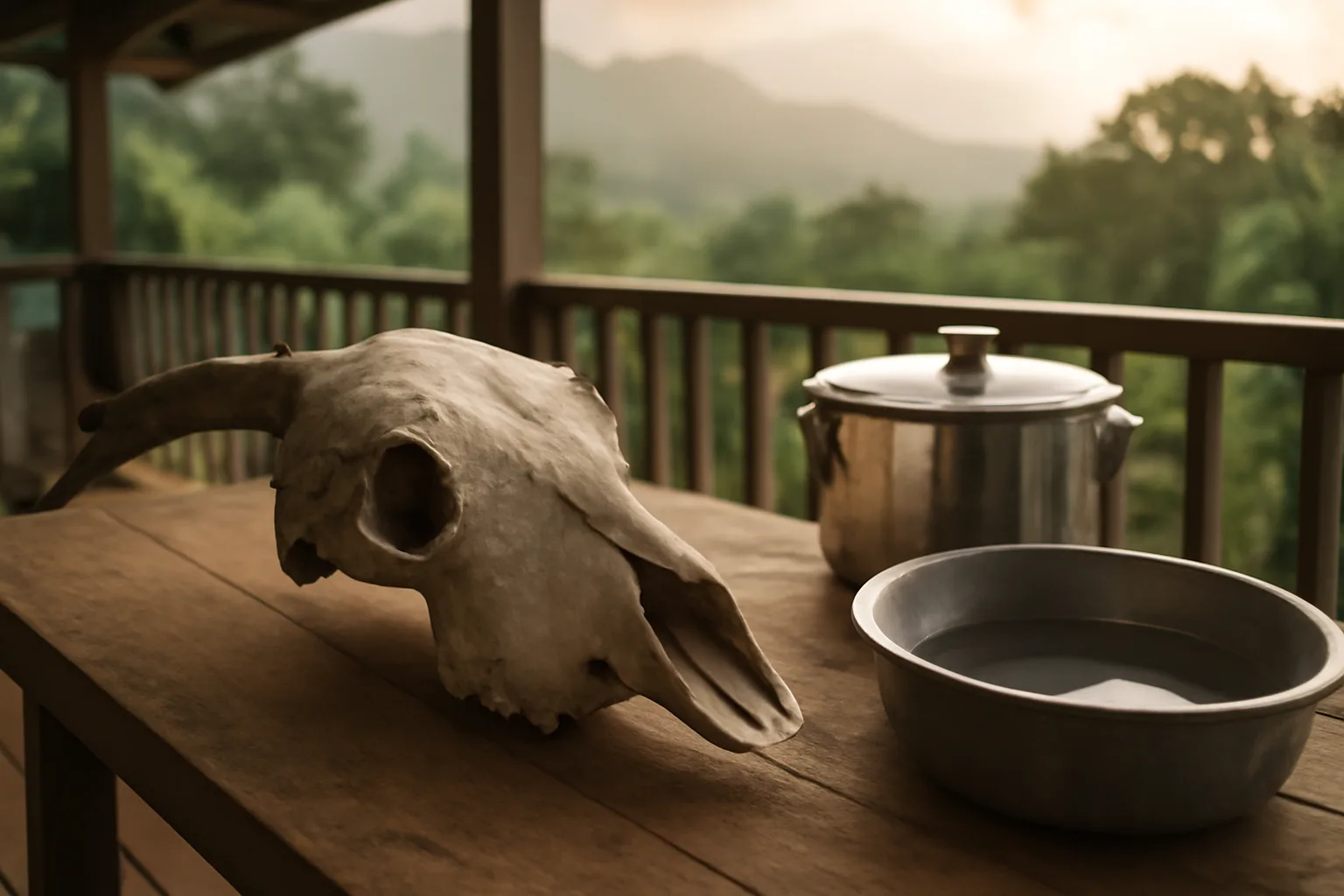
TL;DR
You do not pull a Hawaii european mount license. You register the business, get a GET license, follow DLNR game possession rules, and treat live dermestid beetles as a restricted import until HDOA Plant Quarantine says otherwise. Bird work needs a USFWS taxidermist permit. Island freight and rent drive cost more than the skull process. Confirm every fee with the agency that collects it.
Do you need a license for european mount in Hawaii?
Hawaii does not issue a dedicated statewide european mount or taxidermist card. Paid work still needs a GET license, DCCA papers if you form an entity, and a valid hunting-license trail on every game skull you hold. Bird work is federal, not a Honolulu specialty license.
That surprises people who just read a mainland forum. California taxidermy licensing is a real state program with its own card. Hawaii's gap is not a free pass. It means your paper path is a stack of general business rules plus wildlife law, and you assemble it yourself.
HRS 183D-21 is blunt about game. The statute says no person shall "hunt, pursue, kill, or have in the person's possession any game bird or game mammal unless the person has first procured a hunting license." [1] If a hunter drops a pig head at your door, that animal still sits inside DLNR rules. Keep a copy of their license plus the island, unit, and date. You are holding the parts.
Money changes the stack. The Hawaii Department of Taxation describes the general excise tax as "a privilege tax imposed on business activity in the State of Hawaii." [2] Charge a neighbor to clean a goat skull and you are in business activity. File the GET license. Do not wait for a taxidermy board that does not exist.
DCCA Business Registration is how you become an LLC or put a trade name on the invoice. Confirm the current filing amount on the division's fee table before you write a check. Boards change those lines. I will not invent this week's number. [3]
Skip bird skulls until you read the USFWS taxidermist permit page. Form 3-200-8 is the federal paper for mounting migratory birds for someone other than yourself. [4] Wild pig, goat, sheep, and axis deer skulls do not sit in that bird permit. Illegal take still sits under the Lacey Act if the animal was taken in violation of state or federal law. [8]
If you only process your own legally taken mammal on your own property, and you never take money, you still follow hunting possession law and county nuisance rules. You do not skip HRS 183D because you called it a hobby. Confirm species, season, and unit on the DLNR hunting license page for the island where the animal died. [10]
What business papers do you file first in Hawaii?
File GET and DCCA first. Then call county zoning and HDOA before you buy tanks or insects. That order saves you from owning a steamer you cannot legally run at the address on the lease.
Get the GET license through the Department of Taxation's current online system. Register the entity or trade name with DCCA if you want a company name on the invoice. Ask your county planning desk whether a home occupation can include outdoor cooking of carcasses. Most residential permits assume a laptop, not a simmering pig head.
Hawaii GET on most activities is 4 percent. Counties add a surcharge. The Department of Taxation publishes the surcharge table. Combined, many retailers effectively account for 4.5 percent. Confirm the figure for your island before you print a price list. [2][5][13]
| Task | Agency | What you confirm |
|---|---|---|
| Charge money for skulls | Dept. of Taxation | GET license and current rate |
| Form a company or trade name | DCCA Business Registration | Entity type and fee table |
| Possess game parts | DLNR DOFAW | Hunting license, season, unit |
| Live insects or a beetle colony | HDOA Plant Quarantine | Import permit or a written no |
| Migratory bird mounts for clients | USFWS | Form 3-200-8 |
| Dumping cooker water | Dept. of Health / HRS 342D | No unpermitted discharge to state waters |
Zoning will make or break you. Maceration smells. A wet beetle colony smells worse. Honolulu townhouse rules and a Manoa backyard are not the same as ag land in Ka'u. I would not sign a residential lease that bans odors and then invent a beetle room.
No honest person can promise you an approval clock. Online tax and business filings can move quickly. Land use letters do not. Confirm status with the office that stamps the paper, not with a Facebook group.
If you already ran a shop in a licensed-taxidermy state, read a mainland guide next to this one so you do not import the wrong checklist. How to start european mount in California is the contrast case. Hawaii is lighter on specialty cards and heavier on biosecurity.
How much does european mount cost in Hawaii?
There is no official Hawaii price list for a european mount, and nobody publishes a clean island-wide shop survey. What you pay to start is mostly paper, freight, chemicals, and a place you are allowed to stink up. What a hunter pays you is whatever the few people actually doing this work will quote on your island.
Startup paper is cheap next to Honolulu rent. GET setup and a DCCA filing sit in the low hundreds at most once you add incidental costs, but you confirm the live fee table rather than trusting a blog. [3] The expensive line is workspace. A legal spot with a hose, a freezer, and neighbors who will not call the county is the real ticket.
Chemicals cost more here because they ride a barge. Hydrogen peroxide for whitening, degreasers, and even a decent stainless pot pick up island markup and shipping. I would budget more for consumables in year one than for gadgets. A used stainless stockpot beats a branded "skull system" that rusts in salt air.
Consumer prices float. On the mainland, simple ungulate euros often land in a few hundred dollars at retail shops, but that is not a Hawaii data set and I will not pretend it is. Ask anyone actually taking work on your island. Neighbor-island freight for a frozen pig head can rival the cleaning fee. Quote freight as its own line so you do not eat it.
A $129 Colony + Ship-In Kit from DermestidPath only matters if HDOA and USDA both let live beetles enter. Do not order insects to an island address on a hope. More on that below.
Waste of money: imported ultrasonic jewelry tanks sold as professional degreasers, prepaid "master" classes that never mention Plant Quarantine, and a full retail buildout before zoning says yes. Spend first on ventilation, a freezer, peroxide storage that is not a hot shed, and liability insurance.
Charge GET on the labor if you are in business. The tax is on gross income from the activity, not on your leftover profit after peroxide. [2][13] Build the rate into the quote so you are not surprised on the periodic return.
How long does european mount take in Hawaii?
Paper time and bone time are different clocks. Online GET and DCCA filings can be short. Zoning letters, any HDOA animal-import review, and a federal bird permit are the slow gates. Nobody should guarantee those dates for you.
The skull itself does not care about your business license. Warm island water makes maceration go faster than a January garage in the Midwest. Faster also means smell and a heavier bacterial load. Degreasing still takes weeks because grease is grease. Whitening is hours to a day once the bone is actually clean.
If beetles are legal for you and the colony is strong, a small pig skull can strip in days to a couple of weeks. That range is ordinary taxidermy practice, not a Hawaii clinical trial. Nobody has good published timing data for european mount hawaii work. Humidity will try to mold any skull you rushed off the degrease rack.
Plan on a two to eight week conversation with a hunter for a simple ungulate if degrease cooperates. Tell them the truth. A four day promise is how you hand back a greasy yellow skull and then redo it for free.
Do not confuse process time with "I can advertise next week." You can file GET this month and still be waiting on a county home-occupation answer. I would not take a paid head until the address is allowed to cook bone and the hunter's license copy is in a folder.
Can you import dermestid beetles into Hawaii?
Treat live Dermestes as a regulated organism until HDOA Plant Quarantine gives you something in writing. Do not mail a colony to Honolulu, Hilo, Kahului, or Lihue and hope the inspector is busy.
HRS 150A-5 puts live animals, and the eggs, larvae, or pupae of animals, on the list of articles whose importation into Hawaii is prohibited except as that chapter and the department allow. [6] Plant Quarantine is the desk that actually clears cargo. USDA APHIS may also want a regulated-organism or plant-pest permit before live insects move interstate. [7][14]
Hide beetles already show up as pantry pests in a lot of warm places. That fact does not give you a personal import permit. A breeding colony in a vented tote is still an importation event when it lands at an island airport.
Call HDOA Plant Quarantine before you spend a dollar on starter beetles. Ask whether Dermestes maculatus is prohibited, restricted, or conditionally approved, and what form they want. If the answer is no, stop. Maceration and peroxide still produce a european mount. Beetles are a tool, not a religion.
I would not test this with a "feeder insect" label on a mainland invoice. Inspectors can read. Penalties under chapter 150A are not a cute fine you shrug off so you can keep a hobby box in the garage.
What DLNR rules apply to skulls and game parts?
A european mount of a Hawaii game mammal is still possession of that mammal's parts. HRS 183D-21 is the starting statute. DLNR's hunting license and permit pages, plus the game mammal rules, tell you which species you may hold and from where. [1][10][11]
The usual skulls here are feral pig, goat, sheep, and, on some islands, axis deer. Seasons, methods, and public-hunting units change by island. A legal pig on Hawaii Island is not a stamp of approval for a deer from a closed unit on Maui. Ask where it died. Write it down.
Selling meat or a raw carcass is not the same as charging labor to clean bone. Chapter 183D restricts commercial dealing in game. Read the statute before you advertise that you buy heads. Labor for a finished skull is the cleaner business model. Confirm any gray area with DLNR, not with a hunting-shop rumor.
Tourist and military hunters will walk in missing tags, missing dates, or missing the right island. That is your problem the moment the head is in your freezer. I would refuse the job. A pretty skull does not fix an illegal take, and the Lacey Act still exists if the parts later move. [8]
Game birds are their own pile. State hunting rules and the federal migratory bird statutes can both apply. If it flies and it is not a chicken, pause. [4][10]
Do bird and interstate skulls need extra federal permits?
Wild pig, goat, and axis deer skulls taken legally in Hawaii do not need a USFWS taxidermist permit. Migratory birds do if you mount them for someone else. Form 3-200-8 is the named application. [4]
Eagle parts are not a side hustle. Those go through federal eagle programs, not your peroxide bath. Same for a lot of listed or CITES species that a traveler wants "just cleaned." If you cannot name the permit, you do not take the skull.
Raw heads from the mainland are not a casual UPS moment. Hawaii inspects incoming animals and animal products. USDA animal-health rules can also apply, especially around swine disease controls. Confirm with HDOA Animal Industry and APHIS before you agree to receive a frozen feral hog head from Texas. A clean, dry, finished skull is a different article than a leaking cooler.
The Lacey Act makes it a federal problem to traffic wildlife taken, possessed, or sold in violation of state or federal law. [8] Your invoice will not save you if the hunter poached it and you knew, or reasonably should have known.
If you learned taxidermy paper in Alaska or Arizona, do not assume those state taxidermy cards transfer. They do not. Hawaii wants its own GET file and its own agricultural yes.
Where can you legally run a euro mount shop in the islands?
You run it where county zoning and the lease both allow odor, wastewater, and incoming carcasses. That is a smaller map than "anywhere I can plug in a crock pot."
Four counties, four planning shops. City and County of Honolulu is dense and complaint-driven. Hawaii County has more ag-zoned land that can absorb a cooker and a freezer. Maui and Kauai will care a lot about vacation-rental neighbors and visitor-area smell. Call the planner with the actual process, not a vague "craft studio" story.
Maceration water is not a storm-drain product. HRS 342D-50 bars discharging water pollutants into state waters except in compliance with that chapter. [15] Pot liquor from a rotting pig head is not a cute exception. Cool it, contain it, and dispose of it the way your county wastewater people describe. If they want it treated as solid waste after you reduce it, do that.
A covered lanai with a hose beat a sealed bedroom. Hawaii humidity plus a closed room is how you grow a science project on the walls. Salt air eats cheap steel. Buy stainless or plan to replace it.
Homeowner associations will end you faster than DLNR. Read the house rules. If they ban home businesses or exterior storage, you do not have a shop. You have a future complaint file.
What does first-year european mount work look like in Hawaii?
Year one is pigs and goats, some sheep, and axis deer if you sit on the right island and the hunter did the hunt legally. It is not Midwestern whitetail volume. Anyone promising you a queue of trophy elk is selling a different state.
You will spend more hours on freight holds, GET filings, and "where was this shot" texts than on peroxide. That is the job. Keep a folder per skull: hunter name, license number, species, island, date in, date out, what you charged, and the GET you will report. [2][10]
Oahu gives you more people and worse zoning. Hawaii Island gives you more pigs and longer drives. Maui's deer conversations come with extra politics and extra eyes. Pick the island you can actually permit, not the one with the prettiest ridgeline.
Military and visitor hunters are real customers. They also disappear off-island before the degrease is done. Get a deposit that covers freight back to them. Ship only a clean, dry, finished skull, and still ask the carrier and HDOA whether that shipment needs anything on the label.
Compare notes with other state start guides if you are moving here with a kit already packed. Colorado and Alaska licensing will not answer HDOA for you. They will remind you how much extra paper some mainland shops carry, and how little of it maps onto Honolulu.
What equipment actually works in island heat and humidity?
A freezer, a stainless pot, a heat source you can run outdoors or under a strong vent, peroxide you store cool and dark, nitrile gloves, eye protection, and a way to hold greasy water. That set builds a european mount. The rest is optional.
Peroxide breaks down in heat. A hot shed on the leeward side will quietly ruin a jug. Buy smaller containers more often. OSHA's hazard-communication standard still applies if you have employees and hazardous chemicals on site, including strong oxidizers and degreasers. [12] Label the bottles. Keep the safety data sheets. This is boring and it is how you avoid a stupid burn.
I would start with maceration, not beetles, until Plant Quarantine speaks. Warm water is already on your side. The tradeoff is smell. Do it away from bedroom windows.
Skip the $400 social-media boiler with a cute logo. Skip enzyme powders that cost more per skull than the hunter will pay. A $20 brush and patience still matter after any method.
Mold is the local tax. If the skull is still greasy, do not rush whitening to make a pickup date. You will redo it. Tell the hunter that up front so they stop asking for a one-week turnaround in August humidity.
How should you handle incoming skulls from hunters and the mainland?
Ask for harvest proof before the head leaves their truck. License, island, date, species. No paperwork, no freezer space. You are not a lost-and-found for mystery bone.
Local, legally taken mammals are the easy pile. Raw mainland trophies are not. Hawaii's agricultural inspection system exists because the islands stay fragile on purpose. Call HDOA before you agree to receive animal parts from another state. [6] USDA may have its own yes or no on raw swine. Guessing is how a cooler becomes a seizure.
Finished, clean, dry skulls moving out of Hawaii are simpler than raw heads moving in, but carriers still have rules. Declare what it is. Do not call a pig skull a "craft sample" to dodge a question. That lie is worse than the freight cost.
If a hunter wants a european mount hawaii souvenir from a hotel room goat story with no license, decline. You do not need that skull. You need a business that is still open next season.
Photograph the incoming head and the documents. Store the photos with the invoice. When someone later claims you lost their "record" pig, you will be glad you did.
What would I actually do in year one, and what would I skip?
I would file GET and DCCA in the first week, then call HDOA Plant Quarantine and the county planner before buying anything that smells. I would start on legally tagged local pigs with maceration and peroxide. I would not advertise birds. I would not order beetles. I would not sign a residential lease that bans odors.
I would price freight as its own line, collect a deposit, and keep hunter-license copies. I would carry liability insurance even if the county never asks, because grease, oxidizers, and other people's animals are how claims start. I would read HRS 183D and 150A myself instead of trusting a mainland checklist. [1][6]
I would skip bird work until Form 3-200-8 is in hand, skip "we buy any skulls," and skip a fancy shop buildout. A clean concrete slab with a hose beats a pretty suite you cannot vent. [4]
If, and only if, HDOA gives written clearance for live dermestids, then a starter colony is a supply question. Until that letter exists, look at /start only as background on kits, not as a shipping plan. This site is an independent publisher, not your lawyer and not your permitting desk.
Confirm every fee, form name, and prohibition with the board that enforces it. Rules move. A printed guide is a map, not a stamp.
Frequently asked questions
Do you need a license for european mount in Hawaii?
There is no dedicated statewide european mount or taxidermist license. Paid work needs a GET license and usual DCCA papers. Game skulls still require a lawful hunting-license trail under HRS 183D-21. Migratory bird work for clients needs USFWS Form 3-200-8. Confirm current filings with Taxation, DCCA, DLNR, and USFWS.
How much does european mount cost in Hawaii?
No agency publishes a Hawaii shop survey. Startup cash is mostly GET and DCCA filings, a legal workspace, a freezer, stainless pots, and island-priced peroxide. Hunter prices are whatever local operators quote, plus freight between islands. Build GET into the number. Confirm live government fees on the Taxation and DCCA tables.
How long does european mount take in Hawaii?
Business logins can be quick. Zoning and any insect-import review are not, and nobody should promise those dates. A simple ungulate skull often needs two to eight weeks if degreasing cooperates. Warm water speeds maceration and smell. Humidity slows a honest finish. Beetle timing only matters if HDOA allows the colony.
Can I keep dermestid beetles for european mount work in Hawaii?
Not until HDOA Plant Quarantine says so in writing. HRS 150A-5 restricts importing live animals and their larvae except as the department allows. USDA may also require an interstate organism permit. Existing pantry pests do not equal a legal breeding colony. Use maceration until you have a clearance letter.
Can I ship a raw skull from the mainland to Oahu?
Treat a raw head as an agricultural shipment, not a gift. Call HDOA and check USDA animal-health rules before you accept it, especially swine. A leaking cooler can be refused or seized. A clean, dry, finished skull is a different article. Get the yes in writing, then book the carrier.
Do I need a hunting license to clean someone else's pig?
The hunter needed a valid license to take and possess that game mammal. You should keep a copy of that license, plus island, unit, and date, because you are holding the parts. Your own hunting license does not launder their illegal take. Refuse heads with no paper. Confirm details on the DLNR hunting license page.
Is a european mount legal for axis deer in Hawaii?
Only if that deer was taken where and how DLNR rules allow, and you can show it. Axis deer are not a statewide free-for-all. Island, landowner, and season facts matter. Charging labor to clean a lawfully taken skull is different from buying or selling game. Ask DLNR when the story is messy.
Do I charge Hawaii GET on taxidermy labor?
If you are engaging in business, GET applies to the gross income from that activity. The Department of Taxation calls GET a privilege tax on business activity. County surcharges may stack on the 4 percent state rate. Confirm the combined rate for your island and file on the department's schedule. Do not treat cash jobs as off the books.
Can I run this from a garage on Oahu?
Only if zoning, the lease, and any association rules allow a smelly, wet process and incoming carcasses. Many residential setups fail that test. Honolulu is complaint-heavy. Ask the county planner before you cook a head. A no on home occupation means you need another site, not a quieter lid.
Do wild pig skulls need a federal taxidermy permit?
Legally taken feral pig, goat, sheep, and axis deer skulls do not sit on USFWS Form 3-200-8. That form is for migratory bird taxidermy done for others. Illegal take can still become a Lacey Act problem. Birds, eagles, and many exotics are a hard stop until you hold the right federal paper.
Can I sell cleaned skulls or only charge for labor?
Charging labor to clean a hunter's lawfully taken skull is the cleaner model. Chapter 183D restricts commercial dealing in game animals and their meat. Buying heads for resale as wildlife parts is where people step on rakes. Read the statute and ask DLNR before you advertise inventory. Keep every hunter's license copy.
What insurance should a new euro mount operator carry?
At least general liability that actually covers on-site chemical use and other people's animals. If you have employees, workers' compensation rules apply like any other shop. Insurance is not a Hawaii taxidermy license. It is what you want when peroxide hits an eye or a freezer fails on a visitor's pig. Ask a Hawaii broker, not a mainland Facebook group.
Does a mainland taxidermy license work in Hawaii?
No. A California, Alaska, Arizona, or other state taxidermy card does not replace GET, DCCA, DLNR, or HDOA. Hawaii does not swap those files. Bring your skills, leave their checklist. File local papers and call Plant Quarantine before any live colony moves across the Pacific.
Is dumping maceration water down a storm drain legal?
No. HRS 342D-50 bars discharging water pollutants into state waters except in compliance with that chapter. Cooker water from a rotting head is not an exception. Contain it and follow county wastewater or solid-waste directions. A cheap disposal mistake can cost more than a year of skull work.
Sources
- Hawaii Revised Statutes §183D-21, Hunting licenses required: A hunting license is required to hunt, pursue, kill, or possess game birds or game mammals in Hawaii.
- Hawaii Department of Taxation, General Excise Tax overview: GET is a privilege tax imposed on business activity in Hawaii, measured by gross income.
- Hawaii DCCA Business Registration Division, registration fees: DCCA publishes the current fee table for entity and trade-name filings.
- Hawaii Department of Taxation, county surcharge: Counties may add a GET surcharge on top of the state rate; the department publishes the table.
- Hawaii Revised Statutes §150A-5, Conditions of importation: Importation into Hawaii of live animals and their eggs, larvae, or pupae is prohibited except as chapter 150A and HDOA allow.
- U.S. Fish and Wildlife Service, Lacey Act: It is a federal offense to traffic wildlife taken, possessed, transported, or sold in violation of state or federal law.
- Hawaii DCCA Business Registration Division, how to register: Business entities and trade names are filed with DCCA Business Registration.
- DLNR Division of Forestry and Wildlife, hunting licenses, permits, and stamps: DLNR publishes current hunting license and permit requirements by hunter category.
- Hawaii Revised Statutes chapter 183D, Wildlife: Chapter 183D is the state wildlife statute that frames game possession and department authority.
- OSHA, 29 CFR 1910.1200 Hazard Communication: Employers must communicate hazards of chemicals such as oxidizers and solvents used in a shop.
- Hawaii Revised Statutes §237-13, Imposition of tax: HRS 237-13 imposes GET rates on gross income from business activities, including the common 4 percent rate.
- eCFR, 7 CFR Part 330, Federal plant pest regulations: Federal rules govern movement of plant pests and similar organisms into and through the United States.
- Hawaii Revised Statutes §342D-50, Prohibition on water pollutant discharges: No person may discharge a water pollutant into state waters except in compliance with chapter 342D.