Last updated 2026-08-21
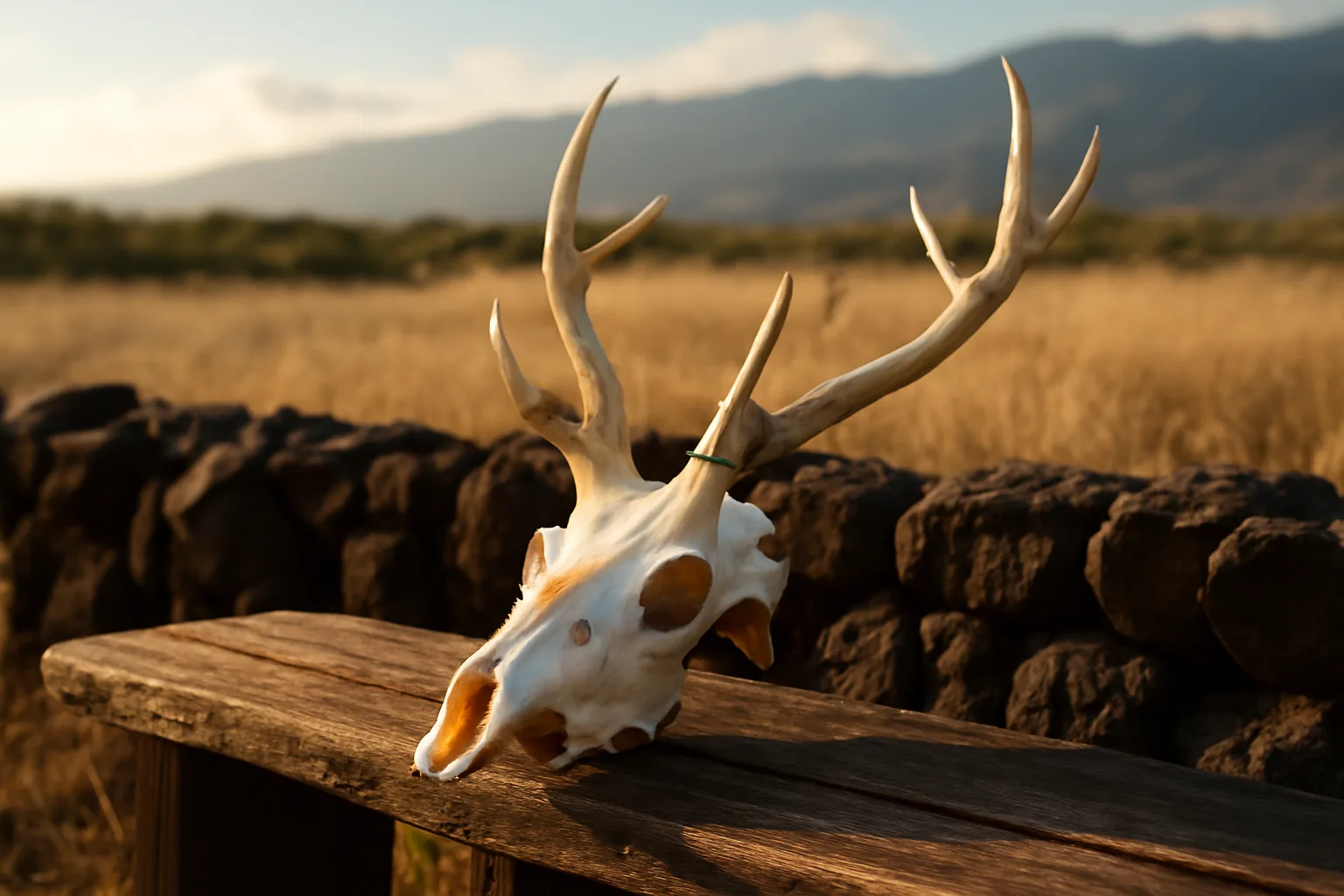
TL;DR
Hawaii does not issue a taxidermy professional license. If you charge for a european mount, you still need a general excise tax license. HRS 237-9 sets a $20 issuance fee. You also have to follow DLNR wildlife rules and HDOA import rules. Migratory birds need a federal taxidermist permit. Live dermestid shipments are a quarantine issue. Confirm every current fee with the agency that collects it.
Do you need a license for european mount in Hawaii?
You do not need a Hawaii professional taxidermy license to clean and whiten a skull. DCCA Professional and Vocational Licensing does not list taxidermy among the professions it licenses. [4] If you take money for the work, you still need a general excise tax license, because HRS 237-9 makes that license a condition of engaging in a taxable business. [1]
That split is the whole ballgame. Mainland friends will tell you to "get your taxidermy license." Hawaii does not sell that piece of paper.
Personal work on an animal you legally took is not the same fact pattern as a shop. Protected species rules still apply to you. GET usually does not, until you start selling. I am not your tax counsel. If a hunting buddy hands you cash and you keep doing it, Hawaii Tax can treat that as gross income.
What I would actually do is simple. If I planned to take even one paid european mount hawaii job, I would file the GET application before I touched a deposit. I would not buy a private school certificate and hang it on the wall like a state card. It is not a state card.
A nene, a honu (green sea turtle), or a Hawaiian monk seal is not a weekend project. Those animals sit under state endangered species law and federal law. [12] Leave them alone.
What paper do you file if you charge for skulls in Hawaii?
If you charge, the first real filing is the general excise tax license. You apply to the Department of Taxation on Form BB-1 (the Basic Business Application). [5] HRS 237-9 is blunt about the price of that license. The statute says you obtain it "upon a one-time payment of the sum of $20, a license to engage in and to conduct such business." [1]
Do not treat $20 as the only money you will send Honolulu. GET is a privilege tax on gross income, not a one-time sticker.
HRS 237-13 taxes a service business at four per cent of gross income. The statute’s service language is "a tax equal to four per cent of the gross income of the business." [2] Taxidermy and skull cleaning are services. Counties may add a surcharge. HRS 237-8.6 authorizes a county surcharge of 0.5 percent. [3] Whether your island currently collects it, and on which gross proceeds, is a Hawaii Tax and county question. Confirm it before you print a price list.
HRS 237-9 sets a $20 one-time GET license issuance fee for a person who engages in a taxable business in Hawaii. [1]
If you form an LLC or corporation, that is a separate DCCA business registration filing on Hawaii Business Express. Those fees change. Confirm the current amount on the DCCA page before you pay a document preparer to do a form you can file yourself.
| Filing | What it does | Where the number lives | Who confirms it |
|---|---|---|---|
| GET license | Lets you legally engage in taxable business | HRS 237-9, Form BB-1 | Hawaii Department of Taxation |
| GET on services | 4% of gross income | HRS 237-13 | Hawaii Department of Taxation |
| County surcharge | Extra 0.5% if the county collects it | HRS 237-8.6 | Hawaii Tax plus your county |
| Entity registration | Forms the LLC or corp, if you want one | DCCA BREG fee schedule | DCCA |
I would file GET first and skip the LLC until I had repeat work. An LLC is useful. It is not a license to mount animals.
Does Hawaii have a taxidermy board or PVL license?
No. Hawaii does not run a taxidermy board, and it does not give a practical exam for european mounts. The DCCA PVL program page is the list of professions that actually need a state vocational license. Taxidermy is not on it. [4]
Hawaii DCCA Professional and Vocational Licensing does not license taxidermists. [4]
That is why those $300 "state license packet" upsells you see in forums are a waste of money here. There is no packet. There is no board calendar. There is no apprentice affidavit.
Compare that with a mainland board state and the difference is obvious. Alabama still runs a real taxidermy license path. California does too. Hawaii’s consumer-protection agency spent its licensing energy on contractors, barbers, and the rest of that list, not on skulls.
If someone sells you a "Hawaii taxidermy permit number," ask which statute creates it. If they cannot point to a numbered chapter, walk away.
What wildlife rules hit european mounts in Hawaii?
Wildlife law is the second stack of paper, and it has more teeth than GET. HRS chapter 183D is the wildlife statute. Hunting, possession of game, and department permits live there. [11] HAR chapter 13-124 is the indigenous wildlife rule. It restricts take and possession of indigenous wildlife, injurious wildlife, and related categories. [7]
Game mammals are a different pile. HAR chapter 13-123 is the game mammal hunting rule. Pigs, goats, sheep, and deer are regulated as game, not as native treasure. [8] A legally taken axis deer or feral pig is the normal european mount hawaii candidate. A pueo, a shearwater, or any listed bird is not.
I would keep the hunter’s name, island, date, and any tag or landowner permission with the skull until the job leaves the shop. That file will not impress Instagram. It will help if a warden asks where the animal came from.
DLNR Division of Forestry and Wildlife writes and amends the hunting and wildlife rules. If you plan to possess anything odd (a seabird, a bat, a marine mammal bone that washed up), stop and ask DOFAW in writing. Do not guess.
Introduced birds are not a free-for-all either. Some doves are hunted as game birds under separate rules. Migratory species still drag federal law into the room. More on that below.
Can you import skulls, hides, or dermestid beetles into Hawaii?
Often, no, not the way mainland shops do it. Hawaii’s plant and non-domestic animal quarantine law is built to keep pests out of an isolated island system. HRS 150A-6.1 tells the Board of Agriculture to maintain lists of animals that are prohibited, restricted, or conditionally approved for import, and it ties lawful import to that list and to department rules. [6] HAR chapter 4-71 is the non-domestic animal import rule set. [13]
A dry, cleaned skull is not the same article as a greasy cape, a frozen pig head, or a live beetle colony. Greasy animal parts and insects are the shipments that get people in trouble. Dermestes beetles are museum pests. Treating them like a harmless craft supply is how you get a box seized.
Live dermestid kits are a mainland habit. A $129 Colony + Ship-In Kit from DermestidPath is a real product on the mainland. It does not punch a hole in HDOA rules. I would not order live beetles into Honolulu, Kahului, Hilo, or Lihue unless Plant Quarantine said that specific shipment was allowed.
Mainland cervid parts have a second problem. Chronic wasting disease rules and the Lacey Act both attach to wildlife that moved in interstate commerce. [14] A Colorado license path does not authorize a Maui mailbox. If a client wants an elk euro flown from the Rockies, talk to HDOA and the originating state before the box is taped shut.
Alaska is the other non-contiguous comparison worth reading. Isolation changes the paper. Hawaii is stricter on bugs.
How much does european mount cost in Hawaii?
There is no official Hawaii price list for a european mount. DLNR does not set shop rates. Nobody I can cite has published a clean statewide survey of skull-mount invoices. If a blog gives you a single "average Hawaii euro price," they invented it.
What you can pin down is the tax layer. HRS 237-13 puts four per cent GET on service gross income, and HRS 237-8.6 lets a county add 0.5 percent. [2] [3] That tax is on the shop, and it shows up in the quote whether the invoice line-items it or not.
Local work (axis deer on Maui, Molokai, or Lanai, pigs and goats almost anywhere) usually costs less than a mail-in mainland elk that has to clear quarantine. Freight, freezer time, and the risk the box never clears HDOA all land on the client.
Electricity is not cheap here. Boiling or long simmering is a real cost, even if I will not pretend I have this month’s EIA cent-per-kWh figure memorized for your neighborhood. Ask the shop what method they use. Beetle work, if they even have a legal colony, is priced differently from simmered bone.
What I would do as a customer: get two local quotes, ask what is included (degrease, teeth, whitening, plaque, shipping), and ignore anyone who will not put the GET treatment in writing. What I would not do is pay mainland "we ship anywhere" prices into a state that can refuse the carcass.
How long does a european mount take in Hawaii?
There is no statutory deadline. Hawaii does not promise a two-week euro. Any shop that guarantees a date on a government form is making that up.
The biology is ordinary. Flesh removal, degrease, and whitening drive the clock. Warm weather speeds bacterial maceration. The same humidity grows mold on a greasy skull you left in a bucket. That is why a rushed maceration in a Wahiawa garage can look worse at day 20 than a careful degrease at day 45.
Dermestid cleaning, where a shop already has a legal colony, can be fast on a small pig or goat skull. Importing a new colony to start that clock is the step that stalls, because HDOA is not your production manager. [6] [13]
Shop backlog is the delay most clients actually feel. One person on Maui with a saw and a pot is not a factory. Ask for a range, not a promise. Build in shipping time if the finished skull has to fly to another island. Inter-island cargo is not overnight magic.
I would rather wait on a fully degreased axis skull than pick up a pretty, greasy one that yellows in the lanai. Re-degreasing is how jobs turn into two jobs.
What federal permits still apply to european mount work in Hawaii?
Federal law does not care that you are in Honolulu instead of Hilo. If the animal is a migratory bird, the U.S. Fish and Wildlife Service taxidermist permit is the one that matters. 50 CFR 21.63 is the current taxidermist permit section. It is the rule that requires a permit before you perform taxidermy services on migratory birds, their parts, nests, or eggs for another person. [9]
The application is Form 3-200-8. [10] USFWS publishes the current fee on the form and in 50 CFR part 13. I am not going to print a fee that the Service can change. Confirm it on the form instructions before you write a check.
Pigs, goats, sheep, and axis deer are not migratory birds. A federal taxidermist permit is the wrong paper for those skulls. You still cannot launder an illegal take through a pretty white bone. The Lacey Act hits wildlife that was taken, possessed, transported, or sold in violation of state or federal law. [14]
Endangered species are a hard no. HRS 195D-4 is the state endangered species section you check next to the federal list. [12] Sea turtles and monk seals are the classic Hawaii examples people still ask about. The answer is no.
If you only want ungulate euros, skip the bird permit until a client shows up with a duck. Then stop and file, or send the bird to someone who already holds 3-200-8.
Is a hunting license the same thing as a shop license?
No. A hunting license is permission to take game. HRS 183D-21 is the hunting license requirement. It is aimed at a person who hunts, pursues, kills, or takes game, not at the person boiling the skull. [11] Fees and license years sit on the current DLNR hunting page. Confirm them there. They move.
Your customer needs a valid take. You need business paper if you charge. Those are two drawers.
If you hunt your own pig on the Big Island and mount it for the garage, the hunting license (and the unit rules in HAR 13-123) is the wildlife paper that mattered on the day you pulled the trigger. [8] GET still stays asleep until you sell the service.
I would not mount a skull from a hunter who "forgot" where it came from. Private land axis deer jobs are common. They still need landowner permission and a legal take under the rules that applied that day. You are not a cop. You are also not a fence.
What would you actually file in year one?
I would do less than the Facebook group says. File Form BB-1 and pay the GET license fee in the statute. [1] [5] Start filing GET returns on the schedule Hawaii Tax assigns you, even if the first quarter is ugly.
I would not form an LLC on day one unless I already had a partner, a lease, or a reason to separate accounts. If I did form one, I would use Hawaii Business Express and pay only the posted DCCA fee.
I would call county planning about home occupation rules before I put a simmer pot in a residential kitchen on Oahu. I will not quote a county ordinance section I cannot stand behind. The planning desk will. Maui, Hawaii County, and Kauai are not copies of Honolulu. Ask the county you actually live in.
I would photograph tags and keep a job log. I would buy ordinary liability insurance if I had strangers walking onto the property. Insurance is not a license.
I would skip paid "certification" courses that imply Hawaii has a board. If I wanted a process education, I would read a mainland how-to for technique only, then throw away every licensing chapter. The California start guide is useful for workflow and useless as Hawaii law. Same for the Alaska start path.
What Hawaii mistakes waste money on european mounts?
Paying for a taxidermy license that does not exist. That is the classic import from Arizona or Alabama Facebook threads. Those states have paper. Hawaii has GET.
Shipping live beetles without an HDOA answer in writing. You can lose the colony, the box, and a chunk of your week inside Plant Quarantine. [6] [13]
Accepting a mainland elk or deer head because the client already paid freight. Freight does not equal entry.
Mounting anything marine or native because it "already died." Dead is not legal. [12]
Pricing like you live in Oklahoma. Four per cent GET, possible county surcharge, island freight, and a pot that runs on Hawaii power will eat a copied mainland price list. [2] [3]
I would also skip custom neon signs, a leased retail bay, and a $2,000 logo before the first paid pig skull. Year one is a pot, a hose, a GET license, and a freezer you already own.
How does Hawaii compare to mainland european mount licenses?
Hawaii is a tax-and-quarantine state, not a taxidermy-board state. The table is the honest version.
| Question | Hawaii | A typical board state |
|---|---|---|
| Dedicated taxidermy license | No PVL license [4] | Often yes, with an exam |
| First business paper | GET license, $20 in HRS 237-9 [1] | Sales tax plus the taxidermy card |
| Birds for clients | Federal 50 CFR 21.63 permit [9] | Same federal permit, plus the state card |
| Live dermestid import | Quarantine problem under HRS 150A [6] | Usually just a livestock or pest question |
| Game mammals | HAR 13-123 hunting rules [8] | State game regs plus shop permit |
Arizona is a useful mainland contrast if you want to see an ordinary desert-state start path. Do not copy their forms onto island letterhead.
If you already hold a mainland card, it does not convert. Hawaii has nothing to endorse.
Where do you confirm fees before you spend anything?
Call the agency that collects the money. Hawaii Tax for GET and Form BB-1. [5] DCCA PVL only if you still do not believe taxidermy is unlicensed, in which case read the programs list again. [4] DLNR DOFAW for game and indigenous wildlife. [7] [8] [11] HDOA Plant Quarantine for anything that flies, crawls, or ships from the mainland. [6] [13] USFWS for birds. [9] [10]
Do not use this page as a filing packet. DermestidPath is an independent publisher, not a law firm and not a service company. Statutes get amended. County surcharges turn on and off. Confirm the current number on the statute page or the form instructions the morning you file.
If you still want a mainland-style kit explanation after you have the Hawaii paper straight, start at /start. Read the import section twice before you put an insect in the mail.
Frequently asked questions
Do you need a license for european mount in Hawaii?
You do not need a DCCA taxidermy license, because Hawaii does not issue one. If you charge for the work, you need a general excise tax license under HRS 237-9. Wildlife and import rules still apply to the animal itself. Confirm current tax filings with Hawaii Tax and species questions with DLNR DOFAW.
How much does european mount cost in Hawaii?
There is no official statewide price. Shops set their own rates, and no cited public survey gives a clean island average. GET of four per cent under HRS 237-13, plus any county surcharge, sits on the service. Local pigs and axis deer usually beat mail-in mainland cervids once freight and quarantine risk are counted. Get two written quotes.
How long does european mount take in Hawaii?
No statute sets a turnaround. Flesh removal, degrease, whitening, and the shop’s backlog set the clock. Heat speeds maceration. Humidity grows mold on greasy bone, so a rushed bucket job can take longer once you redo it. Ask the shop for a range. Treat any guaranteed date as marketing, not a board rule.
Is there a Hawaii taxidermy license exam?
No. DCCA Professional and Vocational Licensing does not license taxidermists and does not schedule an exam. Private certificates are not state licenses. The real beginner filing, if you charge, is the GET license on Form BB-1. Confirm the current application steps on the Hawaii Tax form page.
Do I need a GET license for a single paid skull?
HRS 237-9 ties the license to engaging in a taxable business, not to a five-job minimum. One paid european mount can be enough for Hawaii Tax to care. I would file before I took the first deposit. Talk to Hawaii Tax or a Hawaii CPA if your facts are messy. This is not tax advice.
Can I ship dermestid beetles to Hawaii?
Treat that as no until HDOA Plant Quarantine says otherwise in writing. HRS 150A-6.1 and HAR chapter 4-71 control non-domestic animal import, and dermestids are pests, not craft supplies. A mainland colony kit does not create an exception. Ask Plant Quarantine about the species and life stage before anyone puts holes in a box.
Can I mail a deer skull from the mainland to Hawaii?
Not casually. Hawaii import rules plus originating-state CWD rules and the Lacey Act all attach to wildlife parts that move interstate. A clean, dry skull is a different article than a frozen head, but neither gets a free pass. Talk to HDOA and the originating state before the carrier picks it up.
Do I need a hunting license to mount a customer’s pig?
You need the customer to have taken the animal legally. HRS 183D-21 is the hunting license rule for the person who takes game, not a shop card for the person cleaning bone. Keep a record of the hunter and the take. You still need GET paper if you charge. Confirm current hunting fees on the DLNR page, not from memory.
Are axis deer legal to mount in Hawaii?
Axis deer are introduced game mammals, not indigenous wildlife, and they are hunted under HAR chapter 13-123 and the current DOFAW unit rules. A legally taken axis deer is the standard european mount hawaii subject on Maui, Molokai, and Lanai. Seasons, private-land rules, and tags change. Confirm the take with DLNR before you advertise deer work.
Do bird european mounts need a federal permit in Hawaii?
If you perform taxidermy on migratory birds for another person, yes. 50 CFR 21.63 requires a USFWS taxidermist permit, and Form 3-200-8 is the application. Confirm the current fee on the form. Pigs, goats, sheep, and axis deer do not use that permit. Listed birds and seabirds are usually off the menu entirely.
Does a mainland taxidermy license work in Hawaii?
No. Hawaii has no taxidermy board that can endorse an Alabama, Arizona, or California card. Your mainland license does not replace GET, HDOA import rules, or DLNR wildlife rules. Keep it in the drawer for the state that issued it. File Hawaii paper if you charge on island.
What agency should I call first?
Hawaii Tax, if you will charge. Then DLNR DOFAW if the species is not an obvious pig, goat, sheep, or axis deer. Then HDOA Plant Quarantine if anything will be imported, including insects. USFWS only if birds are in the plan. Confirm fees with the agency that collects them. Do not rely on a forum screenshot.
Can I run a european mount shop from my house?
Maybe, if GET is filed and the county allows that home occupation. Honolulu, Maui, Hawaii County, and Kauai do not share one zoning answer. Smell, wastewater, and stored carcasses are how neighbors start complaints. Ask the county planning desk before you advertise a residential drop-off. I would not skip that call.
Is Hawaii GET the same as mainland sales tax?
No. GET is a privilege tax on the business’s gross income. HRS 237-13 sets four per cent on service businesses. A county may add 0.5 percent under HRS 237-8.6. It is not a pure retail sales tax, even if invoices look similar. Read the Hawaii Tax GET guidance and confirm how you should show it on a skull-mount bill.
Sources
- Hawaii Revised Statutes §237-9 (Licenses; penalty): A GET license is required to engage in taxable business and the statute sets a $20 one-time issuance fee.
- Hawaii Revised Statutes §237-13 (Imposition of tax): Service businesses are taxed at four per cent of gross income under the GET statute.
- Hawaii Revised Statutes §237-8.6 (County surcharge on state tax): Counties may add a 0.5 percent surcharge on GET gross proceeds.
- Hawaii DCCA Professional and Vocational Licensing programs list: Taxidermy is not among the professions licensed by Hawaii PVL.
- Hawaii Department of Taxation Form BB-1 Basic Business Application: Form BB-1 is the basic business application used to obtain a Hawaii GET license.
- Hawaii Revised Statutes §150A-6.1 (Animal import): The Board of Agriculture maintains prohibited, restricted, and conditionally approved animal import lists and import is tied to those rules.
- 50 CFR §21.63 Taxidermist permit: A USFWS taxidermist permit is required to perform taxidermy on migratory birds for another person.
- USFWS Form 3-200-8 Migratory Bird Taxidermist permit application: Form 3-200-8 is the federal application for a migratory bird taxidermist permit.
- Hawaii Revised Statutes §183D-21 (Hunting licenses): A hunting license is required to take game and is separate from any business filing.
- Hawaii Revised Statutes §195D-4 (Endangered species): State endangered species law prohibits unauthorized take and related acts involving listed species.
- Hawaii Administrative Rules chapter 4-71 (Non-domestic animal import): HAR 4-71 is the HDOA non-domestic animal import rule that governs restricted and prohibited animals.
- U.S. Fish and Wildlife Service Lacey Act page: The Lacey Act prohibits trafficking in wildlife taken, possessed, transported, or sold in violation of state or federal law.